
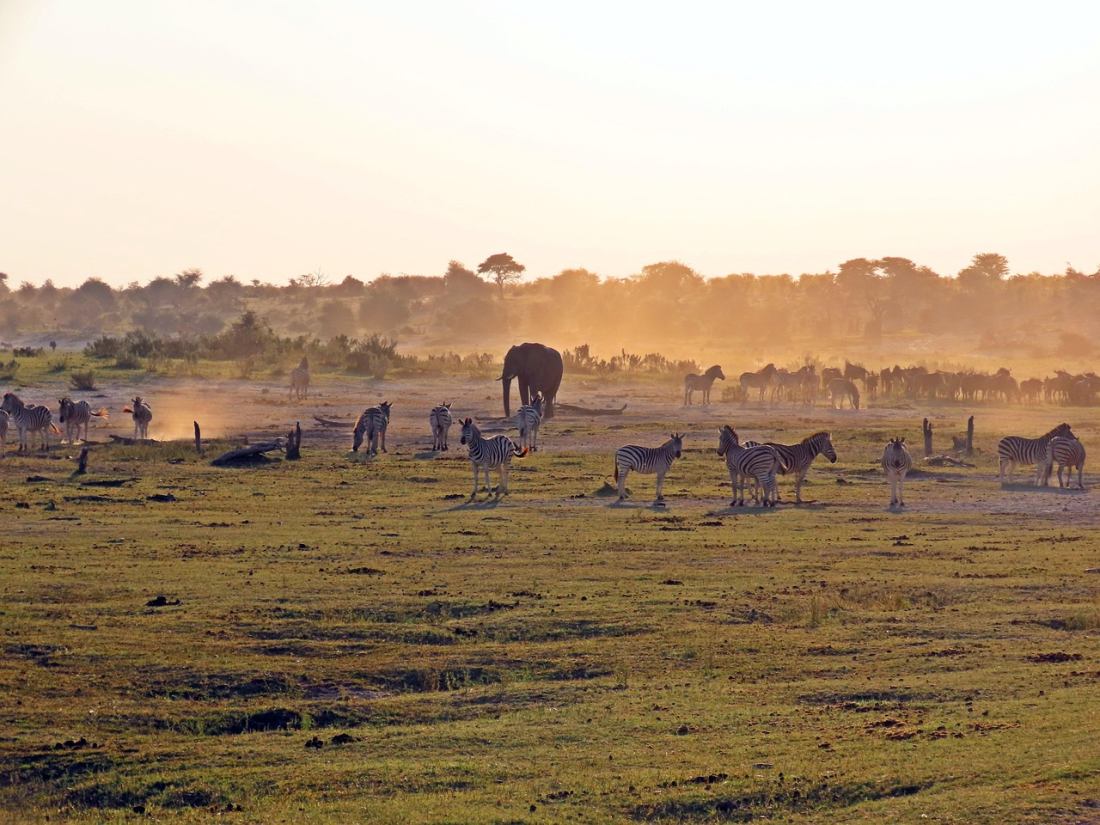
Botswana is one of Africa’s most beautiful and peaceful countries. Its territory hosts numerous national parks and reserves awaiting animal lovers. I’ll present ten of the most beautiful attractions!
Botswana is located in the heart of southern Africa, surrounded by South Africa, Namibia, and Zimbabwe. Much of the country’s territory is covered by the Kalahari Desert, but it is precisely this seemingly barren landscape that harbors one of the world’s richest wildlife and most extraordinary natural phenomena.
Besides its natural treasures, Botswana is also famous for its political stability and sustainable tourism. Through diamond mining, the country has become one of Africa’s wealthiest nations, which it wisely invests in nature conservation and ecotourism development. The dry savanna climate is suitable for travel year-round, though the dry season (May-October) is most ideal for wildlife viewing.
Table of Contents
Best places in Botswana
Okavango Delta
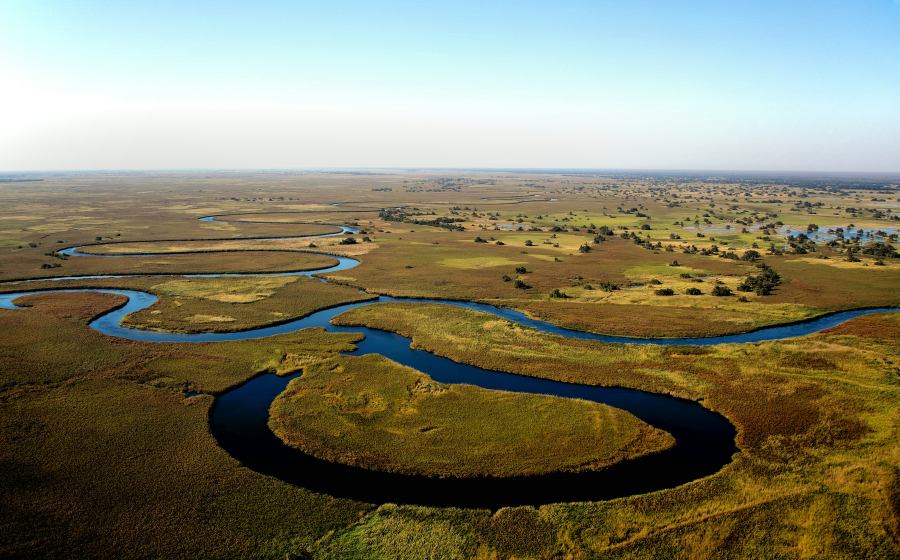
The world’s largest inland delta is located in the heart of Africa, where the Okavango River flows not into the sea, but into the sands of the Kalahari Desert. This UNESCO World Heritage ecosystem changes annually with the rhythm of floods and recessions.
The delta’s area varies between 6,000-15,000 square kilometers depending on the season. During flood season (June-August), water floods the plains, creating countless islands, channels, and lagoons. This period is also the richest for wildlife, when massive elephant herds, hippos, crocodiles, and hundreds of bird species gather around the water.
The delta is traditionally explored by mokoro – dugout canoes guided by local guides using bamboo poles. This quiet mode of transport allows undisturbed observation of wild animals in their natural environment. The delta’s crystal-clear waters are home to countless fish species, while its banks are covered with papyrus and water lilies.
Moremi Game Reserve
The reserve encompassing the eastern part of the Okavango Delta is one of Botswana’s richest wildlife areas, where dry land and wetland habitats meet.
The reserve’s uniqueness lies in the meeting of the delta’s wetlands and dry savanna habitats, creating an extremely diverse ecosystem. The area spans nearly 5,000 square kilometers, and all members of Africa’s Big Five can be found here: elephant, lion, leopard, buffalo, and rhinoceros.
Moremi is particularly famous for its bird diversity. More than 400 bird species have been recorded here, including cormorants, pelicans, flamingos, and the rare African fish eagle. Chief’s Island, found in the reserve, is the delta’s largest island, where enormous elephant herds gather during the dry season.
During game viewing tours, we often see cheetahs, hyenas, and crocodiles and hippos along the waterbanks. The reserve can be explored through guided tours and independent safaris.
Chobe National Park
Botswana’s first national park gained official status in 1967 and is now considered one of Africa’s richest wildlife areas, particularly due to its elephant population.
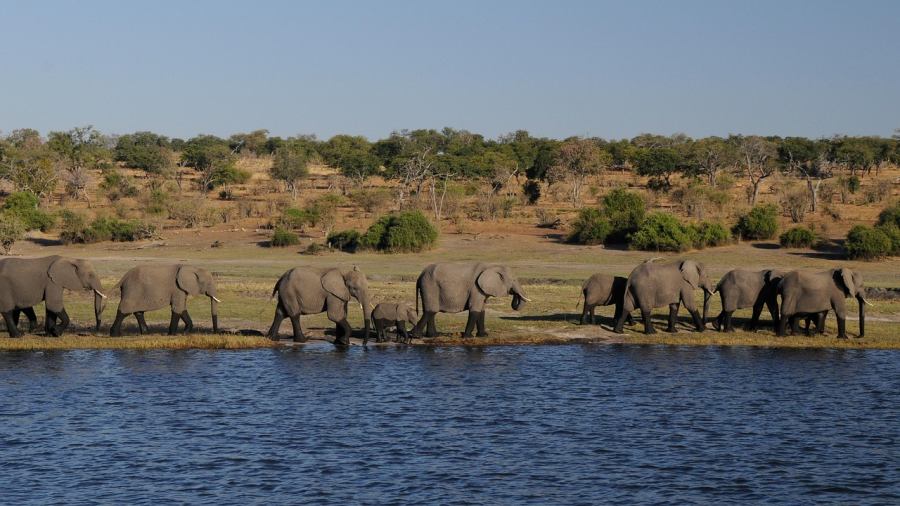
The park covers more than 10,000 square kilometers and encompasses four different ecosystems: the Chobe River floodplains, the Savuti marshes, the Linyanti swamplands, and the dry interior areas. The park is world-famous for its elephant herds – estimates suggest more than 50,000 elephants live here, one of Africa’s largest populations.
Wildlife is particularly spectacular along the Chobe River banks. During the dry season, animals are drawn to water, and from the river we can simultaneously see elephants, hippos, crocodiles, and countless antelope species. River safari is a unique experience when we can directly observe elephant herds bathing and playing in the water from boats.
The park’s birdlife is also exceptionally rich: more than 460 species live here, including the rare African fish eagle, for which this is one of the last refuges.
Savuti
A special area of Chobe National Park where a mysterious channel alternately floods and dries up in decade-long cycles, creating a unique habitat.
Scientists still don’t fully understand the Savuti Channel phenomenon. The channel dries up for long periods, then unexpectedly fills with water again. Water last returned in 2009 after being dry for nearly 30 years. This cyclical pattern creates a unique ecosystem where plant and animal life has adapted to alternating drought and water abundance.
It’s particularly famous for its lion population, which has learned to hunt elephants – an extremely rare phenomenon in the African savanna. Ancient rock paintings found in the area prove thousands of years of human presence.
During the dry season, wildlife concentrates around remaining water reservoirs, making it an excellent location for game viewing. The landscape itself is breathtaking: massive baobab trees, yellowish savanna grass, and bare hills rising in the distance.
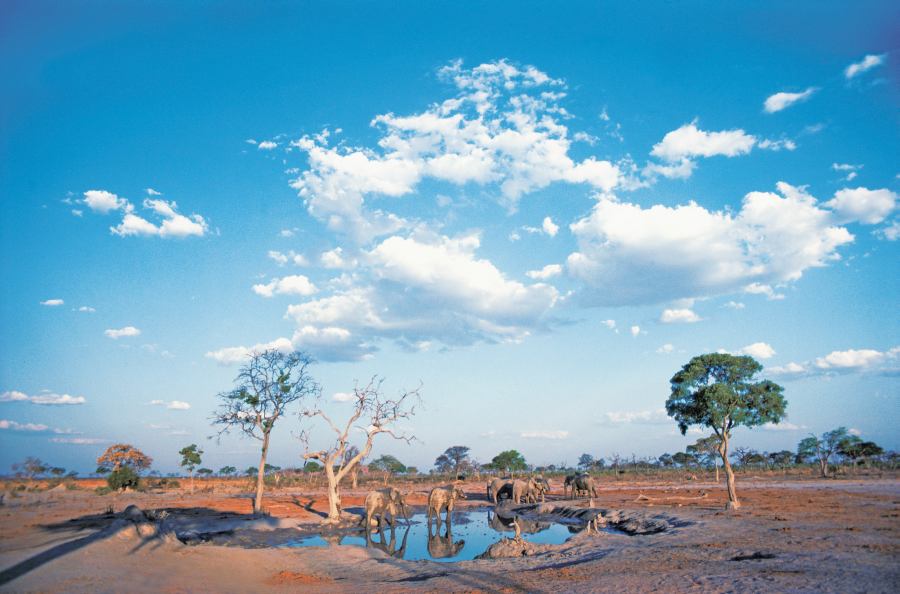
Makgadikgadi Salt Pans
One of the world’s largest salt areas, once a giant lake, now an endless white plain.
The Makgadikgadi salt pans cover more than 12,000 square kilometers and are divided into two main parts: Sua Pan and Ntwetwe Pan. The plain is so flat that due to Earth’s curvature, the horizon actually appears as a curved line. During the dry season, the salty soil forms cracked patterns, while during the rainy season, a thin layer of water covers it, reflecting the sky like a mirror.
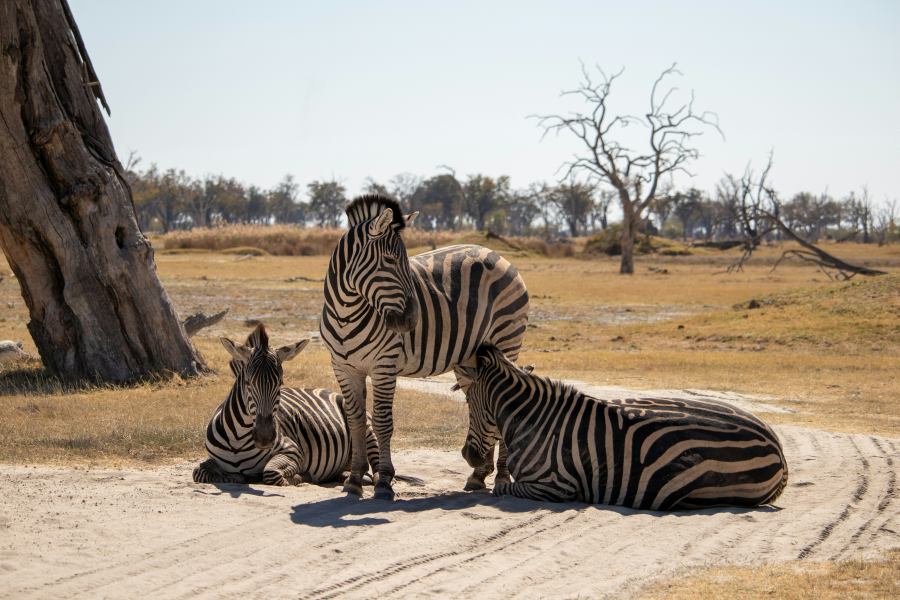
During the rainy season, the salt pans undergo amazing transformation: water attracts thousands of flamingos, zebra and wildebeest herds. This is the site of one of Africa’s largest zebra migrations, when tens of thousands of animals traverse the area.
The salt pans’ night sky is world-famous among astronomers. The complete absence of light pollution allows the clearest view of the Milky Way and southern hemisphere constellations. Many camps are organized specifically for astronomical observation.
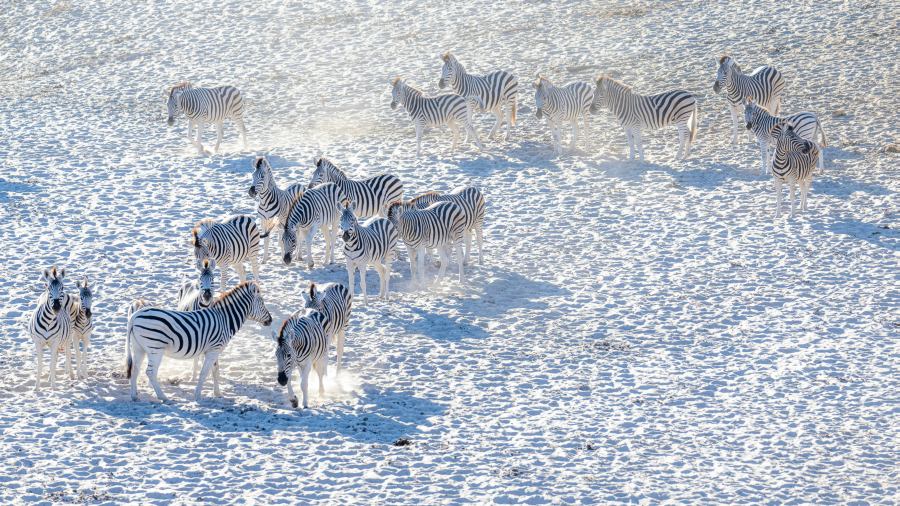
Kubu Island
An ancient granite island rising from the middle of the Makgadikgadi salt pans, crowned with thousand-year-old baobab trees, one of Africa’s most mystical locations.
Kubu Island isn’t actually an island in the traditional sense, but a 1-kilometer-long and half-kilometer-wide rock outcrop that once rose from the middle of a giant lake. In the middle of the dry salt desert, this bare rock and ancient baobab trees create a surreal sight.
The baobab trees on the island are estimated to be over a thousand years old. These giant trees served as shelter for travelers and local peoples for centuries. The island’s name means „hippopotamus”, referring to when it was once surrounded by water.
Nxai Pan National Park
The national park located in the northern part of the Makgadikgadi salt pans is famous for its giant baobab trees and the „Baines Baobabs”.
The park covers nearly 2,600 square kilometers and is a barren, salty plain during the dry season, but transforms into a vibrant ecosystem during the rainy season. The area is cut by numerous shallow depressions called „pans” which become water reservoirs during the rainy season.
Its main attraction is Baines Baobabs, a group of massive baobab trees immortalized in 1862 by painter-explorer Thomas Baines. The trees stand virtually unchanged after more than 150 years, allowing visitors to compare reality with the historical depiction.
During the rainy season, the park attracts rich birdlife, with thousands of flamingos and pelicans arriving. It lies in the path of migrating zebra and antelope herds, so larger herds are often visible. Night safaris provide opportunities to observe rarer nocturnal predators.
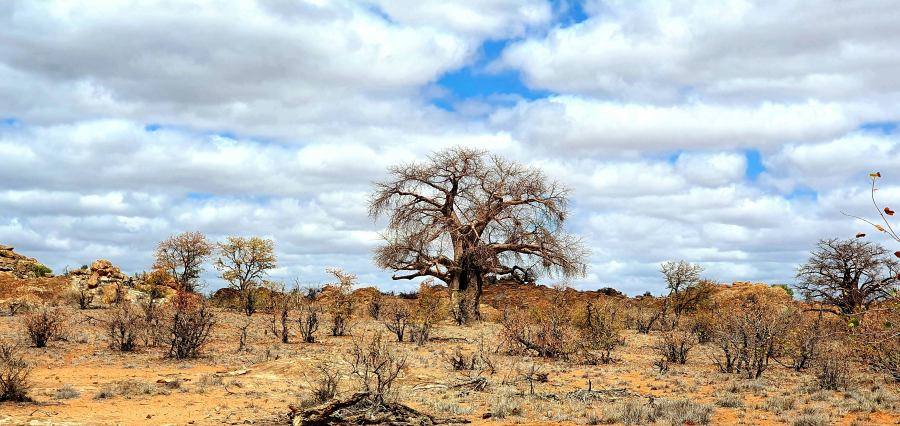
Gaborone
Botswana’s capital and largest city, which with its half-million inhabitants is a meeting point of modern Africa and traditional culture.
The city was founded in 1966 after independence and has since become one of southern Africa’s most dynamically developing capitals. The city lies in the Notwane River valley, surrounded by hills and savannas.
Gaborone’s cultural center is the National Museum and Art Gallery, which presents Botswana’s history from the Stone Age to present day, as well as works by contemporary African artists. The Three Dikgosi Monument in the city center is a memorial honoring three historical leaders who played a role in achieving the country’s independence.
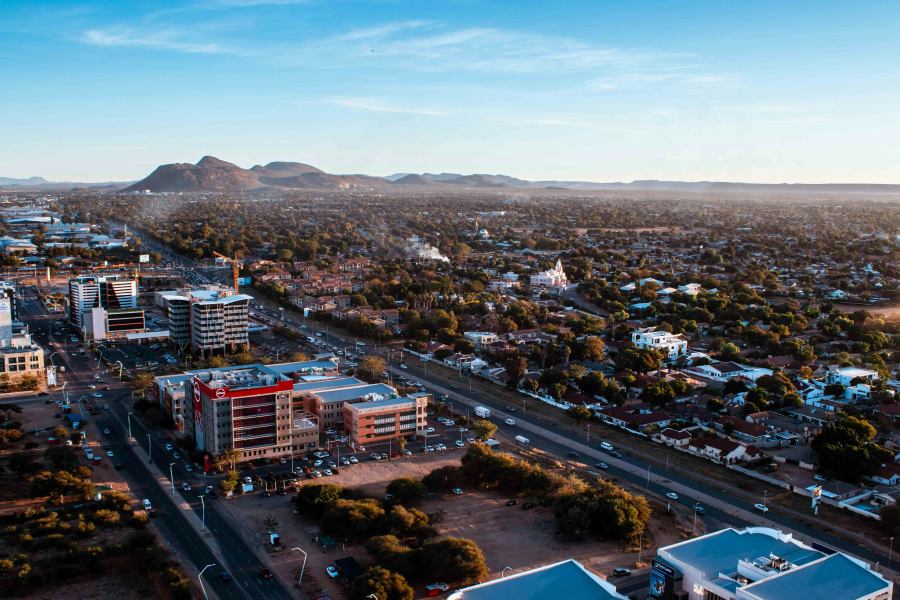
Kgalagadi Transfrontier Park
The enormous park stretching across the Botswana-South Africa border is located in the heart of the Kalahari Desert and showcases the wonders of desert adaptation.
The park’s total area exceeds 38,000 square kilometers, making it one of Africa’s largest conservation areas. The Botswanan side’s Gemsbok National Park has been protected since 1971. The park’s uniqueness lies in its desert ecosystem, where animals and plants have adapted over millions of years to extreme conditions.
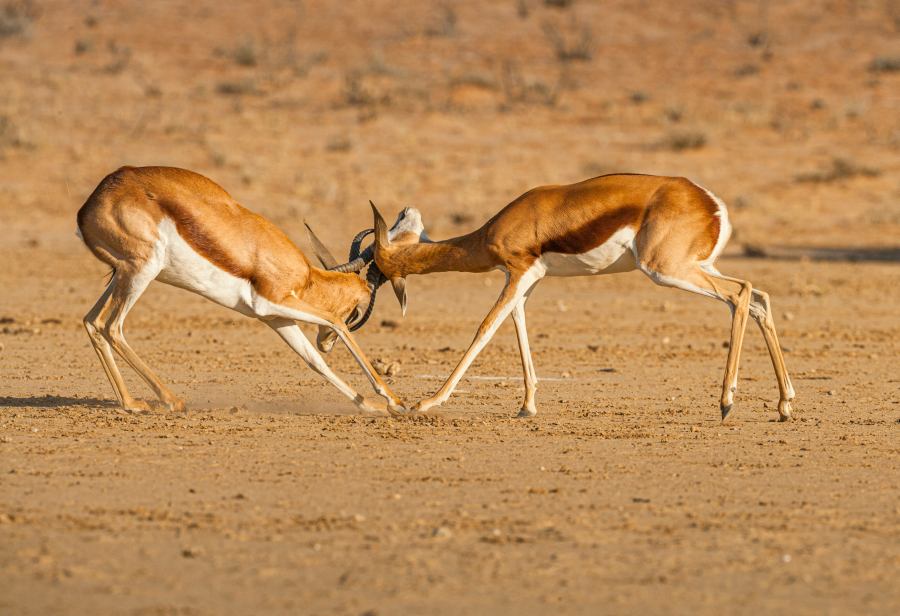
Its most characteristic animals are the gemsbok antelope, springbok, and the Kalahari lions, recognizable by their black manes. These lions cover larger territories than their counterparts elsewhere and have learned to adapt to water scarcity.
The desert landscape appears uniform but is actually varied: red sand dunes, dried river beds, and thorny bushes create the unique environment. The park’s nocturnal wildlife is particularly rich, when animals hiding from the daytime heat emerge.
Tsodilo Hills
Also called the „Louvre of the desert”, these four granite hills contain more than 4,500 ancient rock paintings, forming Africa’s richest prehistoric art collection.
The four hills – Male, Female, Child, and northern hill – rise from the Kalahari Desert plains. The highest, Male Hill, reaches 1,395 meters above sea level. The paintings span a period between 100 and 100,000 years, making them unique documents of human cultural development.
The rock paintings include animals – giraffes, elephants, rhinoceroses, lions -, human figures, and geometric patterns. These works are creations of the San people (Bushmen) and other ancient cultures. Local tradition holds that this is the site of creation, where the first human received animals and tools.
The hills were declared a UNESCO World Heritage Site in 2001. The area has not only archaeological but also spiritual significance for local communities, who still revere it as a sacred place. Visitors can view the paintings on guided tours.