New York is a city where almost everything feels familiar on a first visit, yet it is hard to decide what to fit into four days. That is why it pays to go neighborhood by neighborhood. This 4-day New York itinerary will help you do exactly that!
Table of Contents
Who is this itinerary for?
Four days are enough to experience New York’s most important highlights, but not to see everything. This itinerary is for first-time visitors who want to combine the big icons with walks, viewpoints and a good museum afternoon or two.
Each day is built around a clearly defined part of the city: the first covers Lower Manhattan (Statue of Liberty, 9/11 Memorial, Brooklyn Bridge), the second Midtown (Grand Central, Rockefeller Center, MoMA, Times Square), the third Central Park and the Metropolitan Museum, and the fourth the High Line, Greenwich Village and the Empire State Building.
Plan on 6–9 kilometers (about 4–5.5 miles) of walking a day, with the longer stretches shortened by subway. The pace is moderate, but the big sights (especially on Days 1 and 3) make for long days. If you move more slowly, skip the optional stops; if you want to see even more, you will find alternative programs at the end.
Note that the Metropolitan Museum is closed on Wednesdays and the 9/11 Museum is closed on Tuesdays (except for a few designated Tuesdays), so Day 1 of the itinerary should not fall on a Tuesday, nor Day 3 on a Wednesday! If the days of the week shift, the order of the days can be freely swapped.
Day 1: Lower Manhattan – the Statue of Liberty, the 9/11 Memorial and the Brooklyn Bridge
The first day covers the southern tip of the city, where New York’s story began. Most of the day goes to the Statue of Liberty and Ellis Island; then we head north on foot through Wall Street to the 9/11 Memorial, and finally cross the Brooklyn Bridge to arrive in time for sunset. It adds up to roughly 7–8 kilometers of walking, a significant part of it on the islands.
Morning (approx. 8:00–9:00): Battery Park and the ferry terminal
Take the 1 train to South Ferry, the 4/5 to Bowling Green, or the R/W to Whitehall St; from there it is a few minutes’ walk to Battery Park and Castle Clinton. Have breakfast near your accommodation beforehand: the typical New York breakfast is a bagel with cream cheese and a coffee, available on almost every corner.
Tickets for the ferries to the Statue of Liberty and Ellis Island are sold only by the official operator, Statue City Cruises. Do not buy anything from street vendors: the only official on-site ticket office is in Castle Clinton.
Late morning (approx. 9:00–13:30): the Statue of Liberty and Ellis Island
The first ferries leave around 9 a.m. The time on your ticket is not the ferry’s departure time but the time by which you must join the security line, which is similar to airport screening. In summer and at weekend peak times it can take more than an hour, so it is worth choosing the first ferry.
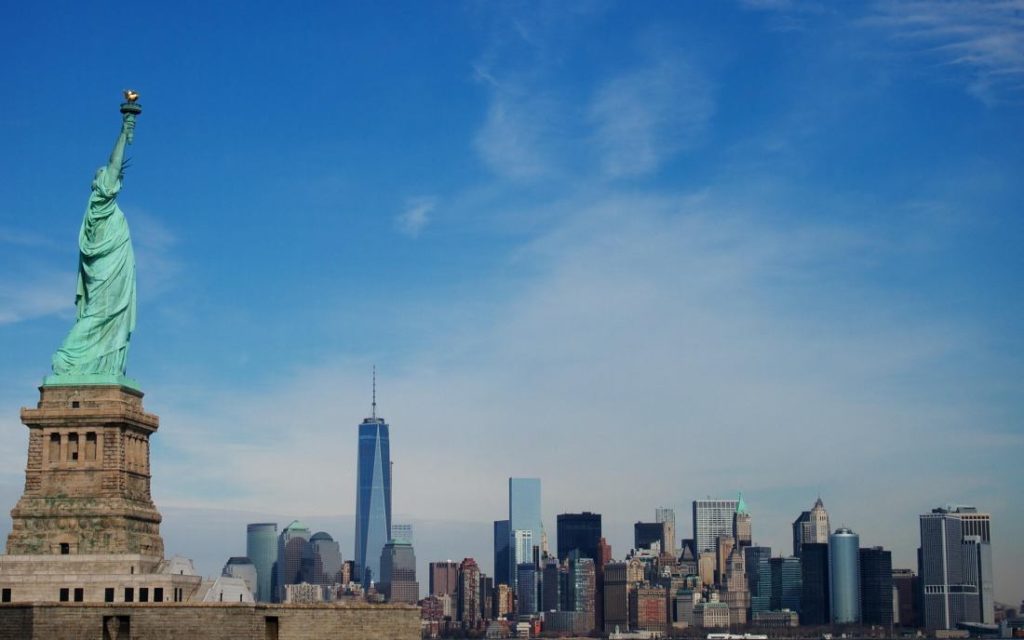
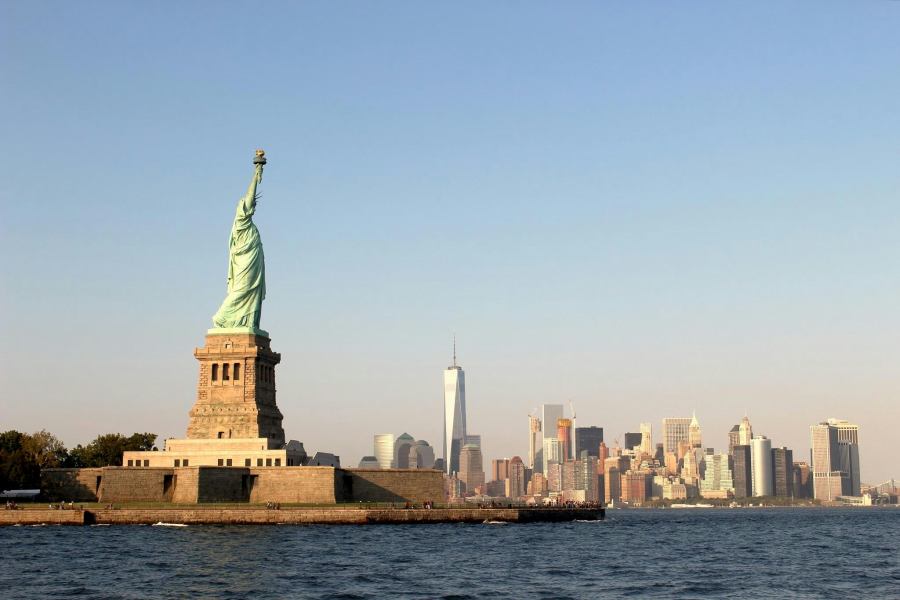
The Statue of Liberty, a gift from France that was dedicated in 1886, is a symbol you can see up close on Liberty Island. Ellis Island can be visited with the same ticket: the immigration museum shows how millions of people arrived in the United States. Allow about 4–5 hours for both islands, including waiting in line.
Ticket prices:
- Adult (over 13): $26
- Over 62: $23
- Ages 4–12: $17
- Free under age 4
Tickets for the pedestal and the crown are available in limited numbers, only online on the Statue City Cruises website, and must be reserved in advance. The climb to the crown is 162 steps, with no elevator. If these sell out, the general admission ticket still lets you visit the islands and the museums, but not the inside of the statue.
Booking and all information can be found here!
Lunch (approx. 13:30–14:30): Stone Street and the Financial District
From the ferry terminal, Stone Street is a 10–12 minute walk (about 800 meters). This cobbled pedestrian street is full of pubs and small restaurants, with tables spilling onto the street in summer. A hearty burger or hot dog suits a day with this kind of pace. In rainy weather, the Oculus shopping center next to the World Trade Center and the surrounding food halls offer covered options.
Afternoon (approx. 14:30–17:00): Wall Street and the 9/11 Memorial
From Stone Street, the Charging Bull (the “bull”) in Bowling Green park is about a 5-minute walk. From there, Wall Street is about a 10-minute walk: the facades of Trinity Church and the New York Stock Exchange are good for photos, but you cannot go inside the Exchange. From Wall Street, the 9/11 Memorial is a 10–12 minute walk (about 800 meters).
The Memorial consists of two huge pools set where the North and South Towers stood, with the names of the victims inscribed along their edges. The outdoor memorial (the plaza) is open daily from 8:00 a.m. to 8:00 p.m. and is free. Allow 30–45 minutes. The neighboring Oculus (a hall designed by Santiago Calatrava) takes just a few minutes more.
The 9/11 Museum is open Wednesday to Monday, 9:00 a.m.–7:00 p.m. (last entry 5:30 p.m.), and is closed on Tuesdays, except for a few designated Tuesdays; advance ticket purchase is required for entry. Plan 2–2.5 hours for the museum; if you add it to the day, shorten the Wall Street stop.
Museum ticket prices:
- Adult: $36
- Over 65: $30
- Ages 13–17: $30
- Ages 7–12: $24
- Free under age 6
Booking and all information can be found here!
Evening (approx. 17:00–21:00): the Brooklyn Bridge and DUMBO
From the Memorial to the Manhattan entrance of the Brooklyn Bridge (near the City Hall – Brooklyn Bridge station) is about a 20-minute walk (about 1.5 kilometers). The bridge opened in 1883, and the pedestrian walkway runs on the upper level. Walking across the bridge (about 1.8 kilometers, 30–45 minutes with stops) gives you the best views of the Lower Manhattan skyscrapers and the Manhattan Bridge. Watch out for cyclists next to the pedestrian lane: the two lanes are separated by a painted line.
At the Brooklyn end of the bridge you will find the DUMBO (Down Under the Manhattan Bridge Overpass) neighborhood and Brooklyn Bridge Park. At dusk, from the corner of Washington Street and Water Street, you can photograph the Empire State Building framed between the two piers of the Manhattan Bridge. For dinner, the area is famous for coal-oven pizza (for example Juliana’s and Grimaldi’s), but there can be long lines at this time; check their opening hours.
On the way back, take the A/C from High Street station or the F from York Street station to return to Manhattan (about 20–30 minutes to Midtown, depending on where you are staying). If you are tired, you can skip the bridge walk: you can also reach the Brooklyn Heights and DUMBO area by subway (for example the A/C or 2/3) and watch the evening fall from Brooklyn Bridge Park.
Day 2: Midtown – Grand Central, Rockefeller Center, MoMA and Times Square
The second day takes place in the heart of Manhattan. The sights line up along a north–south axis around Fifth Avenue, so you can walk almost the whole way and will barely need the subway. It is roughly 6–7 kilometers of walking in total.
Morning (approx. 8:00–10:00): Grand Central Terminal and the New York Public Library
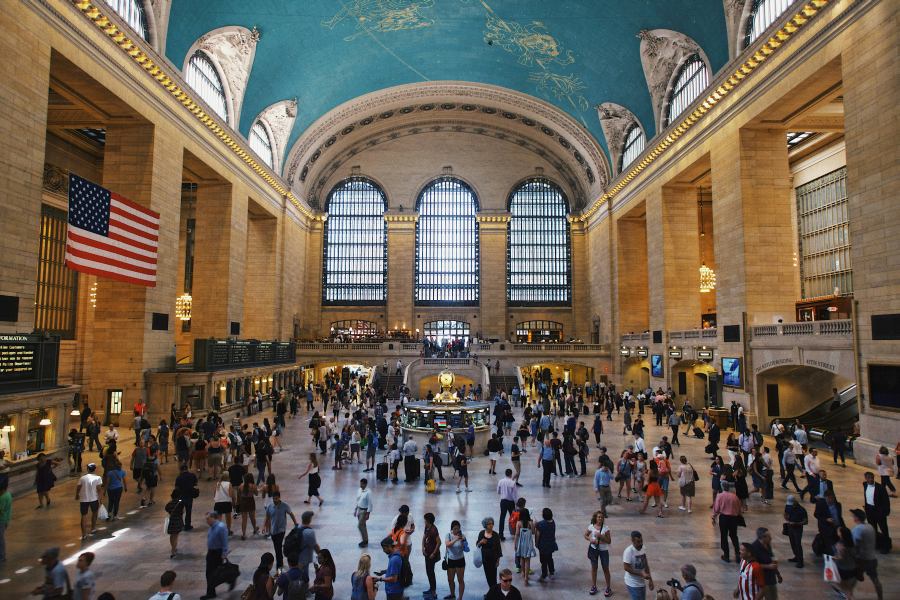
Take the 4, 5, 6, 7 or S subway to the Grand Central–42 St station. Grand Central Terminal opened in 1913 and is still a working railway station; it is worth stopping in for the constellation-decorated ceiling of the main concourse and the famous clock, and entry is free. For breakfast, head to the Dining Concourse on the lower level of the terminal (coffee, pastries, a light breakfast).
From Grand Central, the main building of the New York Public Library (the Stephen A. Schwarzman Building), at the corner of Fifth Avenue and 42nd Street, is about a 10-minute walk (about 700 meters). The marble building guarded by lions is free to visit, and the ceiling painting in the Rose Main Reading Room is especially beautiful. Check its opening hours (especially on weekends). Behind it, Bryant Park is the neighborhood’s green refuge, with an ice rink and a Christmas market in winter.
Late morning (approx. 10:00–12:30): Rockefeller Center and Top of the Rock
From the library, Rockefeller Center is about a 12–15 minute walk (about 1 kilometer) north along Fifth Avenue. On the way you will pass St. Patrick’s Cathedral, which stands opposite Rockefeller Center. This neo-Gothic cathedral is free to visit, and it is worth spending 10–15 minutes inside.
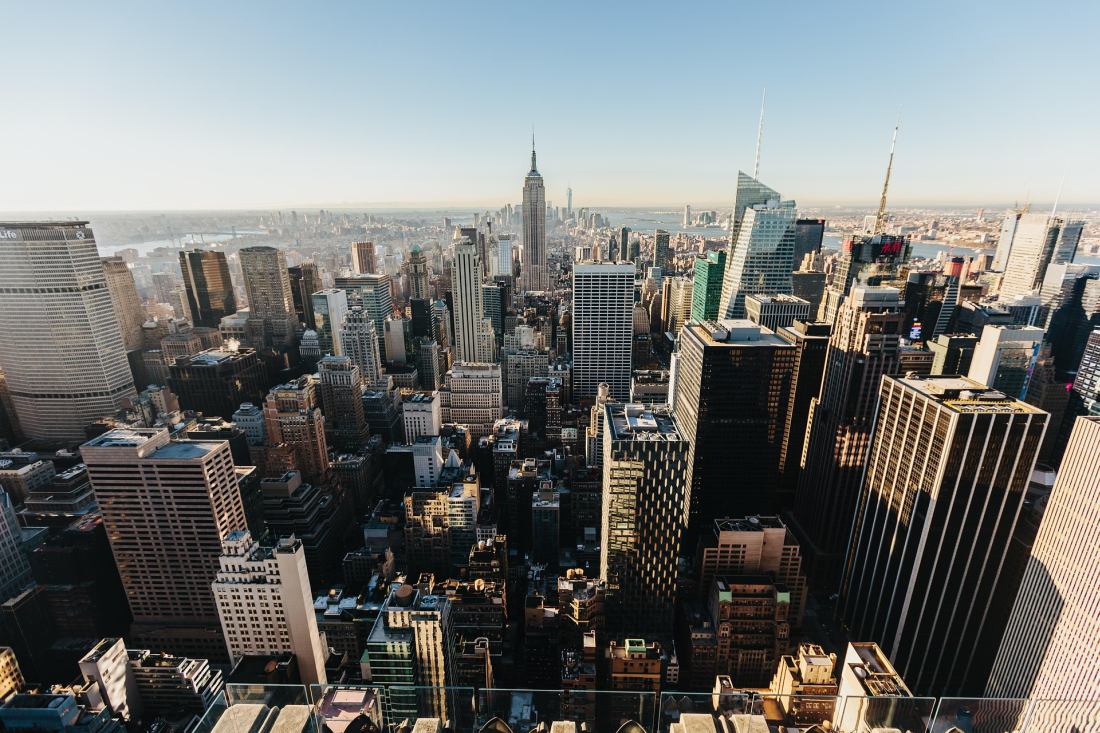
Top of the Rock is the observation deck at the top of Rockefeller Center. Its advantage is that the Empire State Building itself is part of the skyline view from here, which is why many people choose it as their first observation deck.
Tickets are offered for time slots every 10 minutes, and there is no time limit once you are up there. The slots that sell out first are those around sunset, while weekday morning slots are the quietest. Prices vary with demand, from $42 to $65.
After the observation deck, stroll through the Channel Gardens and the Lower Plaza, where the ice rink operates in winter. Allow about 1.5–2 hours for Rockefeller Center, including the observation deck.
Booking and all information can be found here!
Lunch (approx. 12:30–14:00): around Rockefeller Center
The underground concourse beneath Rockefeller Center and the surrounding side streets (49th–52nd Streets, between Fifth and Sixth Avenues) offer a quick, affordable lunch. Typical New York choices are a slice of pizza, a hot dog, a roast beef sandwich or a bagel sandwich. It is best to avoid the restaurants that cater specifically to tourists on Fifth Avenue and in front of Rockefeller Plaza; the side streets are better value.
Afternoon (approx. 14:00–17:00): MoMA
From St. Patrick’s Cathedral, MoMA (11 West 53rd Street) is about a 6–8 minute walk (about 450 meters). The Museum of Modern Art holds one of the most important collections of 20th- and 21st-century art: among other works, it is home to Van Gogh’s The Starry Night, Picasso’s Les Demoiselles d’Avignon and Warhol’s Campbell’s Soup Cans (the works on display may change). Allow 2–2.5 hours.
Opening hours: Monday to Thursday, plus Saturday and Sunday, 10:30 a.m.–5:30 p.m.; Friday 10:30 a.m.–8:30 p.m. The museum is closed on Thanksgiving Day and Christmas.
Ticket prices:
- Adult: $30
- Over 65: $22
- Students (with student ID): $17
- Free under age 16
Booking and all information can be found here!
Evening (approx. 17:00–21:00): Times Square and Broadway
From MoMA, Times Square is about a 15–20 minute walk (about 1.2 kilometers) toward 7th Avenue. Times Square is spectacular after dark, so this is the time to arrive for the neon signs. Allow an hour to an hour and a half. Beware of ticket sellers who approach you and of costumed characters who ask for money for photos.
If you want to see a Broadway show, buy your ticket in advance, at the theater’s official box office or through a reputable seller. There is also a TKTS booth in Times Square, which offers discounted tickets for same-day performances. Shows mostly start around 7:00–8:00 p.m., so plan dinner before or after.
For dinner, the Hell’s Kitchen neighborhood just west of Times Square (mainly along 9th Avenue) is a much better choice than the restaurants on the square itself: many cuisines at moderate prices. If you would like a quieter evening, skip the Broadway show and walk back to Bryant Park or Rockefeller Center, which are also atmospheric in the evening.
Day 3: Central Park and the Metropolitan Museum
The third day has a slower pace: you stroll in Central Park in the morning and spend the afternoon in one of the world’s largest museums. The park and the museum are next to each other, so the whole day can be done on foot, with about 5–6 kilometers of walking.
Remember: the Metropolitan Museum is closed on Wednesdays! Do not schedule this day for a Wednesday; if necessary, swap Day 3 and Day 4.
Morning (approx. 8:00–10:00): Columbus Circle and Strawberry Fields
Take the A/B/C/D or the 1 train to Columbus Circle (the southwest corner of Central Park). Have breakfast in the area or along Columbus Avenue; the bagel shops and cafés of the Upper West Side are local favorites.
From Columbus Circle, Strawberry Fields, with its round mosaic marked Imagine in memory of John Lennon, is about a 15–20 minute walk (about 1.2 kilometers) along Central Park West or through the park. The mosaic is at 72nd Street, near the west entrance.
Late morning (approx. 10:00–12:30): Bethesda Terrace, Bow Bridge and Belvedere Castle
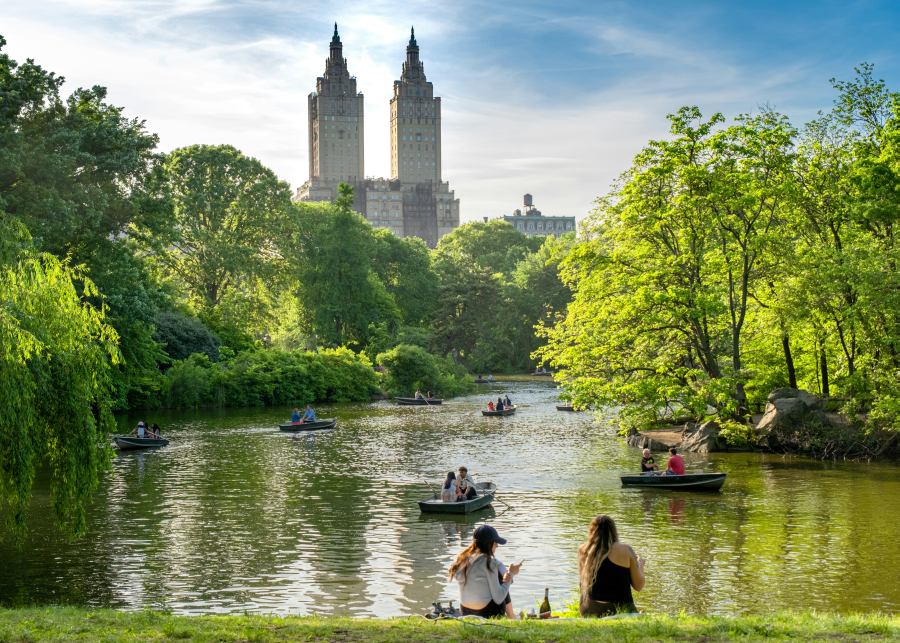
From Strawberry Fields, Bethesda Terrace is about a 10-minute walk (about 700 meters) along the Mall promenade. The terrace is one of the park’s most photogenic spots: the arcade beneath the arch, the fountain and the lake together make a classic Central Park picture. A few minutes from it is Bow Bridge, the curved cast-iron bridge, and then, further north, the viewpoint at Belvedere Castle (about 15 minutes) at the level of 79th Street.
Allow 2–2.5 hours for the park, with stops. Central Park is open daily; it is most beautiful from spring to autumn, but it is atmospheric in winter too, with snow. The lakes and the Bethesda Terrace area are crowded on weekends and quieter early on weekdays.
The park map and all information can be found here!
Lunch (approx. 12:30–13:30): the Met’s cafés or the Upper East Side
From Belvedere Castle, the Metropolitan Museum, at the corner of Fifth Avenue and 82nd Street, is about an 8–10 minute walk (about 600 meters). There are several restaurants and cafés in the museum, which saves time. If you would rather eat more freely, cross over from Fifth Avenue toward Madison Avenue: there are many more places, and calmer ones, than in front of the museum.
Afternoon (approx. 13:30–17:00): the Metropolitan Museum
The Met is among the largest museums in the world, with a collection spanning thousands of years. On a first visit, do not try to see all of it: choose 3–4 sections. Good first choices are the Temple of Dendur (an ancient Egyptian temple in a glass-walled hall), the rooms of European paintings, the arms and armor collection and the American Wing. Allow 3 hours.
Opening hours: Sunday, Monday, Tuesday and Thursday 10:00 a.m.–5:00 p.m., Friday and Saturday 10:00 a.m.–9:00 p.m. Closed on Wednesdays. It is also closed on Thanksgiving Day, December 25, January 1 and the first Monday in May.
Ticket prices:
- Adult: $30
- Over 65: $22
- Students (with student ID): $17
- Free under age 12
Buying tickets online in advance is not mandatory but is possible: a ticket is valid for both Met buildings on the day.
Booking and all information can be found here!
Evening (approx. 17:00–21:00): Museum Mile and the Upper East Side
If you are here on a Friday or Saturday, the Met is open until 9 p.m., so you can move more slowly through the museum and even return after dinner. On other days the museum closes at 5 p.m. From the Met, the Guggenheim Museum (Frank Lloyd Wright’s famous spiral building) is about an 8–10 minute walk (about 600 meters) north along Museum Mile. You do not necessarily need to go in, as the building is spectacular from the outside too.
For dinner, the smaller restaurants of the Upper East Side (Madison Avenue, Lexington Avenue) are worth trying. To get back to your accommodation, you can take the 4/5/6 subway at 86th Street and Lexington Avenue (about a 12–15 minute walk from the Met, or a short bus ride); the train takes about 10–15 minutes to Grand Central–42 St. If you want one more evening experience, Columbus Circle and Lincoln Center are also beautiful when lit up, but this requires a crosstown bus (for example the M79) or a subway transfer.
Day 4: The High Line, Chelsea, Greenwich Village and the Empire State Building
The fourth day starts along the Hudson and shows the city’s cozier, “small-town” neighborhoods: the elevated High Line park, Chelsea Market and the streets of the West Village. The Empire State Building at sunset is the high point of the day. It is about 7–8 kilometers of walking in total, but almost entirely on flat ground.
Morning (approx. 8:00–10:00): Hudson Yards and the start of the High Line
Take the 7 train to 34 St–Hudson Yards (the end of the line). Have breakfast in the Hudson Yards district or at the cafés along the High Line. The High Line is an elevated park built on a former railway track; its park-level access is at 30th Street, at Hudson Yards.
The High Line is open from April 1 to November 30 from 7:00 a.m. to 10:00 p.m., and from December 1 to March 31 from 7:00 a.m. to 8:00 p.m. Admission is free.
Opening hours and all information can be found here!
Late morning (approx. 10:00–12:30): walking the High Line toward Chelsea
From Hudson Yards to the southern end of the High Line (Gansevoort Street) is about 2.3 kilometers, which is a 1–1.5 hour walk with stops. The park passes above the Chelsea and Meatpacking District neighborhoods, with street art along the way and viewpoints over the Hudson River and the surrounding buildings.
Near the southern end is the Whitney Museum of American Art (Gansevoort Street); you can drop in if you like, but check the opening hours and ticket prices in advance, as it is not part of the basic route.
Lunch (approx. 12:30–14:00): Chelsea Market
The High Line passes above Chelsea Market, and you can go down through the exits at 14th–16th Streets (the market is along 9th Avenue and 15th–16th Streets). Chelsea Market is a covered food market and food hall in a former Nabisco cookie factory building: you can choose among tacos, seafood, baked goods and pastries. It is a good option if it rains, and the lines move quickly. It is crowded on weekends and at lunchtime; check its opening hours.
Afternoon (approx. 14:00–17:00): Little Island, the West Village and Washington Square
From Chelsea Market, Little Island (an artificial park island in Hudson River Park at 13th Street) is about a 10–12 minute walk (about 800 meters) west. The island is free and offers beautiful views over the Hudson; check the official website for opening hours. From there you walk east through the streets of the West Village: the smaller, tree-lined streets of Christopher Street, Bleecker Street and Bedford Street, with their brownstone rowhouses, give the “classic” New York atmosphere. Allow about 1–1.5 hours, of which leave at least half an hour for a coffee.
From the West Village, Washington Square Park is about a 15–20 minute walk (about 1.3 kilometers). The park is home to the famous marble arch, surrounded by street musicians and chess players. If you still have energy, the cast-iron-facade streets of SoHo are a 10–15 minute walk from the square, but you can safely skip this stretch.
Evening (approx. 17:00–21:00): the Empire State Building and dinner in Koreatown
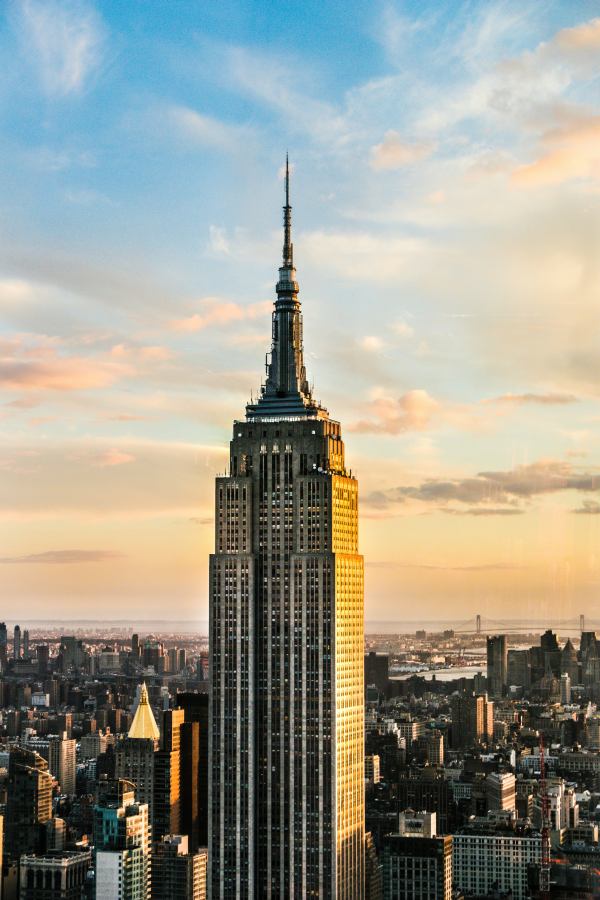
From Washington Square Park toward the Empire State Building, take the B/D/F/M subway from W 4 St to 34 St–Herald Square (about 10 minutes on the train, about 20–25 minutes for the whole trip), then it is about a 5-minute walk (about 400 meters) to the building. The Empire State Building (20 West 34th Street) is the city’s best-known Art Deco skyscraper; the observation deck on the 86th floor offers a 360-degree panorama.
According to the official website, the observation deck is open every day of the year from 9:00 a.m. to 10:00 p.m.
Tickets are offered for time slots every 15 minutes, and there is no time limit once you are up there. Prices vary with demand, from $46 to $60. An Express Pass for faster entry is also available.
Booking and all information can be found here!
For dinner, the dense row of restaurants and cafés in nearby Koreatown (32nd Street between Fifth Avenue and Broadway) is an excellent choice: Korean barbecue, kimchi, bibimbap. If you would like a quieter evening, the evening lights of Bryant Park and Grand Central Terminal are a 15–20 minute walk away.
Practical tips
Tickets and passes for transport
- Single fare (from 2026): a single subway or bus ride costs $3. According to press reports, MetroCard sales ended at the end of 2025, and payment is made through the OMNY system: you tap a bank card or phone at the turnstiles, with no need to buy a separate ticket.
- Weekly cap: with OMNY, a single card or device is charged at most $35 for subway and bus rides in any seven-day period (on a rolling basis); after that, further rides are free. Each traveler needs their own card or phone.
- Staten Island Ferry: a free ferry between Whitehall Terminal and St. George, about 25 minutes, generally every half hour (more often at peak times). On the way you can see the Statue of Liberty and the Lower Manhattan skyline.
Fares and all information can be found here!
City attraction passes: are they worth it?
Several combination passes are available in New York (for example CityPASS). This itinerary includes three paid observation decks and a ferry (the Statue of Liberty, Top of the Rock, the Empire State Building), in addition to admission to the Met, MoMA and the 9/11 Museum. Work out with current prices whether a pass is worth it for your combination: not every pass includes the places in the itinerary, and even with a pass you often have to reserve a time slot.
Clothing and gear
Plan on 6–9 kilometers a day, so comfortable, broken-in shoes are the most important item. Temperatures depend strongly on the season: in winter it is windy and cold at the observation decks and on the bridges, while in summer humid heat is the issue. Dressing in layers works well, because the subway and the museums are air-conditioned or heated. Bring as little luggage as possible for the Statue of Liberty and the airport-style security checks; a large backpack or a suitcase is not a good idea.
Local customs and tourist traps
- It is customary to leave a tip in restaurants (usually 18–20%), and sales tax is added to the listed prices.
- Because of pickpockets in Times Square and on the subway, keep your bag with you. In Times Square, costumed characters ask for money for photos, and street ticket sellers often offer overpriced or fake tickets.
- For the Statue of Liberty, buy tickets only from the official operator, not from street vendors.
- On the Brooklyn Bridge, the pedestrian lane and the bike lane run side by side, so pay attention to the painted line.
- Restaurant prices around Times Square and Rockefeller Center include a location premium; the side streets are better value.
Alternatives for bad weather
In rainy or very cold weather, outdoor programs (Central Park, the High Line, the Brooklyn Bridge, the observation decks) are less enjoyable. Of these, the following are covered or partly covered alternatives that do not require a disproportionate detour.
- 9/11 Museum (Day 1): a 2–2.5 hour indoor program instead of the Brooklyn Bridge and the DUMBO walk. Open Wednesday to Monday 9:00 a.m.–7:00 p.m. (last entry 5:30 p.m.), closed on Tuesdays; tickets must be bought in advance.
- New York Public Library and Grand Central (Day 2): instead of, or in addition to, the outdoor stretch of Bryant Park and Rockefeller Center; both are free and indoors.
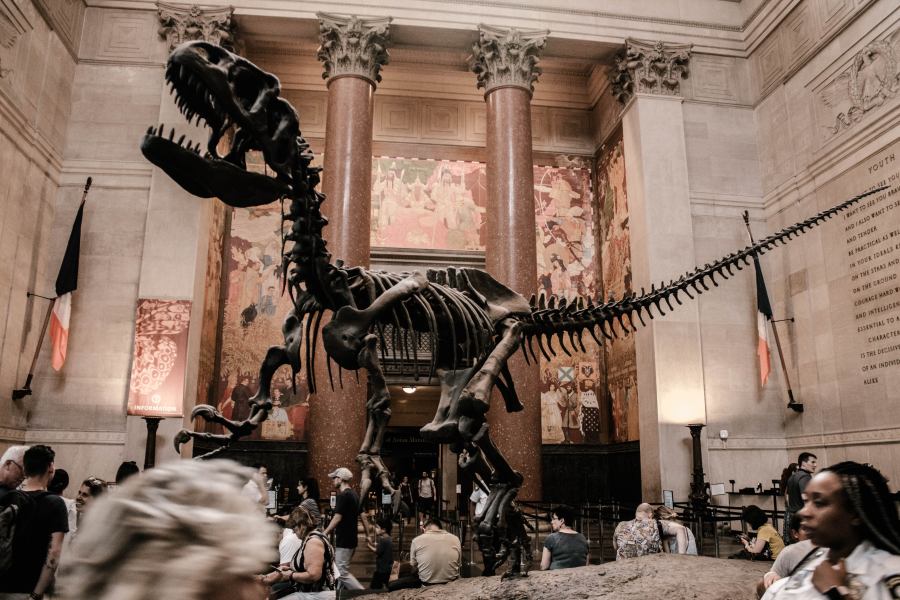
- American Museum of Natural History (Day 3): instead of the morning walk in Central Park, on the west side of the park at 79th Street. Check the opening hours and ticket prices on the official website.
- Chelsea Market and the Whitney Museum (Day 4): instead of the outdoor High Line walk: Chelsea Market is covered, and the Whitney is at the southern end of the High Line. Check the Whitney’s opening hours and ticket price.
- Staten Island Ferry (Day 1): if you could not get a ticket for the Statue of Liberty, the free ferry crosses the harbor in about 25 minutes, and you can see the statue on the way.
Summary
The four-day itinerary is built on four parts of the city: Lower Manhattan, Midtown, Central Park and the Metropolitan Museum, and the High Line–Greenwich Village–Empire State Building axis. With two or three main sights a day, a sensible amount of walking and realistic lunch breaks, you will have time for New York’s icons as well as the atmosphere of its characteristic streets and neighborhoods.