
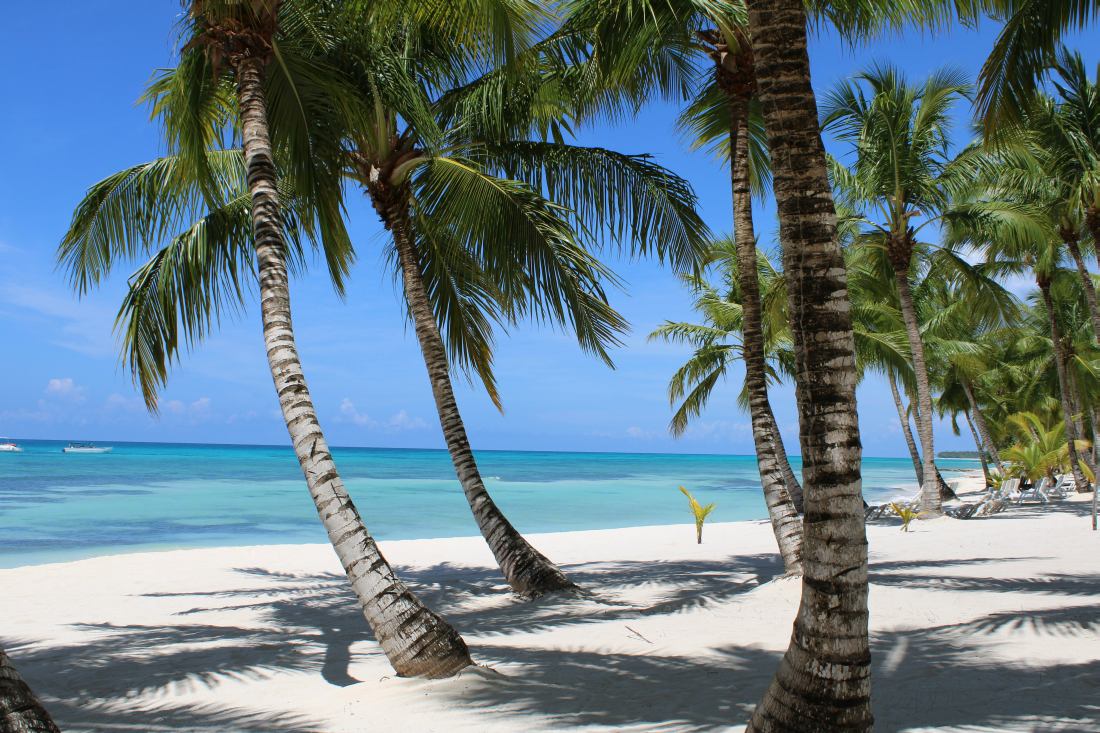
Punta Cana is the most popular beach resort area in the Dominican Republic, where snow-white sandy beaches, palm trees and all-inclusive hotels await travelers. The questions and answers below will help you navigate the most important things to know, whether it’s about safety, transportation or the best time to travel.
Table of Contents
Basic information
Why is it worth traveling to Punta Cana?
Punta Cana is famous above all for its beautiful, white sandy beaches and crystal-clear, turquoise sea, which make it one of the most beautiful resort areas in the Caribbean.
Five-star, all-inclusive hotels line almost the entire coastline, so visitors can look forward to a calm, comfortable stay, whether traveling as couples, families or honeymooners. Besides relaxing on the beach, numerous water sports, excursions and amusement parks are also available nearby, and the region enjoys a pleasantly warm, tropical climate year-round.
What time zone is Punta Cana in?
Punta Cana is located in the Eastern American time zone (Atlantic Standard Time, UTC-4) and does not observe daylight saving time.
When is the best time to travel to Punta Cana?
You can travel to Punta Cana all year round, since the temperature stays pleasantly high throughout the year, typically around 27-32°C, but the dry season between December and April is considered the most ideal period. At this time there is less rainfall, lower humidity, and no risk of hurricanes, so time on the beach and excursions can be enjoyed without disruption.
The rainy season lasts roughly from May to mid-November, when short, heavy showers are more frequent, typically in the afternoon. The hurricane season runs from June to November, so it’s worth keeping an eye on weather forecasts during this period.
How many days is it worth spending in Punta Cana?
For Punta Cana, it’s generally worth allowing at least 7 days, since given the long flight, a shorter trip of just a few days wouldn’t really be worthwhile.
7-10 days comfortably allows for one or two organized excursions in addition to beach relaxation, for example to Saona Island or Scape Park. Anyone who wants to explore other parts of the island beyond relaxing should plan for 10-14 days in order to also reach Santo Domingo or other Caribbean regions.
What is the official currency in Punta Cana?
The official currency of the Dominican Republic is the Dominican peso (DOP).
Dominican pesos cannot be exchanged in Hungary; this can only be done on site, at an official currency exchange location (bank, hotel, official exchange office). The US dollar is accepted in many places, and the major credit cards (VISA, Mastercard) can also be used in larger tourist centers and hotels.
Here is a currency converter calculator where you can check the current exchange rate!
Is English spoken in Punta Cana?
Yes, in the tourist areas, including Punta Cana, most hotel and restaurant staff speak English.
The official language, however, is Spanish, so outside hotels and tourist centers, in local restaurants or markets, you may find that only Spanish will get you by. A few basic Spanish words (hola – hello, gracias – thank you, por favor – please, cuánto cuesta – how much does it cost?) can definitely come in handy.
What type of power outlet is used in Punta Cana?
The Dominican Republic uses type A and B outlets, which are the same as those commonly used in the United States.
Most Hungarian plug devices therefore require a travel adapter. Renovated, more modern hotels increasingly have USB outlets as well, but it’s safer to bring an adapter from home or buy one locally.
What is the mains voltage?
In Punta Cana the mains voltage is 110 Volts, while in Europe the standard is 230 Volts.
Most modern electronic devices, such as phone chargers and laptops, automatically support voltages between 100-240 V, so these can be used without any problem with an adapter. For higher-power devices, such as hair dryers, it’s better to use the hotel’s own equipment.
How does internet and SIM card use work in Punta Cana?
Free Wi-Fi is available in most hotels, although signal quality can vary depending on the room and part of the building.
If you need stable mobile internet for your entire stay, it’s worth buying a local SIM card or eSIM, which in many cases can already be purchased and activated online before your trip, so mobile data is available immediately upon arrival.
Is it customary to tip in Punta Cana?
Yes, tipping is common and expected in Punta Cana, even at all-inclusive hotels.
In restaurants it’s customary to leave about 10% of the bill as a tip if the service charge isn’t already included in the price. At all-inclusive hotels it’s also polite to give a small tip to waitstaff, housekeeping or porters, typically around 1-5 dollars per occasion.
Travel and transportation
How do I get from the airport to my hotel?
Punta Cana International Airport (PUJ) is only a 15-30 minute drive from most hotels in Bávaro, Cap Cana or Uvero Alto.
The most common solution is a transfer organized by the hotel or travel agency, which is worth booking in advance from home. Official taxi service is also available at the airport, and a few ride-sharing services operate as well. Local authorities specifically recommend using only official transfers or taxis, since thefts targeting tourists have occurred on the route from the airport to the hotels.
What is the most convenient way to get around in Punta Cana?
Punta Cana’s hotels and attractions are located relatively far apart from each other, along a long stretch of coastline, so most tourists use organized excursions, official taxis or the hotels’ own shuttle buses.
Local public transportation (buses, motorcycle taxis) doesn’t meet European standards, and the risk of accidents with local transportation is also higher, so it isn’t recommended for tourists to use it independently. For excursions, restaurants or neighboring resort areas, the simplest option is an official, pre-arranged taxi or an organized transfer.
Accommodation and safety
Is Punta Cana a safe destination?
According to the classification of the Hungarian Consular Service, the Dominican Republic falls into the safe category, and in Punta Cana’s tourist zone there is an increased police presence, with a police force called Politur that specifically assists tourists.
The most common problem is property crime, such as pickpocketing, so it’s worth leaving your passport and more valuable items in the hotel room or safe, and carrying only as much cash as needed for a given activity. Without a guide, it’s best to avoid isolated, less-visited beaches and areas.
Which area is best to stay in Punta Cana?
The name Punta Cana is actually used to collectively refer to several resort areas close to each other, the most popular of which are Bávaro, Cap Cana, Uvero Alto and Punta Cana’s central area itself.
- Bávaro – the busiest and most popular resort area, with plenty of hotels, restaurants and lively nightlife
- Cap Cana – an elegant, exclusive luxury zone with its own marina and golf courses, primarily for more discerning travelers
- Uvero Alto – a calmer, less crowded stretch of coast, typically with larger, quieter all-inclusive hotels
- Punta Cana’s central area – an easily accessible area close to the airport, with numerous well-known hotel chains
Bávaro is the ideal choice for most tourists, since it offers the easiest access to the main attractions and restaurants, while Uvero Alto or Cap Cana is recommended for travelers seeking peace and quiet and smaller crowds.
Health information
Are vaccinations required to travel to Punta Cana?
There is no mandatory vaccination required for most tourists traveling to the Dominican Republic.
However, the National Public Health Center recommends having vaccinations against hepatitis A and B, typhoid, and diphtheria-tetanus, especially for longer stays or travel outside the tourist zone. Before traveling, it’s worth visiting a vaccination center or your family doctor for accurate, up-to-date recommendations.
Is tap water safe to drink in Punta Cana?
Drinking tap water is not recommended in Punta Cana; locals and hotels alike use bottled or filtered water for drinking.
In most all-inclusive hotels, drinking water and ice are safe to consume, since they use treated water for these purposes, but outside the hotel, from street vendors, it’s always best to choose bottled water. Most tourists can use tap water for brushing their teeth without any problem, though those with more sensitive stomachs may prefer to use bottled water for this too.
Experiences
What are the must-see attractions in Punta Cana?
Punta Cana’s best-known experiences include Saona Island, Scape Park with its Hoyo Azul lagoon, Bávaro Beach, and the Indigenous Eyes ecological park.
- Saona Island is one of the region’s most popular full-day excursions, reachable by catamaran or speedboat. The protected area is rightly famous for its pristine white sandy beaches, palm trees and shallow, turquoise water, and dolphins and sea turtles often appear during the boat trip.
- Scape Park is an adventure park located in Cap Cana, whose main attraction is Hoyo Azul, a stunning turquoise cenote enclosed by rocks, which can be reached after a short hike through the jungle and across suspension bridges. The park also offers zipline tours, caves and waterfalls as part of a full-day program.
- Bávaro Beach is the region’s longest and most popular beach, where water sports, snorkeling and watching the sunset are all popular activities. The Indigenous Eyes ecological park showcases the calmer side of the jungle with its crystal-clear natural lagoons and walking trails.
What are the most popular foods and drinks in Punta Cana?
The best-known dishes of Dominican cuisine include mangú, sancocho and tostones, while rum and mamajuana are the most popular drinks.
- Mangú is made from boiled, mashed plantains and is typically eaten for breakfast with fried onions, cheese and eggs.
- Sancocho is a hearty traditional soup containing several kinds of meat and vegetables, which is also often served on festive occasions.
- Tostones are twice-fried, crispy plantain slices available as a side dish in almost every restaurant.
- Among the drinks, Dominican rum is recognized worldwide, and all-inclusive hotels typically offer it in unlimited quantities, in cocktails or on its own.
- Mamajuana is a traditional drink made from tree bark, herbs, rum, wine and honey, which many consider to be an aphrodisiac.
What important holidays and festivals take place in Punta Cana?
Among the most important holidays in the Dominican Republic are the February carnival, Independence Day in March, and the October Creole music festival.
The Dominican carnival takes place throughout February, with colorful parades, costumes and street music, and the biggest, national celebration is held on the last Sunday of the month. Independence Day is celebrated on February 27, when a military parade and large-scale street celebrations are held in Santo Domingo.
In the Punta Cana region, hotels and restaurants also frequently hold their own live music, merengue and bachata dance evenings, bringing tourists closer to the atmosphere of local culture.