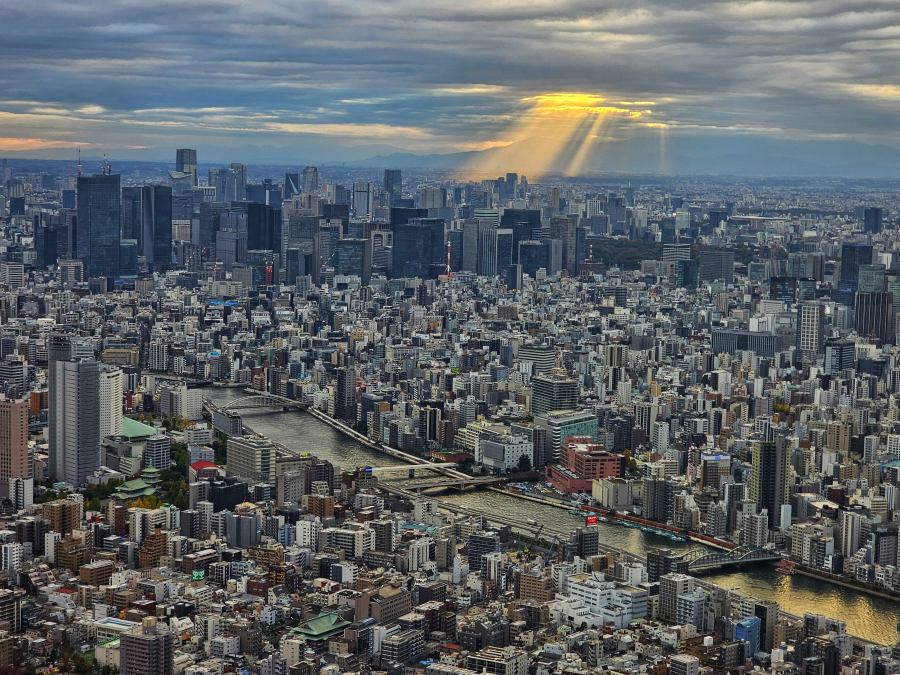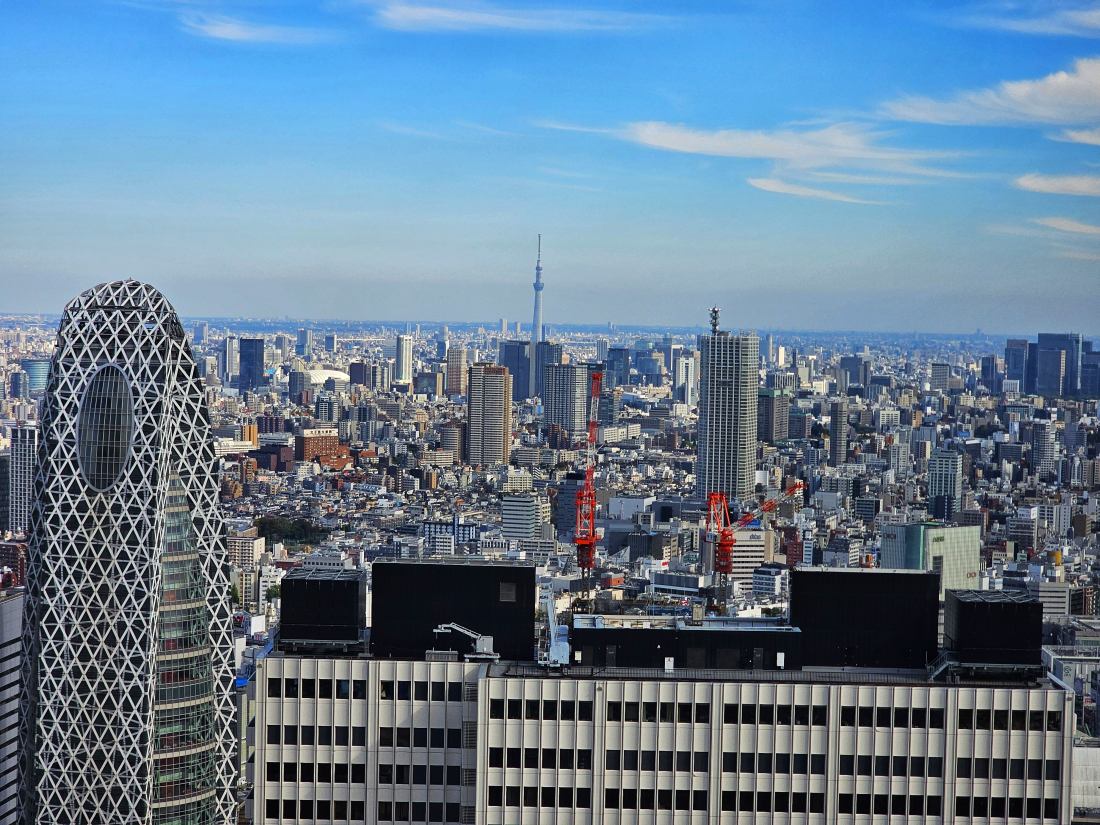
Tokyo is one of the most exciting cities in the world, where traditional Japanese culture and ultra-modern technology meet in perfect harmony. The following questions and answers will help you navigate the most important things to know, whether it’s about safety, transportation, or the best time to visit.
Table of Contents
Basic information
What time zone is Tokyo in?
Tokyo is in the Japan Standard Time zone (JST, UTC+9). Japan does not observe Daylight Saving Time (DST). The time in Tokyo remains constant throughout the year at UTC+9.
When is the best time to visit Tokyo?
The spring (March–May) and autumn (September–November) seasons are generally considered the best times to visit Tokyo. In spring, the cherry blossoms, and in autumn, the fiery red foliage make the city especially special.
The spring season, especially from late March to mid-April, is the time of the world-famous sakura, or cherry blossoms. This is one of the most popular periods, so it is worth booking accommodation and flights in advance. Daytime temperatures range around 10–18 °C, which makes for pleasant sightseeing.
The autumn season lasts from September to November. Temperatures gradually drop, and the trees turn beautiful shades of yellow and red. This period is also great for sightseeing and is less crowded than the spring season.
Summer (June–August) is hot and humid, with temperatures sometimes exceeding 35 °C. June marks the tsuyu, or rainy season, which brings heavy rainfall. Winter(December–February) is cold but generally dry; snow is rare, and the city sparkles with festive decorations during the Christmas season.
How many days should you spend in Tokyo?
At least 5–7 days are generally recommended to explore Tokyo. Given the city’s vast size and the wealth of things to see, less time will only scratch the surface.
In 5 days the most popular neighbourhoods – Shibuya, Shinjuku, Asakusa, Harajuku and Akihabara – can each be explored in a day. The most important temples, shrines and viewpoints can also be visited in this time.
7 days or more allows for half-day excursions, for example to the nearby towns of Nikko or Kamakura, or to the Mount Fuji area. With a longer stay, individual neighbourhoods can be explored in greater depth, and there is more time for local experiences – market visits, gastronomic discoveries.
What is the official currency in Tokyo?
The official currency of Tokyo and all of Japan is the Japanese yen (JPY), which is used throughout the country.
Japan remains a strongly cash-based country, so it is advisable to always carry enough cash. Credit cards are accepted at larger hotels, department stores and restaurants, but many smaller restaurants, shops and transport ticket offices accept cash only. ATMs are available at the airport and throughout the city; the most reliable are 7-Eleven and Japan Post ATMs, as these are guaranteed to accept foreign cards.
Here is a currency converter calculator where you can check the current exchange rate!
Do people speak English in Tokyo?
In tourist-frequented places in Tokyo – hotels, larger restaurants, museums and transport hubs – basic communication in English is generally possible. However, Japan is one of those developed countries where English proficiency is relatively low among the general population.
In smaller restaurants, markets and local shops, English communication is not always possible. In these situations, a translation app (e.g. Google Translate, which can also translate Japanese characters from a photo) or knowledge of a few basic Japanese phrases can be very helpful: konnichiwa – good day; arigatou gozaimasu – thank you; sumimasen – excuse me.
What type of power socket is used in Tokyo?
Japan uses Type A sockets (with two flat parallel pins), which differ from the European plugs common in Europe. Therefore, a travel adapter will be needed for most European devices.
The voltage in Japan is 100 Volts, which is lower than the 230 Volts used in Europe. However, most modern chargers and laptops are universal (100–240 V), so these will work fine with an adapter. For hair dryers and other high-power devices, it is worth checking the voltage tolerance in advance and bringing a voltage converter if necessary.
How common are earthquakes in Japan, and how worried should you be?
Japan is located in one of the world’s most active seismic zones, so minor tremors occur almost daily, but more serious earthquakes are rarer.
The country is part of the Pacific Ring of Fire, where several tectonic plates meet, making seismic activity a natural phenomenon. Nevertheless, Japan is exceptionally well-prepared: the majority of buildings are constructed with earthquake-resistant technology, and the authorities issue warnings even for minor tremors.
How does internet and SIM card usage work in Tokyo?
Tokyo has excellent internet coverage, and free Wi-Fi is available almost everywhere – in hotels, cafés, shopping centres, and even at many metro stations. For continuous mobile internet, it is worth renting a pocket Wi-Fi router or purchasing a local SIM card or eSIM.
A pocket Wi-Fi is a small portable device that can be used by multiple people simultaneously, and can be rented or collected at the airport. As an alternative, more and more people are choosing eSIMs, which can be purchased and activated at home, so mobile internet is immediately available upon arrival at the airport.
Is it customary to tip in Tokyo?
No, tipping is generally not customary in Japan, and in many cases it can even be considered rude. This is one of those Japanese cultural customs that surprises foreign tourists arriving in Japan the most.
In Japan, the prevailing view is that workers do their job to the best of their ability, and their salary is the compensation – no extra reward is needed. If you offer a tip, the waiter or hotel staff may become embarrassed and refuse it. Instead, it is better to express satisfaction with a smile and a word of thanks.
Transport
How do I get from the airport to central Tokyo?
Tokyo has two main international airports: Narita (NRT), located approximately 60–80 km from the city, and Haneda (HND), which is only 15–25 km from the city centre. Several transport options are available from both airports.
From Narita Airport the most convenient and fastest option is the Narita Express (N’EX) train, which goes directly to Shinjuku, Shibuya and Tokyo stations in approximately 60–90 minutes. A cheaper alternative is the Limousine Bus, which stops at numerous hotels, although it may be slower depending on traffic.
From Haneda Airport Shinagawa can be reached in approximately 30 minutes by the Keikyu Line train, from where the entire city centre is easily accessible. The Monorail is also a convenient option, taking you to Hamamatsucho station. A taxi is also possible, but this is a considerably more expensive option.
What is the most convenient way to get around Tokyo?
Tokyo’s public transport network is one of the densest and most comprehensive systems in the world – using a combination of the metro, urban trains and buses, almost any destination can be reached quickly and punctually. For most tourists, the combination of the metro and JR trains is the best solution.
The Tokyo Metro and Toei Metro networks together consist of 13 lines in total and cover virtually all the important points of the city. The trains are extremely punctual, and English-language signs at the stations also help with navigation.
IC cards – such as Suica or Pasmo – are rechargeable electronic cards that can be used to pay conveniently on the metro, trains, buses, and even in many shops and vending machines. These can be purchased at the airport or any major metro station and are far more practical than buying individual tickets each time.
Accommodation and safety
Is Tokyo a safe city?
Tokyo is considered one of the safest major cities in the world. Crime rates are extremely low, and tourists can generally feel safe at any time of day, in almost any part of the city.
Violent crimes in public spaces and on public transport are minimal. Lost items are also returned at an exceptionally high rate to local police boxes (koban), where helpful officers assist foreigners too. The only significant risk comes from natural disasters – mainly earthquakes – for which it is worth being prepared.
Which neighbourhood is best to stay in Tokyo?
The most popular accommodation options in Tokyo are found in the city’s diverse neighbourhoods. The best choice varies for everyone, depending on interests, budget and the purpose of the trip.
Shinjuku is one of the most bustling and exciting neighbourhoods, serving as an excellent transport hub. Ideal for those who want to be close to nightlife, shopping centres and train connections.
Shibuya is the capital of youth trends and shopping, home to the world-famous Shibuya Crossing. It is an excellent transport hub, surrounded by many exciting restaurants, cafés and shops.
Asakusa is one of the best preservers of traditional Japanese atmosphere. Accommodation close to Senso-ji Temple is ideal for those seeking old Tokyo, craft shops and authentic street food.
Ginza is Tokyo’s luxury district, with elegant boutiques, galleries and outstanding restaurants. This area offers premium accommodation and is close to many city-centre attractions.
Health information
Are any vaccinations required for travelling to Japan?
There are generally no mandatory vaccinations required for most travellers to Japan. However, some vaccinations may be recommended, especially for longer stays.
Japan has an advanced healthcare system and is generally a low health-risk travel destination. Basic vaccinations – hepatitis A, typhoid – may be recommended for safety. For longer stays or hiking in rural areas, the Japanese encephalitis vaccine may also be worth considering. For current recommendations, it is always advisable to consult your GP or a travel medicine clinic before departure.
Is tap water safe to drink in Tokyo?
Yes, tap water in Tokyo is clean and safe to drink, with drinking water quality that is excellent and among the best in the world. A significant proportion of locals also use tap water as their drinking water.
Tokyo’s and all of Japan’s water supply meets strict quality assurance standards. Some people find the taste of the tap water slightly chlorinated, especially in the summer months, but this is completely harmless from a health perspective. If someone prefers bottled water, it is also easily and cheaply available at every konbini (Japanese convenience store).
Experiences
What are the must-see attractions in Tokyo?
Tokyo’s most famous attractions include Senso-ji Temple in Asakusa, the Shibuya Crossing, Meiji Jingu Shrine, Shinjuku Gyoen Park and the view of Mount Fuji – or from the Tokyo Skytree. These places beautifully showcase both the city’s rich history and its ultra-modern character.
Senso-ji is Tokyo’s oldest Buddhist temple, made unforgettable by its imposing gate – the Kaminarimon – and its picturesque shopping street. It is best visited early in the morning when there are fewer tourists.
The Shibuya Crossing is one of the world’s busiest pedestrian crossings, which has become a symbol of modern urban life. It offers a breathtaking spectacle especially in the evening, when giant screens and neon advertisements illuminate the crowd.
Meiji Jingu is a tranquil Shinto shrine nestled in a vast forested park near the bustling Harajuku and Shinjuku neighbourhoods. The shrine offers a striking contrast to the urban bustle that surrounds it.
The Tokyo Skytree stands 634 metres tall, making it Japan’s tallest building and one of the best viewpoints over the city. On clear days, Mount Fuji is also visible from here.
Shinjuku Gyoen is one of Tokyo’s most beautiful parks and one of the most popular spots for cherry blossom viewing in spring. It offers a peaceful refuge from the busy city centre.
What are the most popular foods and drinks in Tokyo?
Tokyo is one of the world’s most acclaimed gastronomic capitals – it has even surpassed Paris in the number of Michelin-starred restaurants. The most well-known local dishes include ramen, sushi and sashimi, tempura, yakitori and onigiri, while popular drinks include sake, ume shu and matcha latte.
Ramen egy kiadós leveses tésztalé, amelynek rengeteg regionális változata létezik – Tokióban különösen népszerű a shoyu (szójaszószos) és a tonkotsu (sertéscsontleves) alap. Ramen éttermek szinte minden sarkon megtalálhatók.
Sushi and sashimi are Japan’s most famous dishes, available at particularly high quality in Tokyo. Near the city’s Tsukiji Market (and the new Toyosu Market) you can have fresh sushi for breakfast in the morning.
Tempura consists of vegetables or seafood lightly fried in a crispy batter, served with noodle salad or rice.
Yakitori are skewered grilled chicken pieces that appear on the menu of almost every izakaya (Japanese pub).
When it comes to drinks, traditional Japanese sake (rice wine), matcha (green tea) and the various cold drinks from vending machines are indispensable parts of Tokyo. Matcha latte has been particularly fashionable in café culture in recent years.
What are the major holidays and festivals in Tokyo?
Tokyo hosts numerous special festivals and celebrations throughout the year. The most well-known include Hanami (cherry blossom viewing) in spring, Bon Odori in summer, the Tanabata festival in July, as well as the Christmas illuminations and Shogatsu (Japanese New Year) in winter.
Hanami is the celebration of cherry blossoms, held from late March to early April. At this time, both locals and tourists picnic under the trees in parks and along riverbanks, admiring the pink blossoms. The most popular locations are Ueno Park, Shinjuku Gyoen and the Meguro River.
The Sumida Fireworks Festival is one of summer’s most spectacular events, held in July along the Sumida River. It is Tokyo’s biggest fireworks show, attracting more than one million spectators each year.
Shogatsu, the Japanese New Year (1–3 January), is one of the most important Japanese holidays. At this time, Tokyo residents don traditional kimonos and make their first visit of the year to shrines and temples (hatsumode). The festive atmosphere is accompanied by special foods – such as osechi ryori – and decorative ornaments.