
Belgrade, the capital of Serbia, has historically stood at the dividing line between Eastern and Western cultures. This is precisely why visitors find themselves in a place with a unique atmosphere.
Located at the confluence of the Sava and Danube rivers, it is one of Europe’s oldest cities: the wider Belgrade area was the cradle of the largest European prehistoric culture. It has survived more than 40 wars and has been rebuilt each time.
Table of Contents
Belgrade attractions
Belgrade Fortress (Kalemegdan)
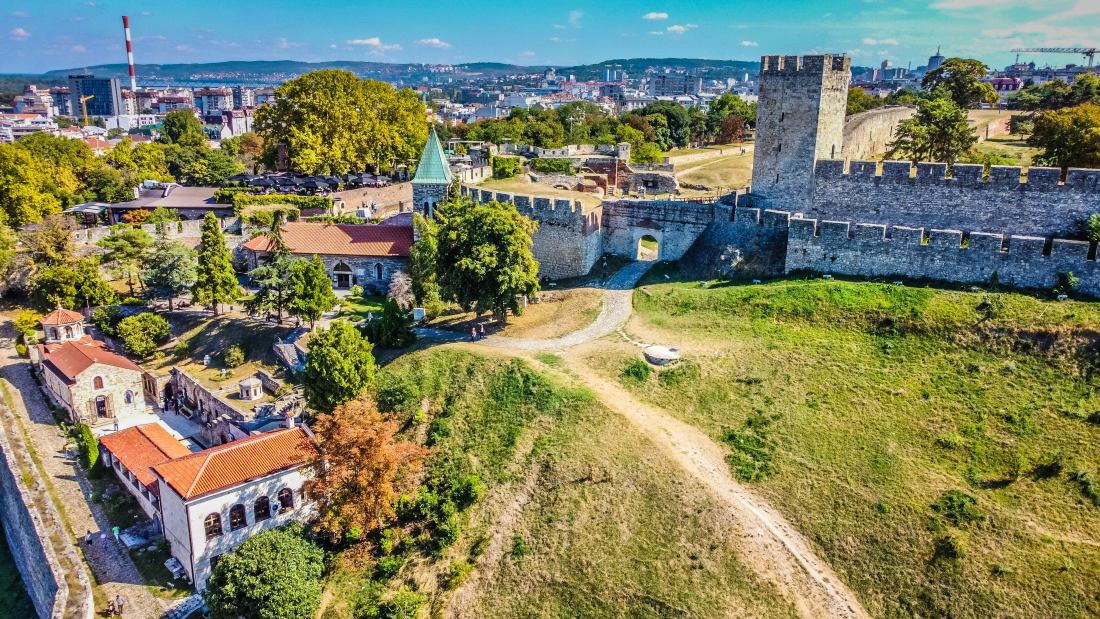
Rising in the heart of the city, Kalemegdan is simultaneously a fortress, park, and historical memorial site, making it Belgrade’s most famous attraction. Celtic tribes first built a fortification on this strategically important high ground, followed by Romans, Byzantines, Hungarians, Ottomans, and Austrians, each adding their own stones to the structure.
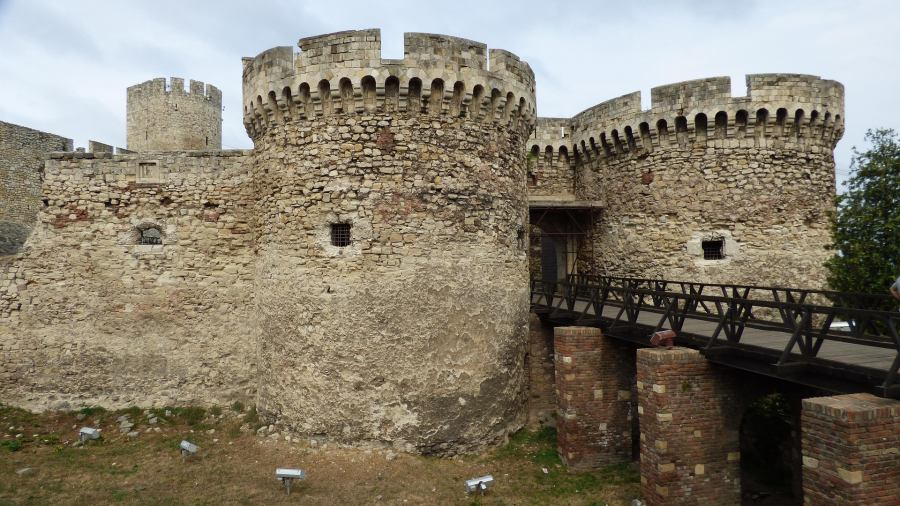
Walking within the fortress walls reveals several millennia of history: the Ottoman remnants of the Zindan Gate, the ruins of the Roman well, and the Despot Gate each evoke different eras. From Kalemegdan Park, there is an unparalleled view of the confluence of the Sava and Danube rivers, and beyond the Novi Sad Bridge, the skyscrapers of modern New Belgrade emerge.
Located within the fortress grounds is the Pobednik (Victor) statue, one of Belgrade’s symbols, which proclaims the city’s freedom with its bronze sword raised toward the Danube. Today, the fortress complex is not only a historical memorial park but also a cultural center: in summer it hosts open-air exhibitions, concerts, and festivals.
Republic Square
Located in the city center, the square is the hub of Belgrade’s social and cultural life, where locals’ favorite meeting point is the equestrian statue of Prince Mihailo. The square is home to the imposing building of the National Museum of Serbia and the neo-baroque palace of the National Theatre, symbols of 19th-century urban development.
The square is constantly bustling: during the day, shoppers and tourists walk through, while in the evening young people gather on the steps. The Knez Mihailova pedestrian street opens from the surrounding streets and begins here, making the square an ideal starting point for exploring the city center.
Knez Mihailova Street
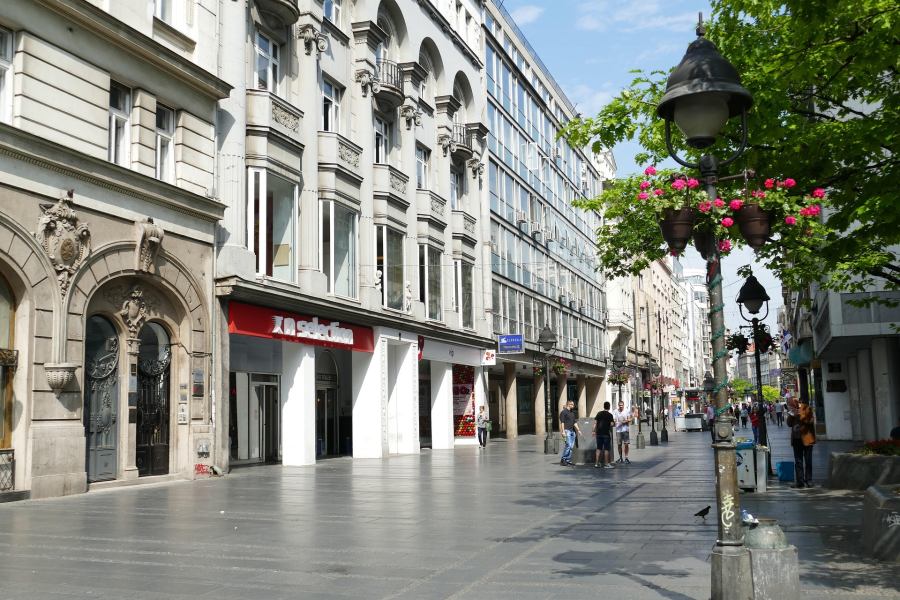
The main street of the city center, the pedestrian street bearing Prince Mihailo’s name, connects the Kalemegdan fortress with Terazije Square. This boulevard lined with 19th-century buildings is the center of Belgrade’s commercial and social life.
Along the street stand neoclassical and academic-style buildings, several of which are protected monuments. On the ground floors, international brand stores, cafes, and restaurants await visitors, while the upper floors preserve the atmosphere of the city’s bourgeois era with historical artifacts.
In the evening, Knez Mihailova is particularly lively: street musicians, artists, and students add color to the promenade.
Saint Sava Temple
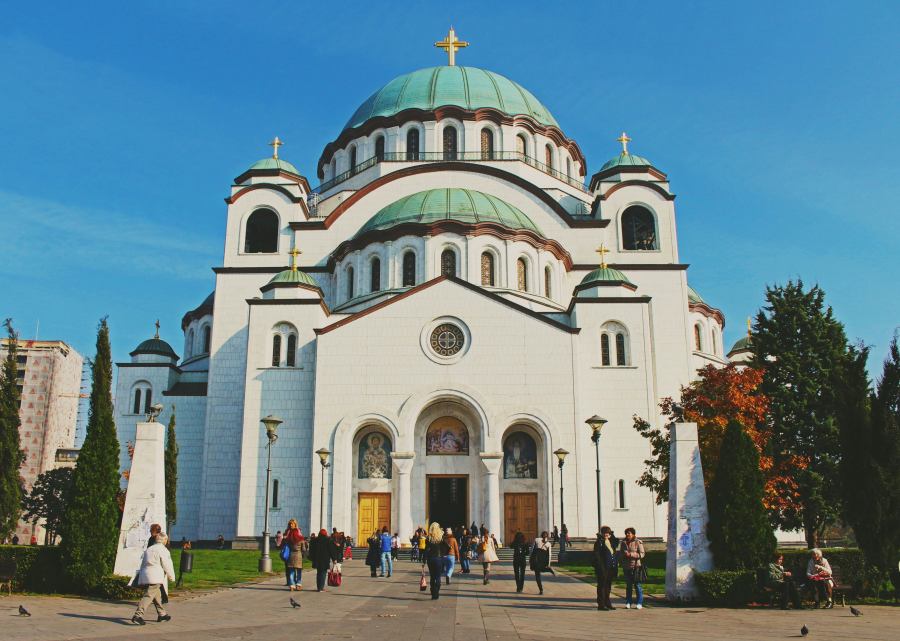
One of the world’s largest Orthodox churches rises on Vračar Hill, at the very spot where the Turks burned Saint Sava’s relics in 1595. The monumental structure began construction in 1935, but was only consecrated in 2004, and its interior decoration continues to this day.
The church is made of nearly 4,000 tons of white marble and granite, with its central dome reaching 70 meters high. The interior of the Byzantine-Serbian style sacred building is decorated with gilded mosaics, marble columns, and monumental frescoes – Russian masters also participated in creating the decorations.
Visiting the church is not only a religious but also an architectural experience: the massive interior space, the central area under the dome, and the richly detailed decorations are stunning. In the evening, the illuminated church is visible from afar, becoming a defining element of Belgrade’s skyline.
Zemun District
This historical district on the Danube bank is now part of Belgrade, but for centuries it belonged to the Austro-Hungarian Monarchy. This unique duality is still felt: Zemun’s Central European atmosphere, bourgeois houses, and narrow streets are distinctly different from the character of other Belgrade districts.
Along the Danube promenade (kej), fish stalls, restaurants, and cafes line up, offering dishes made from fresh Danube fish. Zemun’s atmospheric streets, old Orthodox church, and the riverside houseboats create a special atmosphere loved by both locals and tourists.
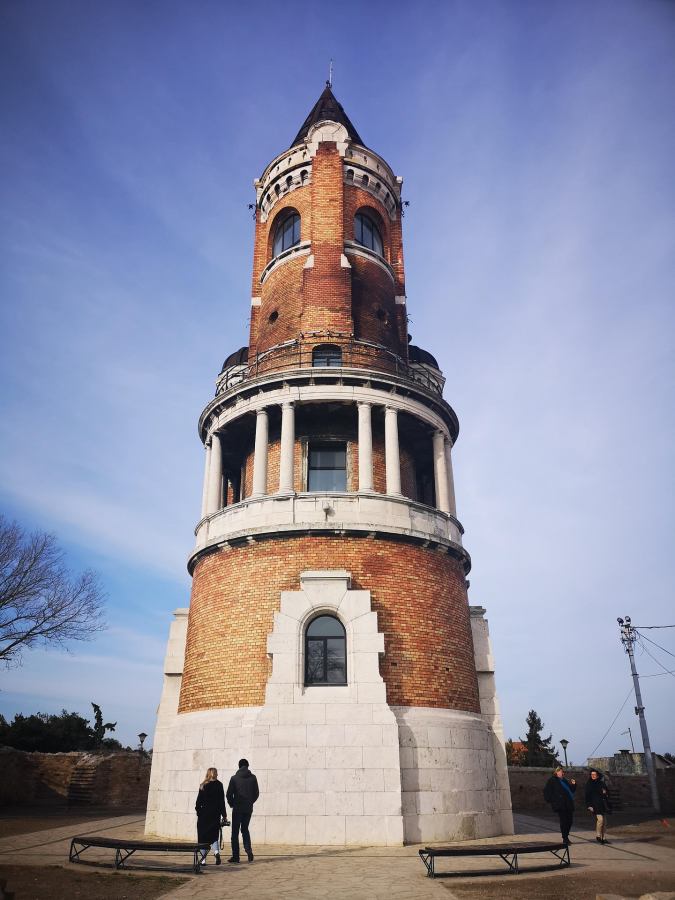
Gardoš Tower (Millennium Tower)
The 36-meter-high tower rising on Gardoš Hill in Zemun was built in 1896 to honor the millennium of the Hungarian conquest. The structure’s current official name is Sibinjanin Janko Tower, but Belgrade Germans know it as Kula Sibinjanin Janka.
The tower has Romanesque architectural features: built of brick, its stairs climb 140 steps upward. From the top, a panorama unfolds: the Danube, Zemun’s old rooftops, Belgrade’s center, and New Belgrade’s skyscrapers are all visible on clear days.
The park around the tower offers pleasant walking opportunities, while the surrounding narrow streets hide old Zemun houses, art galleries, and small workshops.
Skadarlija Street
Belgrade’s bohemian quarter became a favorite meeting place for artists, writers, and poets at the end of the 19th century. The cobblestone street is lined with traditional Serbian restaurants (kafana) offering dinners accompanied by live music, cymbalom, and violin.
During the district’s golden age, famous artists such as poet Đura Jakšić and painter Đorđe Krstić frequented here. The street’s atmosphere has retained this special charm: the walls are decorated with artistic graffiti, and retro lanterns light up in front of the restaurants.
Among Skadarlija’s most famous restaurants are Dva jelena (Two Deer) and Tri šešira (Three Hats), which offer authentic Serbian cuisine and traditional music. The area is especially lively in the evening when musicians perform and the street fills with life.
Ada Ciganlija
The peninsula on the Sava River serves as Belgrade’s „sea” where a beach stretching more than 7 kilometers welcomes bathers.
The artificial lake was created in the 1960s with the help of dams and has since become the city’s most popular leisure center. It’s not just suitable for swimming – bike paths, running tracks, beach volleyball courts, and extreme sports (wakeboard, zipline) also await those seeking active recreation.
Around the island, restaurants, cafes, and houseboats offer refreshments and food. Due to the park-like green areas and shady rest spots, Ada is popular not only in summer: many also visit in fall and spring to walk, run, or bike.
Cathedral (Saborna Crkva)
The baroque-style Orthodox cathedral in the city was built between 1837-1840 and is among Belgrade’s most important religious buildings. The church is located on the central Kralja Petra Street, in close proximity to the Knez Mihailova pedestrian street.
The church was consecrated in honor of Archangel Michael, and its facade is decorated with classicizing baroque elements. The interior is adorned with a rich iconostasis, 19th-century frescoes, and chandeliers, which are masterpieces of Serbian Orthodox art.
The cathedral also contains the burial sites of several members of the Serbian dynasty, including King Milan I. The church serves not only a religious function but is also a symbol of Serbian national identity: several important state funerals were held here.
Princess Ljubica Residence (Kneginja Ljubica Konak)
The former princely palace on Kralja Petra Street by the Danube was built between 1829-1831 for Princess Ljubica and her son Mihailo. The building is one of the finest examples of Balkan architecture: Ottoman and Serbian folk elements are mixed in it.
The konak now operates as a museum that evokes the atmosphere of 19th-century Belgrade bourgeois and princely life. The furnishings, furniture, and household items are authentic, providing insight into the everyday life of the Serbian Principality era.
A traditional Balkan garden has been created in the building’s courtyard, enhancing the historical atmosphere. The museum also hosts temporary exhibitions on Serbian cultural heritage topics, so it’s always worth checking the current programs.
Topčider Park
The 115-hectare park located in the southern part of the city is one of Belgrade’s oldest public parks, famous for its plane trees. The area began to be landscaped in the 1830s during Prince Miloš’s reign, who also built his summer residence here.
The central element is the Obrenović dynasty palace, which now operates as a museum showcasing the life of 19th-century Serbian rulers. Many of the monumental plane trees are 150-200 years old and are classified as protected natural monuments.
A small stream runs through the park, crossed by pedestrian bridges, while walking paths lead through the wooded areas. Topčider is equally popular among families, athletes, and nature lovers.
Tito’s Blue Train
The luxury train used by Josip Broz Tito can be viewed at Topčider railway station, which was the Yugoslav president’s official means of travel. The blue-painted train served Tito from 1959, on which he traveled throughout Yugoslavia and made state visits abroad.
The train’s interior reflects extraordinary splendor: mahogany furniture, silk curtains, a personal sleeping cabin, and a study are found within. Among the carriages are a conference room, dining car, and quarters designed for the entourage.
Today it operates as a museum where visitors can glimpse behind the scenes of socialist Yugoslav diplomacy. The train’s authentic condition and historical significance offer a special experience for those interested in the 20th century.
Avala Tower and Monument
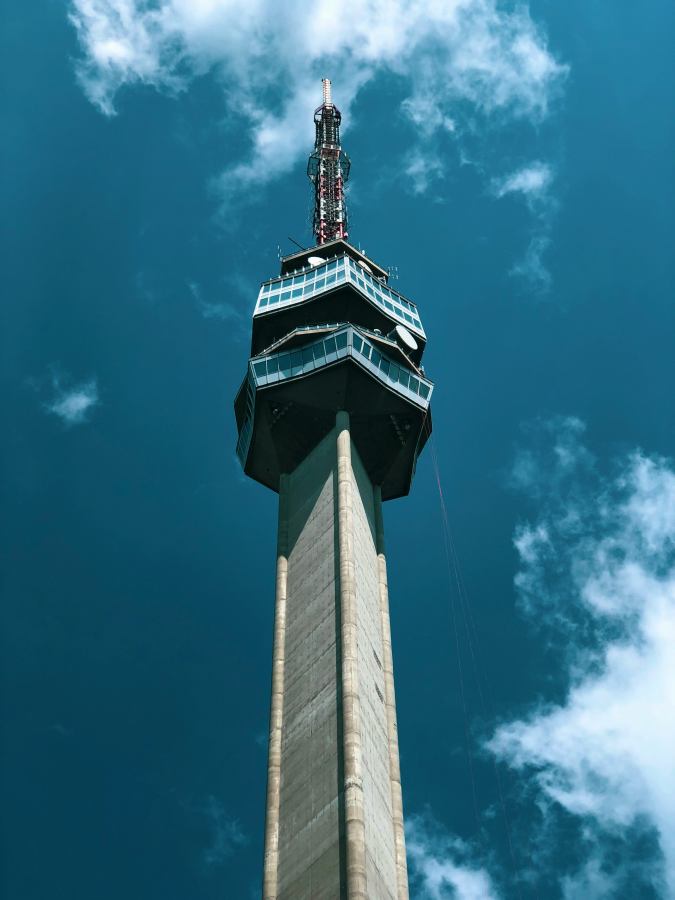
Two significant landmarks rise atop Avala Mountain on the southeastern hills outside Belgrade. The 204.5-meter-high television tower was built in 1965 but was destroyed during the 1999 NATO bombing – it was completely rebuilt in 2010 based on the original plans.
From the tower’s observation deck at 122 meters high, a stunning panorama unfolds before visitors: on clear days, one can see up to 100 kilometers away. The view encompasses Belgrade, the surrounding forests, and the distant mountains.
The mountain’s other attraction is the Monument to the Unknown Hero, unveiled in 1938 in memory of Serbian soldiers who fell in World War I. The monumental granite monument with its eight female caryatids and massive size has become a symbol of national pride. The surrounding park is a popular excursion destination suitable for both forest walks and picnics.
Best museums in Belgrade
National Museum of Serbia
The museum on Trg Republike (Republic Square) is Serbia’s oldest and most significant museum, founded in 1844.
The neo-Renaissance building was reopened in 2018 after a comprehensive renovation that lasted 15 years and completely renewed the exhibition spaces. Visitors can explore the exhibitions in chronological order, spanning from Roman Viminacium to 20th-century Serbian art.
The collection comprises nearly 400,000 artifacts from prehistoric times: archaeological finds, medieval Serbian frescoes, European paintings, and modern art works can all be found. Among the museum’s most valuable pieces are the Miroslav Gospel from the 12th century and numerous works by European masters, including creations by Renoir, Matisse, and Picasso.
All information can be found here!
Museum of Yugoslav History
The museum complex in the Dedinje neighborhood is the most important memorial site of the Yugoslav era, whose central element is the tomb of Marshal Josip Broz Tito. The state leader who died in 1980 rests in the House of Flowers (Kuća cveća), which is kept in its original condition with thousands of flowers that admirers have continuously brought since his death.
The museum consists of three main buildings: in addition to the tomb, the Old House (Stara kuća) displays Tito’s personal items and gifts, while the May 25th Museum explores the history of the Yugoslav state. The collection includes more than 22,000 gifts that Tito received from various world leaders.
Visitors can gain insight into everyday life in 20th-century Yugoslavia: Tito’s uniforms, cars, and study all come to life. Walking through the park’s peaceful, orderly environment, one can feel the nostalgic atmosphere of the era.
All information can be found here!
Nikola Tesla Museum
The museum preserving the memory of the world-famous Serbian inventor opened in 1952 in Belgrade’s center, in an elegant villa from the 1920s. The collection displays Tesla’s original personal items, manuscripts, blueprints, and inventions, and is the only institution in the world where Tesla’s ashes also rest.
The permanent exhibition also includes interactive demonstrations: visitors can see with their own eyes the operation of Tesla coils and demonstrations of wireless energy transmission. The museum preserves more than 160,000 of Tesla’s original documents, more than 2,000 photographs and blueprints, as well as his personal household items.
The visitor experience is enhanced by guided tours during which Tesla’s life and inventions come alive. The museum is not just a historical science memorial but also documentation of the birth of the modern electrical energy industry, where visitors can understand how Tesla’s work shaped today’s technological world.
All information can be found here!
Museum of Contemporary Art
The museum located in New Belgrade on the Sava riverbank opened in 1965 and houses the most important collection of modern art from former Yugoslavia and Serbia. The brutalist-style building itself reflects the architectural character of the era with its geometric forms and concrete structures.
The collection contains more than 35,000 artworks from the 1900s to the present: paintings, sculptures, video art, and installations can all be found. The exhibition spaces showcase contemporary Yugoslav and Serbian artists, but works by international creators also have a place.
Interactive exhibitions and periodic exhibition series make museum visits experiential for visitors, while the terrace offers beautiful views of the Danube and Kalemegdan fortress.
All information can be found here!
Belgrade weather: when is the best time to visit?
Belgrade lies in a temperate continental climate zone where four distinct seasons can be experienced. The proximity of the Danube and Sava has a moderating effect on extremes, but summers are hot and winters can occasionally be frosty.
Spring (March-May):
March is still cool, but by April pleasant temperatures of 15-18°C can be expected. In May, daily maximums frequently range between 20-25°C, and the city turns green. Showers may occasionally occur, but overall this period is characterized by beautiful, sunny days.
Summer (June-August):
June temperatures of 25-28°C gradually rise, and in August the temperature can climb above 35°C. Summer months during heat waves are often dry and hot, when crowds cool off at Ada Ciganlija’s beaches. Nights also remain warm, which is perfect for evenings spent on houseboats.
Fall (September-November):
September is still summer-like with temperatures around 20-25°C and pleasant sunshine. From mid-October cooling begins, and by November values drop to 5-10°C. The fall is colorful, with the yellowing and browning of parks providing a particularly picturesque sight.
Winter (December-February):
Winter months are cool, with temperatures frequently hovering around freezing point. Snowfall is not uncommon, but the city is generally not characterized by snow cover for long periods. In January, weather can be expected between -5 and +5°C, and a thicker coat is definitely necessary.
Best time to visit Belgrade:
The most pleasant time to visit Belgrade is between May-June and September-October. In May and June, the city blooms, the weather between 22-28°C is ideal for walks and outdoor activities, and cultural festivals also begin. September and October are also excellent choices: the heat wave has passed, but pleasant temperatures of 18-24°C can still be expected, while there are fewer tourists.