
Lower Austria is primarily known for its wonderful natural attractions and charming towns. From Vienna, excellent excursions can be made throughout the region!
Lower Austria is Austria’s largest state, surrounding Vienna and extending from the Danube Valley to the ridges of the Eastern Alps. It borders Burgenland, Styria, and Upper Austria. This region, filled with medieval castles, baroque monasteries, wine culture, and breathtaking mountain landscapes, shows a different face in every season.
Table of Contents
Best places in Lower Austria
Wachau
One of the most beautiful sections of the Danube stretches between Melk and Krems, where the river winds its way through the hilly landscape in a meandering valley.
The region has been a UNESCO World Heritage Site since 2000, and for good reason: the steep vineyard terraces, medieval villages, and fortified churches create a magical atmosphere. In spring, the blossoming apricot trees, and in autumn, the golden yellow colors of the vineyards make the region particularly special.
The valley is a famous wine region, where the Grüner Veltliner and Riesling varieties are especially worth tasting. The local wineries gladly welcome visitors, and the wine cellars offer a special experience. The bicycle path along the Danube is popular among tourists, allowing you to comfortably explore the villages.

Melk Abbey
This monumental baroque structure rises on a cliff above the Danube, visible from afar as it dominates the river.
The Benedictine abbey, founded in 1089, received its present form in the 18th century when it was rebuilt according to Jakob Prandtauer’s plans. The yellow-façaded complex is one of Europe’s most significant baroque monuments and functions not only as a religious but also as a cultural center.
During your visit, you can explore the ceremonial hall, which dazzles with its ceiling frescoes and rich stucco decorations. The library is particularly impressive: the collection of over 100,000 volumes and the magnificent baroque hall are true treasures. The abbey church’s golden ornaments and Paul Troger’s frescoes show such richness of detail that you could spend hours observing them.
The abbey’s park and viewing terrace offer a wonderful panorama of the Danube Valley and the surrounding landscapes. If possible, visit in spring or summer when the gardens are in bloom. Monks still live in the abbey today, maintaining the traditions, and the complex’s museum provides insight into the monastery’s history.

Semmering Pass
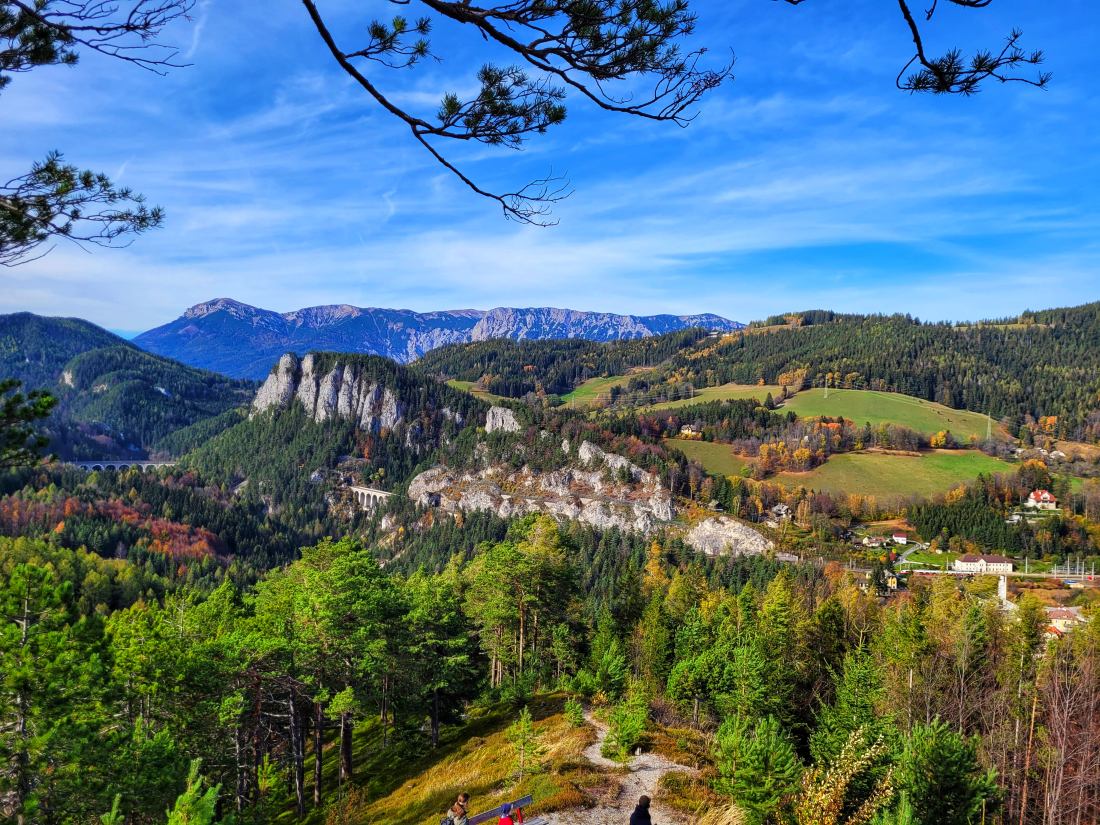
The pass between Vienna and Graz is not just a geographical crossing but also an engineering marvel. The railway line built in 1854 was the first mountain railway to overcome a large altitude difference, and it has been a World Heritage Site ever since. The landscape is special: forested mountain slopes, viaducts, and tunnels alternate as the train winds its way upward.
The area was already a popular resort among Vienna’s aristocracy by the end of the 19th century. Some of the grand hotels still operate today and have retained their original charm. In winter you can ski, and in summer you can hike in the area; the well-maintained trails are suitable for hikers of all levels. The Semmering Railway Museum provides insight into the history of the railway’s construction.
One of the most beautiful views is from the Doppelreiter viewpoint, from where you can see both the valley and the winding railway line. The area is full of marked hiking trails, ranging from short walks to full-day hikes.

Sankt Pölten
Lower Austria’s capital since 1986, though the settlement’s history goes back much further. Due to the city’s size, it’s easily walkable, yet all important attractions are accessible.
The most important baroque buildings are located around the Domplatz, including the cathedral, whose interior draws attention with its rich stucco decorations and frescoes. The nearby Rathausplatz offers modern sculptures and fountains. The green areas and parks surrounding the city provide a pleasant contrast to the historic center.
The Landhausviertel, the district of the provincial government, shows the city’s new face with its modern buildings. A rich selection of cultural programs awaits visitors throughout the year. The main street of the city center, Kremser Gasse, is popular among tourists.

Lunzer See
Located in the Alps at 600 meters altitude, this crystal-clear mountain lake is Lower Austria’s only natural lake. The water surface nestled in the embrace of surrounding forests and mountains exudes a different mood in every season. In summer, swimming and rowing are popular, while in winter, ice skating is the favorite pastime if the lake freezes.
The path around the lake offers a pleasant hour-long walk, during which you can admire the varied shoreline sections. On the northern side, the beach area also has rest areas and a restaurant waiting for visitors. The water quality is excellent, and the environment is a nature reserve, so the local flora and fauna are particularly rich.
The nearby village of Lunz am See can be a starting point for hikes in the surrounding mountains. The Seehof restaurant is famous for its fish dishes, prepared from locally caught trout.
Rosenburg Castle
The Renaissance castle standing on a steep cliff rises above the Kamptal valley and is one of the best-preserved fortresses in the region.
Built in the 12th century, the castle changed hands several times and received its present form in the 16th century when it was rebuilt in Renaissance style. The visitor-friendly castle provides insight into the everyday life of the aristocracy.
The castle’s main attraction is the daily falconry demonstrations, where experienced falconers demonstrate the abilities of birds of prey. During the show, eagles and other raptors fly freely over the visitors’ heads, and the falconers provide explanations about the birds’ characteristics. The performance held in the castle courtyard is a real experience for all ages.
Several rooms in the building house a museum that displays family collections and historical weapons. From the castle, there’s a beautiful view of the surrounding valley and the winding bed of the Kamp River. The castle garden and moats are also freely accessible, and in spring the blooming gardens offer a special sight.

Wiener Neustadt
The city is Vienna’s southern gateway and has been an important industrial and commercial center since the Middle Ages.
The main square, the Hauptplatz, is one of Europe’s largest medieval squares, bordered by imposing townhouses. The city, founded in the 12th century, received its name from the Babenberg dukes when they began deliberate urban development.
The remains of the medieval city wall are still visible today, and the Water Tower (Wasserturm) is a unique Gothic structure that originally provided the city’s water supply. The Liebfrauenkirche church in the city center is also noteworthy, with its rich interior decorations. The local museum provides insight into the city’s industrial past, particularly the history of aircraft manufacturing.
It also serves as a starting point for the nearby Schneeberg and Rax mountains, making it an ideal base for exploring the area. For those who don’t want to hike much, the nearby Hohe Wand with its viewing terrace is a perfect choice.
Schneeberg-Rax
These two neighboring mountain ranges are located near Vienna and are the city dwellers’ favorite excursion destination. At 2,076 meters, Schneeberg is Lower Austria’s highest peak, while the Rax plateau draws attention with its special geological formations.
The Schneebergbahn has been transporting passengers to the summit since 1897, and the journey itself is an experience due to the varied landscape. Numerous hiking trails lead across the plateau, from family-friendly walks to technical hikes. The mountain huts at the summit welcome visitors with local dishes and refreshments.
The Ottohaus and other mountain huts on the Rax side are popular hiking destinations that can serve as starting points for longer mountain hikes. The karst-characterized plateau has a special flora and is also interesting for those interested in geology. In winter, you can also ski and snowshoe hike in the area.

Ötscher-Tormäuer Nature Park
The Ötscher mountain range with its wild romantic valleys and gorges is one of Lower Austria’s most beautiful natural areas. At the center of the nature park stands Mount Ötscher, often called „Lower Austria’s Matterhorn” due to its characteristic shape.
The park’s most famous attraction is the Ötschergräben, an impressive gorge through which the hiking trail leads on wooden bridges and stairs. The stream rushing through the gorge’s depths and the steep rock faces create a special atmosphere. The hiking trail takes several hours but is well-maintained, and at the end, the Mirafall waterfall awaits hikers. The nearby Lackenhof settlement operates as a ski resort in winter.
Guided tours are also organized in the nature park, during which local conservation rangers present the area’s special flora and fauna. Several mountain huts are located within the park, where you can rest and taste local specialties. The hike to the Ötscher summit is a real challenge, but the view from the top is worth all the effort.

Krems an der Donau
The city at the eastern gateway of the Wachau is one of the region’s cultural centers due to its historical role.
The streets and squares of the medieval old town have retained their original atmosphere and offer pleasant walking opportunities. The city has been an important trade hub since the 10th century and is now known as a center of art and winemaking.
The Kunsthalle Krems and the Karikaturmuseum present contemporary art exhibitions, and the city’s cultural programs are rich throughout the year. The Steiner Tor, the medieval city gate, is one of the most photographed attractions. Hiking trails have been created on the vineyard hills around the city, and many of the wine cellars gladly welcome visitors for tastings.

Dürnstein
One of the most picturesque settlements in the Wachau valley lies along the Danube, and its blue-towered monasteries make it recognizable from afar. In the Middle Ages, the small town played an important role when Richard the Lionheart was held captive in the castle towering above it. Today, the romantic streets and charming houses attract visitors.
The Stiftskirche, the church of the Augustinians, with its blue tower, is the town’s symbol, and its baroque interior is richly decorated. The path to the castle ruins takes about half an hour of walking, but the view of the Danube bend and the valley is worth the effort. The small town has several wine cellars where you can taste the local Riesling and Grüner Veltliner wines.
Along the main street, you can view the works of local artists in small shops and galleries. Due to the settlement’s size, it’s easily walkable and is a perfect place for a slow, relaxing afternoon. In summer, tourists also arrive by boat, which lends a special atmosphere to the small boat harbor.

Baden bei Wien
This elegant spa town was already known for its medicinal waters in Roman times, and in the 19th century, it became the favorite resort of Vienna’s imperial family. The city is easily accessible from Vienna, and visitors can relax year-round in its thermal water baths. The Kurpark’s extensive green area, with roses and pavilions, is a true oasis in the heart of the city.
The Römertherme is a modern thermal bath and wellness center where various pools and saunas await. The colorful-façaded Biedermeier houses in the historic city center now hide shops and cafés. Casino Baden is one of Austria’s oldest casinos and offers entertainment opportunities in an elegant setting.
The surrounding forests are networked with hiking trails, and from the nearby Hermannskogel viewpoint, Vienna is visible on clear days. In summer, the Operettenfestspiele theater performances offer a special cultural experience. If you love peaceful relaxation, Baden is a perfect choice for a long weekend.
Klosterneuburg
At Vienna’s northern gateway, on the banks of the Danube, lies this ancient settlement, which owes its significance to its massive Augustinian monastery. Since its founding in 1114, the monastery has been an important pilgrimage site for the region and preserves the memory of the Babenberg dynasty. The size and richness of the complex rival Melk Abbey.
During your visit to the monastery, you can view the Verdun Altar, which consists of 51 gilded enamel images and is a masterpiece of medieval art. The monastery library preserves over 300,000 volumes, and the painted ceilings are true wonders. You can also visit the wine cellars, where the monks have been producing quality wines for centuries.
The nearby Leopoldsberg viewpoint offers a special panorama of the Danube bend and Vienna. The town’s charming main street is the scene of pleasant walks, where small museums and shops await visitors.

Grafenegg Castle
The neo-romantic castle near Krems exudes a fairy-tale atmosphere with its towers and decorations.
It received its present form in the 19th century when elements of the English Tudor style were combined with local traditions. The castle park is freely accessible, and walking among the huge trees, clearings, and flower beds, you might feel like you’re in a movie.
In summer, the castle hosts the Grafenegg Festival, which presents classical music concerts. The modern, open stage in the park ensures special acoustics. Inside the castle, there’s a museum that presents the family’s history and the building’s changes. During the annual Christmas market, the castle and park exude an especially magical atmosphere.
