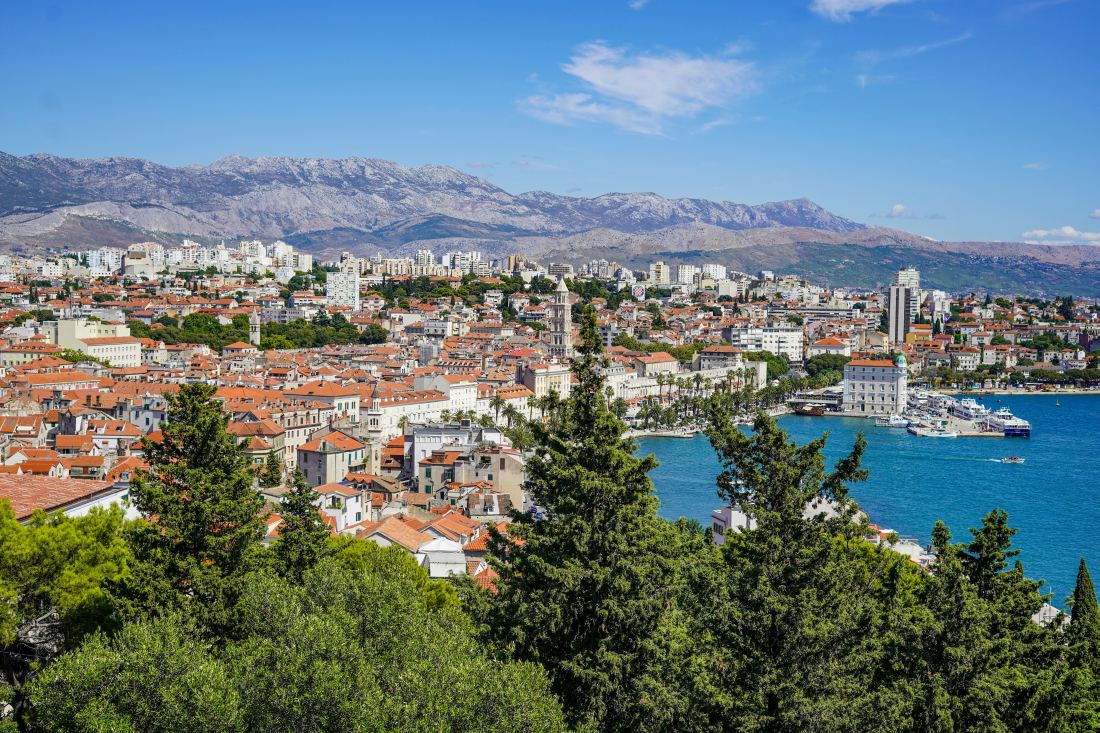
Split and its surroundings is one of the most popular holiday destinations in Croatia. The Dalmatian city and the nearby towns, islands and beaches offer a wonderful experience!
Split is the second-largest city in Croatia, located in Split-Dalmatia County, and is the largest city in Dalmatia.
Table of Contents
Attractions in Split
Diocletian’s Palace
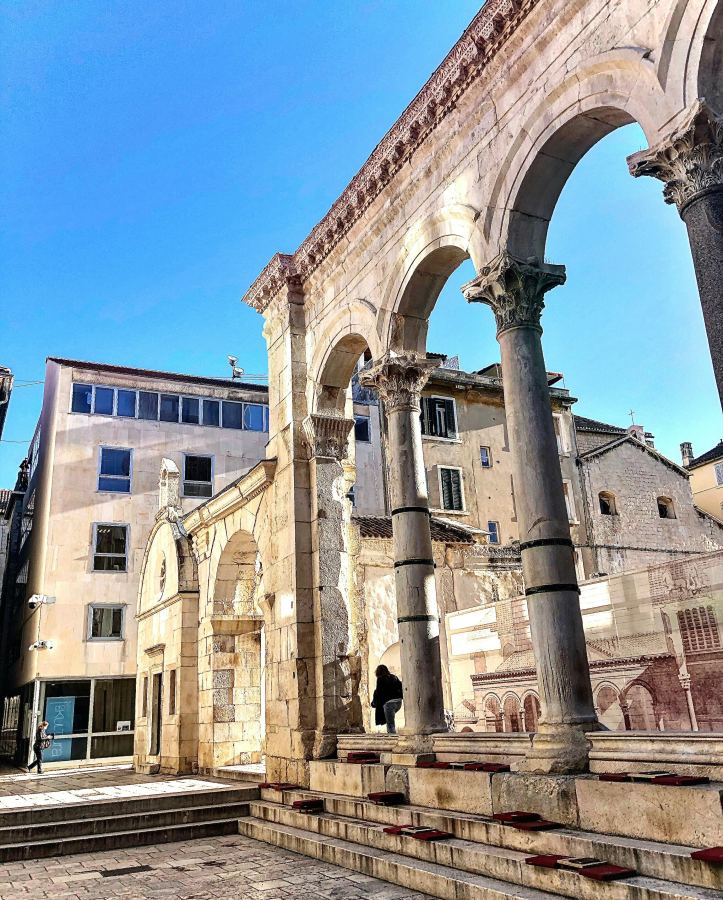
The old town is essentially the palace itself. This ancient palace was built around 300 AD by Roman Emperor Diocletian. It has been on the UNESCO World Heritage List since 1979.
The emperor retired from politics in 305 AD and stayed in the palace until his death in 311 AD.
The imperial palace is 200 meters long, 170 meters wide, with walls 15-20 meters high. It consists of charming narrow streets, squares, and amazing buildings. Almost every small street has restaurants and cafes.
Its most famous gate is the impressive Golden Gate (Zlatna vrata), which is the northern entrance to the palace.
Riva
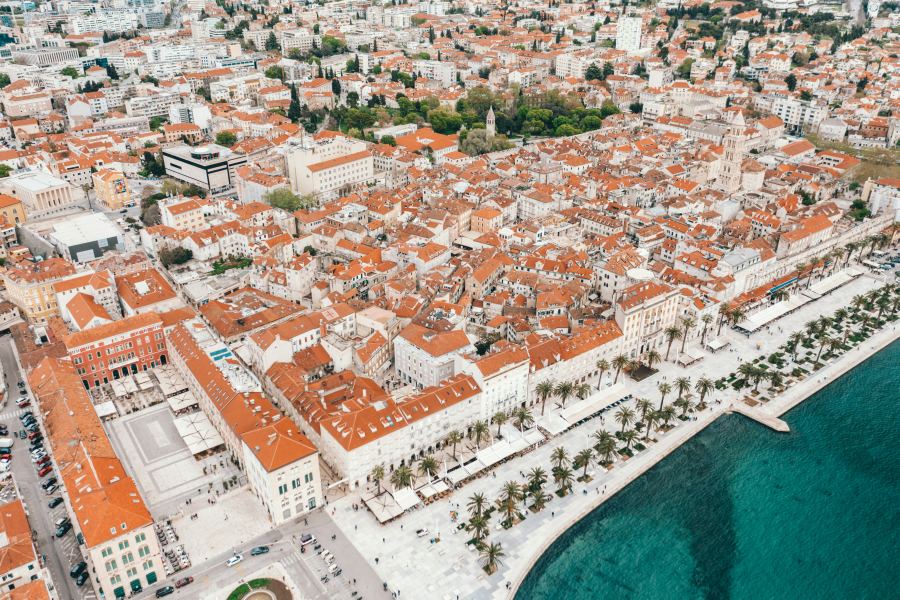
The famous Split promenade stretches between the palace and the harbor.
The street is full of shops, restaurants, bars, and beautiful palm trees. It’s worth visiting in the evening to enjoy the buzz and atmosphere.
Cathedral of Saint Domnius
The cathedral is named after Split’s patron saint, Saint Domnius, who was martyred under Diocletian. Built in 305 AD, the cathedral has a Romanesque bell tower.
The church has a Hungarian connection: above the main gate, there are two stone coffins containing the earthly remains of Catharine and Margaret, daughters of Hungarian King Béla IV.
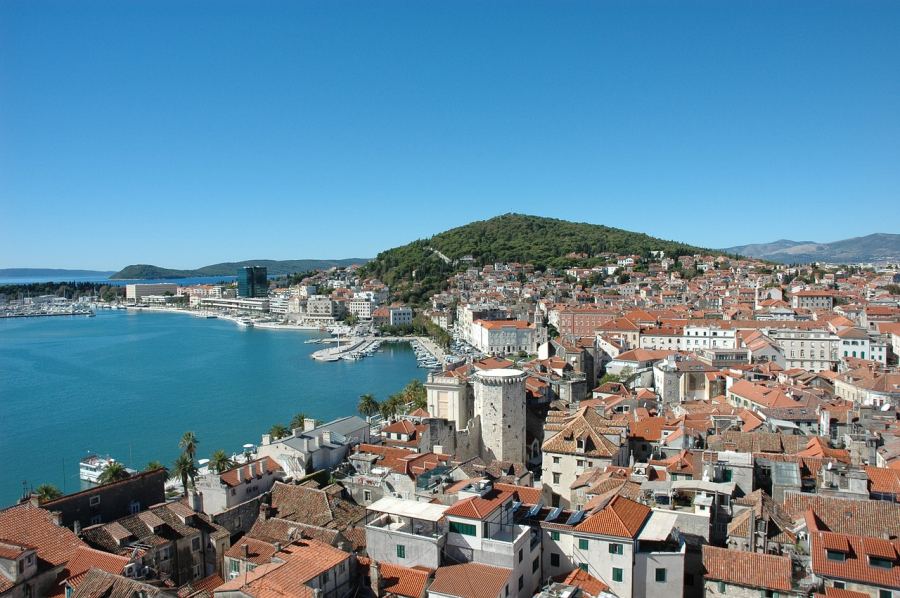
It’s worth climbing the bell tower for a good view of Split’s old town.
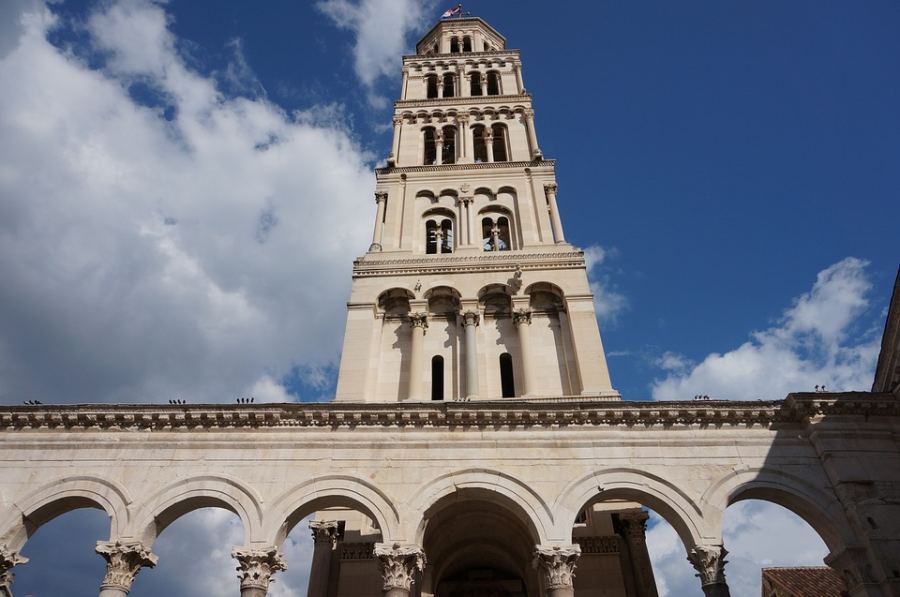
Temple of Jupiter
Opposite the cathedral entrance, a narrow alley leads to Split’s best-preserved Roman-era monument.
It has been a baptistery since the 7th century, with its most beautiful part being the baptismal font decorated with Old Croatian reliefs.
Prokurative
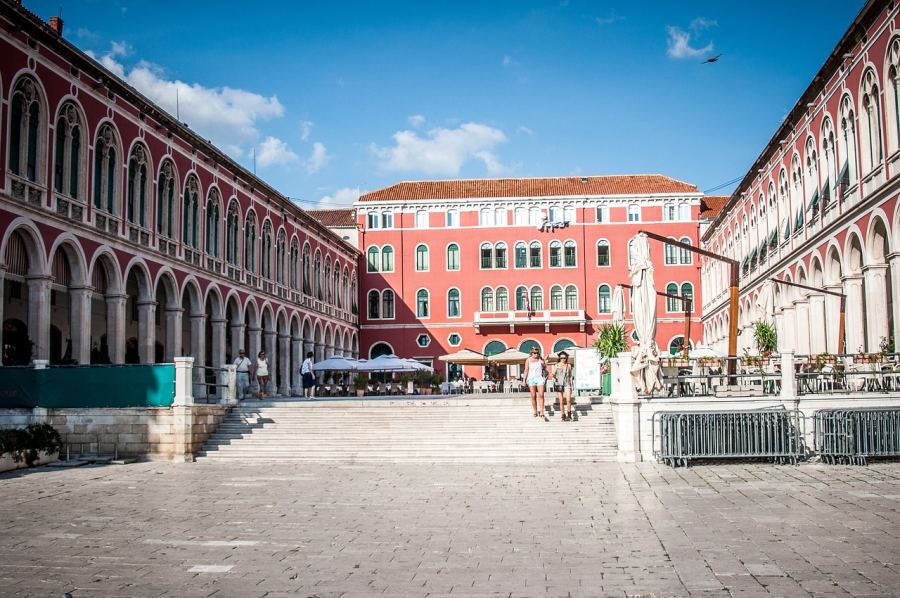
This Republic Square stands at the western end of the Riva promenade, with beautiful red buildings.
The 19th-century neo-Renaissance style buildings evoke Venetian times. The square somewhat resembles St. Mark’s Square.
Gripe Fortress
A modern fortress complex located east of the city center on Gripe Hill.
The Venetians built the fortress here in the 17th century to defend against Turkish attacks.
Today, the Gripe Fortress houses the Croatian Maritime Museum, the Croatian State Archives, and hosts concerts.
Archaeological Museum
The museum displays Greek sculptures, Greek, Roman, and Illyrian jewelry, everyday objects, and rich findings from the Salona excavations.
It also has a rich lapidarium. Several famous sarcophagi can be found, including the Hippolytus and Phaedra sarcophagus.
Froggyland
A somewhat „interesting” exhibition created by a Hungarian taxidermist.
You can see stuffed frogs in various human life situations. There’s nothing disgusting about it; it can be described as rather funny.
Meštrović Gallery
Ivan Meštrović is Croatia’s and former Yugoslavia’s greatest, world-renowned sculptor, creator of numerous Yugoslav, Croatian, and Serbian-themed, as well as Christian-inspired sculptures.
His works are exhibited in his former home, workshop, and garden. Those who love art should visit this place.
Marjan Hill
A peninsula and forest park west of Split’s city center. Its coast is quite indented and varied, with numerous bays, rocks, and reefs.
The hill itself is 178 meters high, with its highest peak called Telegrin. This is the best viewpoint, offering a beautiful panorama of the city and the sea.
Beaches in Split
Bačvice
Split’s most popular beach, close to the city center. Often crowded during high season.
The shore is gently sloping and sandy, making it perfect for children.
Firule
This popular beach is found not far east of Bačvice.
The sandy-pebble beach is in a bay, surrounded by many bars and restaurants.
Žnjan
This long stretch of coastline, consisting of several parts, is on the outskirts of Split.
It’s a well-developed fine pebble beach, deepening quickly in most places. There are several bars and restaurants on the shore.
Ježinac
This charming beach is found on the southern part of Marjan Hill, west of the city center.
The shore is pebbly and quickly deepening. However, due to the hill above it, this beach has a wonderful location.
Attractions near Split
Trogir
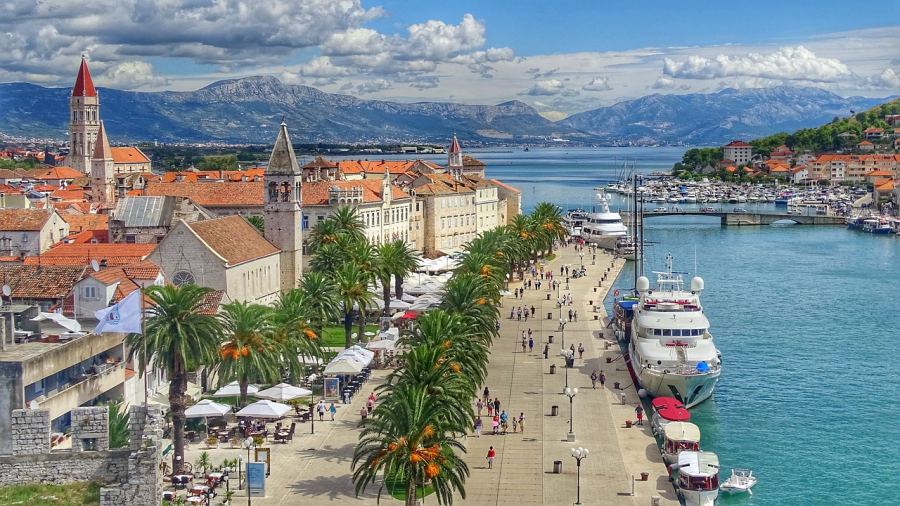
Located 30 km west of Split. The city center is part of the UNESCO World Cultural Heritage under the name „Historic City of Trogir.” The city is situated on a tiny island between the island of Čiovo and the mainland.
The city appeared in the Game of Thrones TV series as the city of Qarth.
Its old town is one of the most beautiful Croatian city centers. Main attractions include the Kamerlengo Citadel and St. Mark’s Tower.
The Cathedral of St. Lawrence stands in the city’s main square. This Romanesque-Gothic style church, built between the 13th and 15th centuries, has a main portal that is the most valuable architectural sculpture in Dalmatia.
There are many picturesque bays around Trogir, especially the Seget and Saldun bays are very beautiful.
Omiš
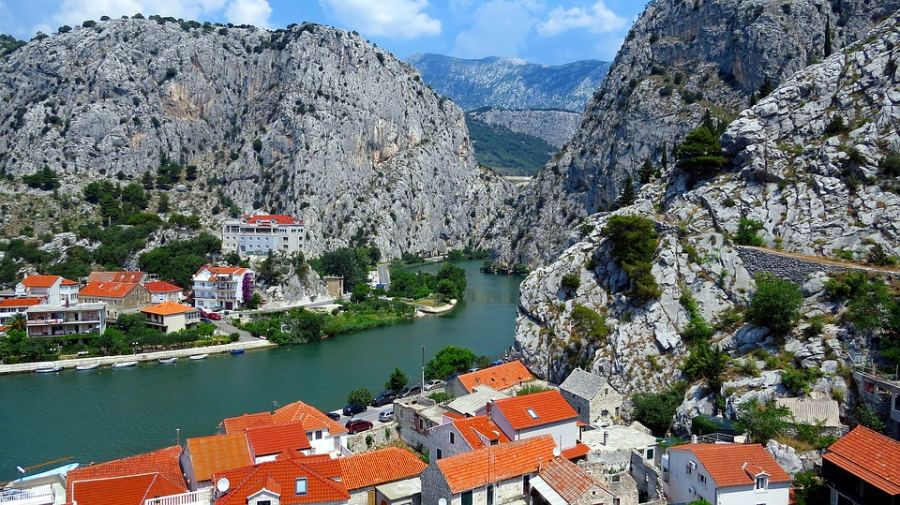
Located 25 km southeast of Split at the Adriatic mouth of the Cetina River.
It’s best known for its sandy beaches, formed by the sediment of the Cetina River.
Velika, at the river mouth, is one of the most beautiful beaches in the area. The huge gray rock mass rising behind the city provides a wonderful experience for those relaxing on the fine sandy beach.
The Cetina River reaches the Adriatic through a narrow canyon, making it excellent for whitewater rafting trips.
For those seeking even more adrenaline, you can try zip-lining over the river.
Brač
This island near Split is the third largest in the Adriatic Sea and, with its 778-meter-high Vidova Gora, the highest island.
The southern side of the island is steep, with many rocky cliffs meeting the sea. The northern side, however, gently rises towards the interior of the island.
From Split, you arrive by boat to the town of Supetar, which is the center of the island. It’s a popular holiday resort, from where roads lead to attractions and beaches.
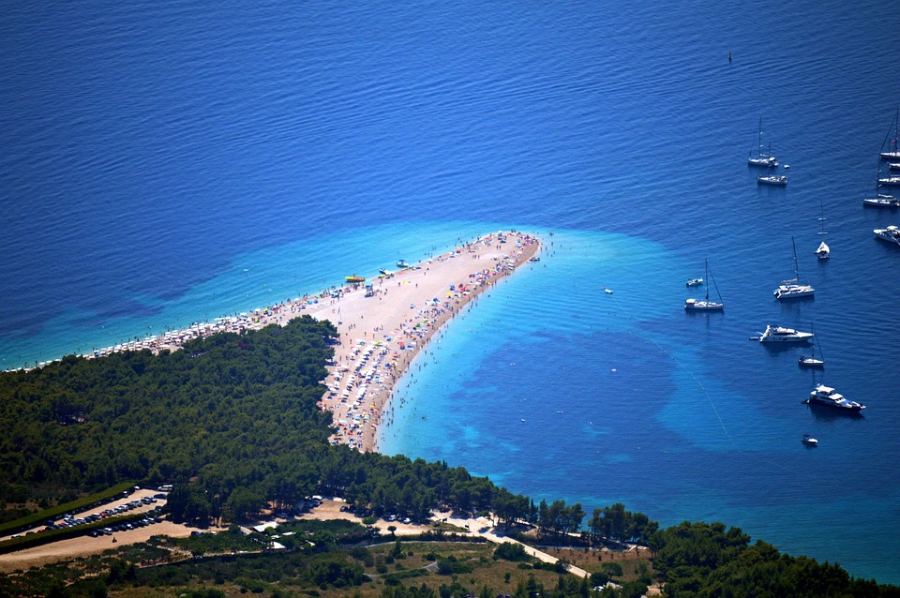
Here you can find one of the most beautiful beaches of the Croatian Adriatic, Zlatni Rat. This pebble beach, known as the „golden horn” extends into the sea in a triangle shape, offering a spectacular sight.