
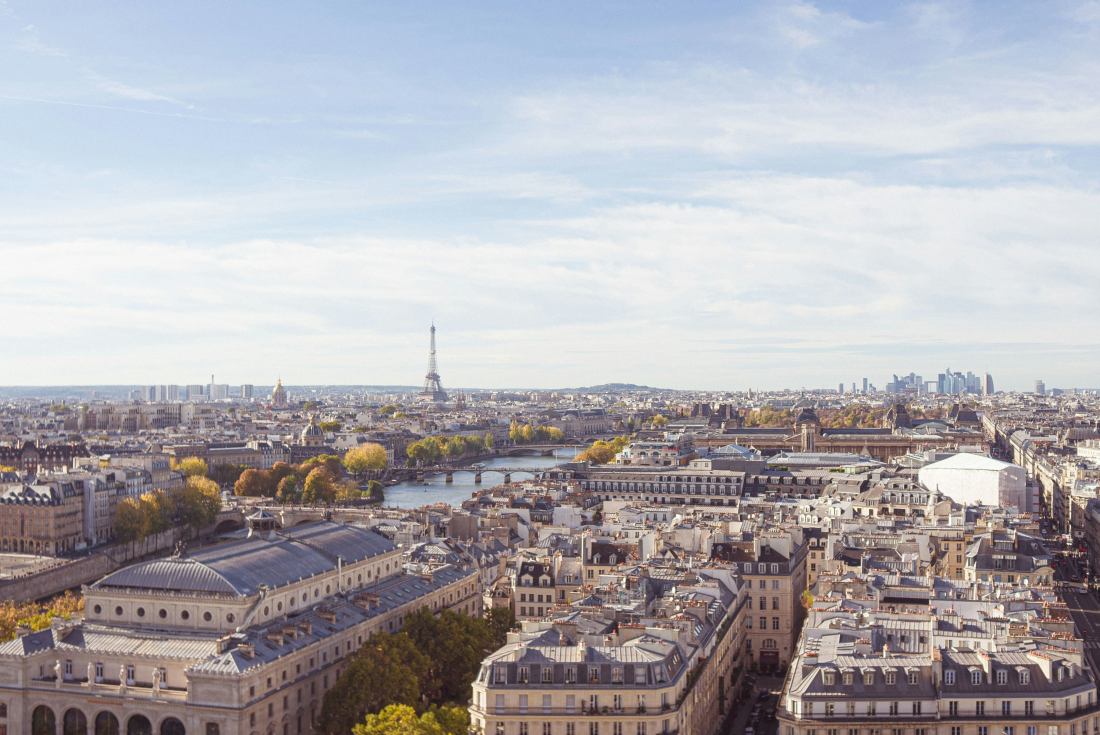
Paris is one of the most popular destinations among tourists, with an enormous number of sights. That is exactly why planning a visit is not easy. This 3-day Paris itinerary will help you with all of it!
Table of Contents
Who is this itinerary for?
Three days is enough to get to know Paris’s most important experiences, but not enough to see everything. This itinerary is meant for first-time visitors to Paris who want to combine the big sights with walks, coffee breaks and relaxed lunches.
Each day is built around a well-defined part of the city: the first covers the Île de la Cité and the Left Bank (Sainte-Chapelle, Notre-Dame, Musée d’Orsay), the second the Louvre, the Tuileries Garden and the Champs-Élysées with the Arc de Triomphe, and the third Montmartre and the Eiffel Tower.
Plan on 5–8 kilometres of walking per day, and we shorten the longer stretches by metro. The pace is moderate: two or three main sights a day, plus lunch and a rest.
Day 1: Île de la Cité and the Left Bank
The first day covers the historic heart of the city and the Left Bank. The sights are within walking distance of each other, and the one metro ride of the day is short. In total it is roughly a 5–6 kilometre walk.
Note that the Musée d’Orsay is closed on Mondays, so the first day of your itinerary should not be a Monday!
Morning (approx. 9:00–10:00): The Stained-Glass Windows of Sainte-Chapelle
Take Metro Line 4 and get off at the Cité stop. Sainte-Chapelle stands within the grounds of the Palais de Justice, so you have to go through a security check.
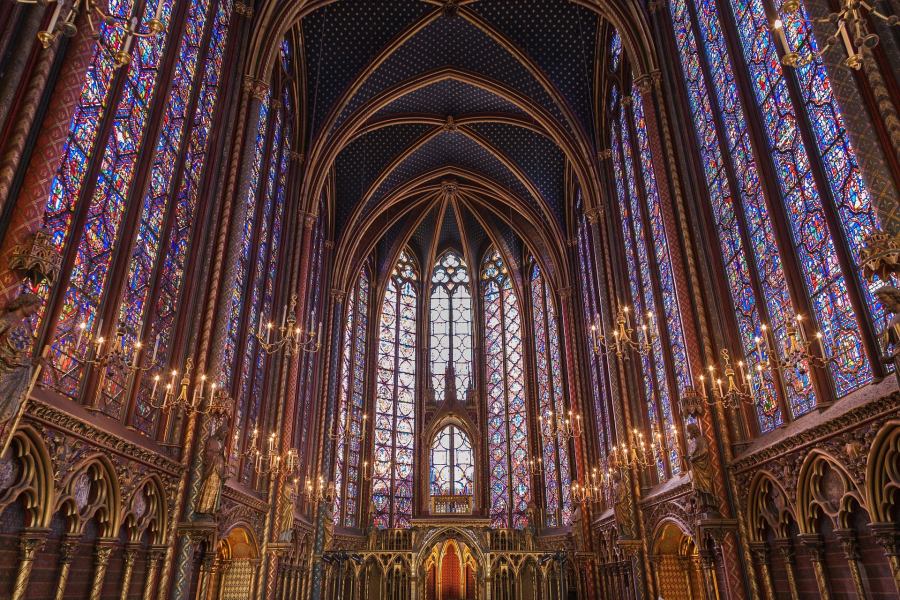
It is worth booking the first time slot (9:00): the 13th-century stained-glass windows, about 15 metres tall, are at their most radiant in the morning light, and there are no crowds yet.
Sainte-Chapelle was the private chapel of King Louis IX (Saint Louis), built to house the relics of the Passion. The lower chapel feels almost like a crypt, but once you climb the stairs, the walls of the upper level are filled entirely with stained glass.
Be sure to book your ticket in advance, as tickets often sell out days ahead. Tickets are booked by time slot. Allow 45–60 minutes for the visit.
Ticket prices:
- Full price: €16
- Free for under 25s
- Free on the first Sunday of January, February, March, November and December
Booking and all information can be found here!
Late morning (approx. 10:00–12:30): Notre-Dame
From Sainte-Chapelle, Notre-Dame is about a 6–8 minute walk (roughly 450 metres) toward the eastern end of the Île de la Cité.
Notre-Dame Cathedral reopened to visitors at the end of 2024 after the major restoration that followed the 2019 fire. The interior, the rose windows and the renewed decoration are the highlights of a visit of about 60–90 minutes.
Entry is free and no ticket is needed. If you want to cut down the waiting time, you can reserve a free time slot on the official website (slots only appear a few days before the visit). The towers must be booked separately on the official towers page.
Free time slot booking and all information can be found here!
If you have time left: the Conciergerie (Marie Antoinette’s prison) can be visited with a combined ticket together with Sainte-Chapelle, in about 45 minutes.
Lunch (approx. 12:00–13:30): Saint-Germain-des-Prés
From Notre-Dame to Saint-Germain-des-Prés, take Metro Line 4 from the Cité stop (about 5 minutes, no transfer), or walk along the Seine for about 25 minutes. On the latter route you will pass the stalls of the bouquinistes (riverside booksellers).
Choose the classic bistros and cafés of the Left Bank neighbourhood rather than the restaurants on the square in front of Notre-Dame. Typical dishes include soupe à l’oignon (onion soup), croque-monsieur, steak-frites, salade niçoise, or a savoury galette and a sweet crêpe. Since the area is pricier, the lunchtime set menu (formule) often offers better value for money.
Afternoon (approx. 13:30–17:00): Musée d’Orsay
From Saint-Germain-des-Prés, the Musée d’Orsay is a 12–15 minute walk (about 1 km) toward the Rue du Bac.
The Musée d’Orsay is a former railway station, and its large, vaulted hall is a sight in itself. It houses one of the richest Impressionist and Post-Impressionist collections in the world: Monet, Renoir, Degas, Cézanne, Van Gogh. You will find the masterpieces in the Impressionist galleries on the 5th floor, and the huge clock window is a great spot for photos.
Allow 2.5–3 hours. The museum is open Tuesday–Sunday from 9:30 to 18:00 (last entry 17:00), and until 21:45 on Thursdays. It is closed on Mondays.
As it is one of the most popular sights in Paris, be sure to buy your tickets in advance! It is worth buying them a few weeks ahead, because tickets sell out quickly.
Ticket prices (when purchased online):
- Full price: €16
- Parent(s) with a child under 18: €13
- Free for under 25s
- Full-price ticket after 18:00 on Thursdays: €12
Booking and all information can be found here!
Evening (approx. 17:00–21:00): The Banks of the Seine and the Pont Neuf
From the Musée d’Orsay to the Pont des Arts, it is a 12–15 minute walk along the Quai Voltaire (about 1 km). From there, the Pont Neuf and the western tip of the Île de la Cité (Square du Vert-Galant) are another 10 minutes or so.
From the Pont des Arts you can see the Louvre and the Institut de France, and from the tip of the island you can see the two arms of the Seine. Have dinner in the side streets of Saint-Germain, Odéon or the Latin Quarter, where bistros and smaller restaurants are more plentiful.
Day 2: The Louvre, the Tuileries Garden and the Champs-Élysées to the Arc de Triomphe
The second day follows the great axis of the Right Bank: from the Louvre through the Tuileries Garden and the Place de la Concorde, along the Champs-Élysées to the Arc de Triomphe. The museum forms the backbone of the day, and from the afternoon on there is an open-air walk, so you still have energy left for the viewpoint at the end of the day. The total walking distance is about 6–7 kilometres. The Louvre is closed on Tuesdays, so the second day of your itinerary should not be a Tuesday.
Morning (approx. 8:00–10:00): The Palais-Royal and Entering the Louvre
Take Metro Line 1 or 7 to the Palais Royal–Musée du Louvre stop. You can have breakfast at the bakeries in the Palais-Royal gardens or under the arcades of the Rue de Rivoli, then walk over to the museum (about 5 minutes) for your 9:00 time slot.
Late morning (approx. 9:00–12:30): The Louvre’s Main Route
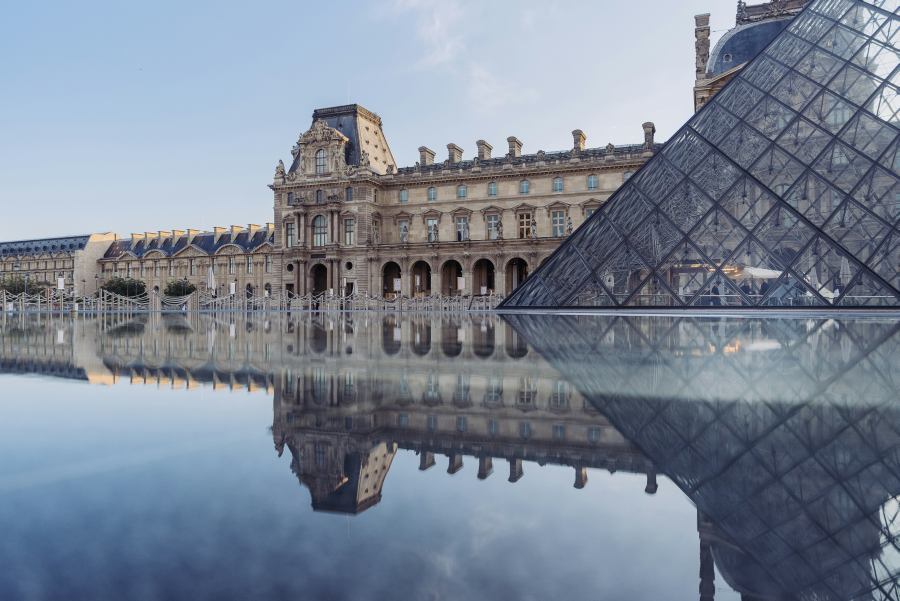
The Louvre is one of the largest museums in the world, and it is neither possible nor worthwhile to tour it all in one morning. In three to three and a half hours, it is best to pick the most famous works: the Mona Lisa in the Denon Wing, the Winged Victory of Samothrace and the Venus de Milo. All three are easy to reach, and you will pass many other important works along the way.
Opening hours: Monday, Thursday, Saturday, Sunday 9:00–18:00, Wednesday and Friday 9:00–21:00. Closed on Tuesdays.
Ticket prices:
- Full price: €22
- Free for under 26s
Booking and all information can be found here!
Lunch (approx. 12:30–14:00): The Palais-Royal or the Tuileries Garden
When you leave the Louvre, there are two good directions that need no detour: the bistros around the Palais-Royal and the arcades of the Rue de Rivoli, or the kiosks and cafés of the Tuileries Garden. The latter is easier if you would like to rest on the garden chairs with a quick sandwich (jambon-beurre) or savoury pies. If it is not raining, you can also have a picnic: baguette, cheese and fruit are available at a bakery or shop.
Afternoon (approx. 14:00–17:00): The Tuileries, the Place de la Concorde and the Champs-Élysées
From the Louvre through the Tuileries Garden to the Place de la Concorde it is a 15–20 minute walk (about 1 km, walking only).
The Tuileries Garden is a classic example of French garden art: an open promenade with fountains and benches. You do not need to set aside separate time for it; it is on your way, right next to the Louvre.
The Musée de l’Orangerie (optional, about 1–1.5 hours) stands at the Concorde end of the garden and holds Monet’s Water Lilies panels, which the painter himself donated to France. It is open Wednesday to Monday from 9:00 to 18:00 and closed on Tuesdays. A full-price ticket costs €12.50 online and €11 on site.
The Place de la Concorde has the Luxor Obelisk in its centre. The Champs-Élysées starts here, and the Arc de Triomphe is about 1.9 kilometres away, or about 30 minutes on foot. If you are tired, take Metro Line 1 at Concorde: it is a 6–8 minute ride to the Charles de Gaulle–Étoile stop, without a transfer.
Evening (approx. 17:00–21:00): The Arc de Triomphe Terrace and Dinner
The Arc de Triomphe, the triumphal arch commissioned by Napoleon, stands in the middle of the Place de l’Étoile. The eternal flame at the Tomb of the Unknown Soldier is rekindled every evening.
You approach it on foot through the underground passage; do not try to cross the roundabout. The upper terrace requires a ticket, and the lifts are for people with reduced mobility only, so everyone else has to climb the stairs.
The terrace is open until late in the evening: until 22:30 from October to March, and until 23:00 from April to September. It is worth going up in the hour before sunset: the twelve avenues fan out from here like a star, and the lights of the Champs-Élysées come on.
Ticket prices:
- Full price: €22 between April and September, €16 between October and March
- Free for under 25s
Booking and all information can be found here!
For dinner, the side streets are usually better value than the restaurants on the main Champs-Élysées avenue. If you would like a calmer evening, you can swap the Arc de Triomphe for a sunset walk in the Tuileries Garden or the Palais-Royal, and have dinner around the Palais-Royal.
Day 3: Montmartre and the Eiffel Tower
The third day links two outstanding sights that lie far from each other. Montmartre is the city’s most cheerful, most „village-like” neighbourhood, and the Eiffel Tower is the symbol of the city. The metro ride between them is the only longer stretch, and in return the evening finale in the lights is as memorable as it gets. The walking is about 4–5 kilometres, but with many stairs.
Morning (approx. 8:00–10:00): Up to Montmartre
Take Metro Line 2 and get off at Anvers, then follow the Rue de Steinkerque to the funicular (the funicular can be used with one metro ticket, but you can also climb the stairs). There are good bakeries for breakfast around both Anvers and Abbesses (Line 12). The early morning hours are quieter, and there are no crowds yet on the stairs and around the square.
Late morning (approx. 10:00–12:30): Sacré-Cœur and the Artists’ Quarter
Sacré-Cœur, the white Romano-Byzantine basilica, stands at the highest point of the city, and entry is free. The apse mosaic is the largest mosaic in France. Photography is forbidden inside the basilica.
About 300 narrow steps lead up to the dome, and in return you get a 360-degree view of Paris. This is paid: a full-price ticket is €8, and €5 for those under 15. It is open every day from 10:15 to 17:30. All information can be found here!
Next to Sacré-Cœur is the Place du Tertre. Portrait painters sell their work on the square, and the surrounding streets (Rue de l’Abreuvoir, Rue Lepic) are charming. (If you are interested in the art history of the neighbourhood, the Musée de Montmartre and the Renoir Gardens deserve another 1–1.5 hours.)
Lunch (approx. 12:30–14:00): Abbesses and the Rue Lepic Area
The restaurants on the Place du Tertre mainly cater to tourists. A better choice is the Place des Abbesses and the side streets of the Rue Lepic: galettes and crêpes, traditional bistro dishes (steak-frites, duck leg confit, onion soup), as well as cheese shops, where a plate of cheese and a baguette also make a quick, good lunch.
Afternoon (approx. 14:00–17:00): From the Moulin Rouge to the Trocadéro
From Montmartre to the Blanche metro stop, it is a 15-minute walk down the Rue Lepic. On the way you can see the Moulin Rouge from the outside. From Blanche, take Metro Line 2 to Charles de Gaulle–Étoile, where you change to Line 6 and ride on to the Trocadéro. The whole trip, including the metro ride and the transfer, takes about 40 minutes.
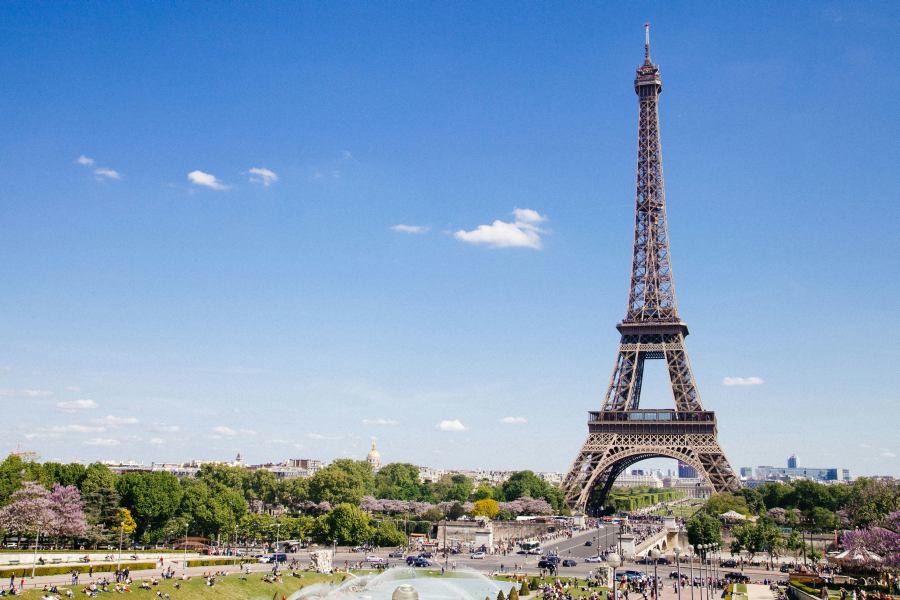
From the Trocadéro, the terrace of the Palais de Chaillot offers the most beautiful panorama of the Eiffel Tower. It is worth spending 20–30 minutes here, then walking across the Pont d’Iéna to the tower (about 10 minutes).
The Eiffel Tower is Paris’s iconic sight, the symbol of the city. There are observation decks on the 2nd floor and at the summit. The summit and the stairs are not accessible to people with reduced mobility. Large luggage or strollers cannot be taken into the tower. The Eiffel Tower is not included in the Paris Museum Pass.
Ticket prices to the 2nd floor by lift:
- Full price: €23.50
- Ages 12–24: €11.80
- Ages 4–11: €6
- Free under age 4
Ticket prices to the 2nd floor by stairs:
- Full price: €14.80
- Ages 12–24: €7.40
- Ages 4–11: €3.80
- Free under age 4
Ticket prices to the summit by stairs, then lift:
- Full price: €28
- Ages 12–24: €14
- Ages 4–11: €7
- Free under age 4
Ticket prices to the summit by lift all the way:
- Full price: €36.70
- Ages 12–24: €18.40
- Ages 4–11: €9.20
- Free under age 4
(Prices will increase from 11 January 2027!)
Booking and all information can be found here!
Evening (approx. 17:00–21:00): Light Show and Dinner
At dusk the tower is lit in golden lights, and after dark it sparkles with flashing lights for 5 minutes every hour on the hour. If you would like to watch the sparkle from below, sit out on the lawns of the Champ-de-Mars or at the Trocadéro.
For dinner near the tower, the side streets of the 7th arrondissement (for example around the market street Rue Cler) are better than the tourist-oriented places at the foot of the tower. If you are not tired, you can also board a Seine cruise near the tower (about one hour), which is especially atmospheric in the evenings in the illuminated city.
Practical tips
Tickets and passes for transport
- Single tickets (in 2026): a metro/train/RER ticket costs €2.55 and a bus/tram ticket costs €2.05. The Navigo Easy card (about €2) is rechargeable and can hold several tickets, and it can also be loaded onto your phone.
- Day ticket or pass: the Navigo day ticket is valid across the whole of Île-de-France (except the airports). The Navigo Day pass costs €12.30 and is valid for a calendar day.
- Airport: a single airport–Paris ticket costs €14.
Ticket and pass prices and descriptions can be found here!
The Paris Museum Pass: is it worth it?
The pass is valid for 2, 4 or 6 days and covers more than 50 museums and monuments, but not transport or the Eiffel Tower.
Pass prices:
- 2 days: €85
- 4 days: €105
- 6 days: €125
In this itinerary, the full-price tickets for the Louvre, the Orsay, Sainte-Chapelle, the Orangerie and the Arc de Triomphe add up to more than €85, so it is worth buying. You can even fit more museums into the two days to make better use of the pass.
For the Louvre, the Orsay, Sainte-Chapelle and the Orangerie, you need to book a time slot even with the pass.
Passes can be bought, and all information can be found, here!
Clothing and equipment
Count on 5–8 kilometres a day, with cobblestone streets and many stairs (in Montmartre and at the Arc de Triomphe). Comfortable, broken-in shoes and dressing in layers are best. Large luggage and strollers cannot be taken into the Eiffel Tower, and there are no luggage lockers at the Arc de Triomphe, so set out with a small backpack. In churches (Notre-Dame, Sacré-Cœur), dress appropriately and behave quietly.
Local customs and tourist traps
- When entering a shop or restaurant, say hello („Bonjour”); this is a basic rule of politeness.
- Pickpockets are common at the Louvre, in the metro, on the steps of Sacré-Cœur and around tourist groups, so wear your bag in front of you, closed. On the steps of Sacré-Cœur you may meet „friendly” bracelet weavers and petition collectors who expect money in return. Do not stop to chat with them, and they will leave you alone!
- The Louvre officially warns about fake ticket-selling websites and street ticket sellers.
- In the restaurants on the Place du Tertre and on the main avenue of the Champs-Élysées, you pay more than in the side streets.
Alternatives for bad weather
In rainy or very cold weather, the big viewpoints (the Arc de Triomphe, the Sacré-Cœur dome, the Eiffel Tower) are less enjoyable, while the Louvre, the Orsay and Sainte-Chapelle are indoors. It is worth moving these programmes earlier or supplementing them with the following, without making a big detour.
- The Conciergerie and the Archaeological Crypt of the Île de la Cité (Day 1): the Conciergerie next to Sainte-Chapelle (the prison of the French Revolution, with Marie Antoinette’s cell) can be visited with a combined ticket, in about 45–60 minutes, and it is open roughly 9:30–18:00. If it rains, it is worth slotting this in instead of waiting outdoors in front of Notre-Dame. The archaeological crypt is in front of the cathedral.
- Musée de l’Orangerie (Day 2): instead of the walk in the Tuileries Garden, an indoor programme of about 1–1.5 hours with Monet’s Water Lilies. It is open Wednesday to Monday from 9:00 to 18:00 and closed on Tuesdays. After this you can also get to the Arc de Triomphe by metro, or spend the evening elsewhere.
- Galerie Vivienne and the Palais-Royal Arcades (Day 2): covered, atmospheric passages right near the Louvre, for lunch, coffee or shopping. Spend your post-Louvre lunch time here, and skip the Tuileries Garden.
- Musée de Montmartre and the Renoir Gardens (Day 3): instead of the viewpoint from the Sacré-Cœur dome, if the weather is rainy or foggy, this small museum on the art history of the neighbourhood makes a programme of about 1–1.5 hours. The interior of the basilica and its mosaic can be seen in such weather too (entry is free). If possible, move your evening visit to the Eiffel Tower to another time, because in overcast weather the view is less spectacular.
Summary
The three-day itinerary builds on the three most important parts of the city: the Île de la Cité and the Left Bank, the Louvre–Champs-Élysées axis, and Montmartre and the Eiffel Tower. With two or three main sights a day, sensible walking and realistic lunch breaks, you will also get a taste of the city’s distinctive atmosphere.


