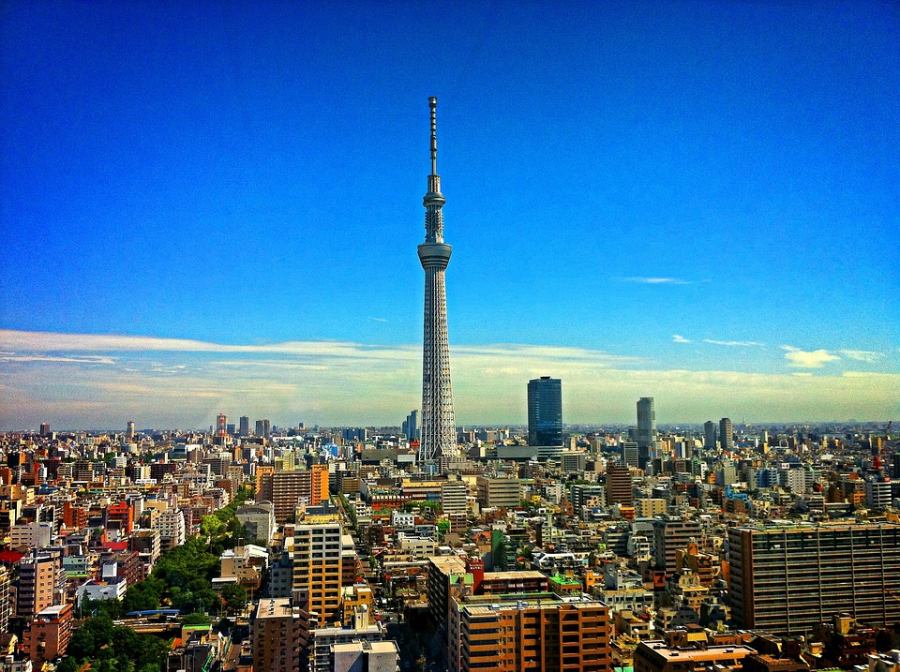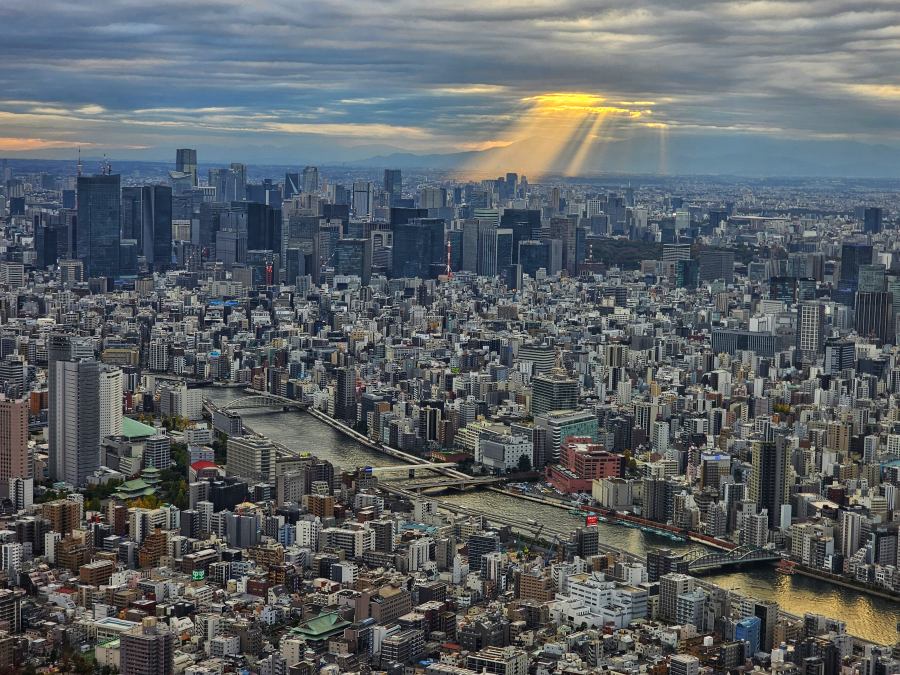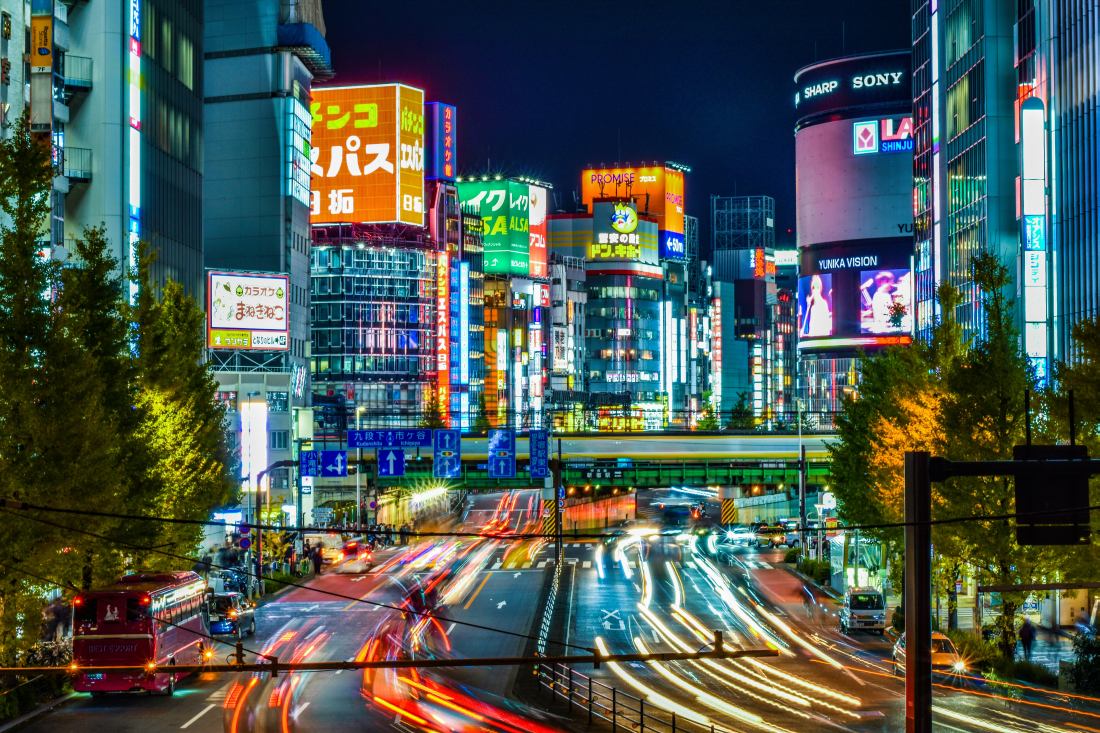
Tokyo is one of the largest cities in the world, so it is not easy to cover Japan’s capital. That is exactly why this 4-day itinerary helps you organize the sights!
Table of Contents
Who is this itinerary for?
This itinerary was designed for first-time visitors to Tokyo who are spending four days there and want to see both the great icons (Sensō-ji, the Shibuya Crossing, Meiji Shrine) and the everyday atmosphere of the city (markets, yokochō alleys, eating around the stations).
Each of the four days is built around one or two districts: the first covers “old Tokyo” (Asakusa, Ueno) and Akihabara, the second Meiji Shrine, Harajuku, Omotesandō and Shibuya, the third Tsukiji, Ginza and the Imperial Palace East Gardens, and the fourth teamLab Planets and Shinjuku.
Plan on walking 8–12 kilometers a day; longer stretches are shortened by subway and JR trains. The order of the days of the week matters: the Tokyo National Museum is closed on Mondays, the Imperial Palace East Gardens on Mondays and Fridays, and the Tsukiji Outer Market on Wednesdays, Sundays and public holidays. Day 3 should therefore fall on a Tuesday, Thursday or Saturday. Starting on a Tuesday is ideal: Tuesday (Day 1), Wednesday (Day 2), Thursday (Day 3), Friday (Day 4).
Day 1: Asakusa, Ueno and Akihabara
The first day explores old Tokyo. Asakusa and Ueno are only a few stops apart on the Ginza subway line, and Akihabara is just one JR stop from the south side of Ueno, so the whole day can be done comfortably without commuting. The total walk is about 7–9 kilometers.
Note that the Tokyo National Museum is closed on Mondays, so the first day of the itinerary should not be a Monday!
Morning (approx. 8:00–10:00): Kaminarimon and Sensō-ji
Take the Ginza or Toei Asakusa subway line to Asakusa Station; from there the Kaminarimon (“Thunder Gate”) is a few minutes’ walk. At 8 a.m. the daytime crowds have not yet arrived, and you can take photos in peace in front of the huge red lantern gate. For breakfast, pick a café or bakery in the area, or the nearest convenience store (konbini): onigiri (rice balls) and tamagoyaki sandwiches are a cheap, quick and atmospheric Japanese breakfast.
Sensō-ji is Tokyo’s oldest Buddhist temple. According to tradition, in 628 two fishermen pulled a statue of Kannon out of the Sumida River, and the temple was built on this spot. Between the Kaminarimon and the Hōzōmon gates runs the Nakamise-dōri shopping street, and in front of the main hall stands an incense burner whose smoke visitors waft over themselves for good health. You can also try an omikuji (fortune slip); most places have an English translation.
Allow 60–90 minutes for the visit. The temple complex can be visited freely and there is no admission fee; the main hall is open from 6:00 to 17:00. The Nakamise shops usually open around 9:00, so if you arrive early in the morning, the stores will still have their shutters down.
Late morning (approx. 10:00–12:30): Nakamise, the Sumida riverside and Kappabashi
The Sumida riverside is a 5-minute walk from the main hall, with a good view of the Tokyo Skytree. If you feel like it, you can take a short walk along the river, but you will get the experience even without climbing the tower.
From there, walk back through the side streets of Nakamise, then head toward Kappabashi-dōri (about 15 minutes on foot west of Asakusa Station). This is the street of shops selling kitchen tools and the famous plastic food samples (sampuru). Some shops may be closed on Sundays or public holidays. Allow about 45 minutes.
Lunch (approx. 12:00–13:30): downtown Asakusa
The Asakusa area is ideal for lovers of traditional Japanese cuisine: tempura (tempura-donburi, i.e., tempura served over rice), unagi (grilled eel), soba and tonkatsu are typical here. Those who want to eat quickly can get melon-pan, ningyō-yaki (small round cakes) and dango in the side streets of Nakamise.
Choose your lunch spot in the streets between the Kaminarimon and Sensō-ji, so there is no detour. Restaurant opening hours and closing days vary, and many restaurants close for a break in the afternoon, so do not plan lunch later than 13:30.
Afternoon (approx. 13:30–17:00): Ueno and the Tokyo National Museum
From Asakusa Station, Ueno is 3 stops (about 6 minutes) on the Ginza subway line. From the subway station, the Tokyo National Museum is about a 10-minute walk through Ueno Park.
The Tokyo National Museum is Japan’s largest museum. The Honkan (Japanese Gallery) displays swords, armor, painted folding screens, kimonos and samurai equipment, all in chronological order, so it gives a good overview of Japanese history. For a first visit the Honkan is enough: allow 2–2.5 hours so that you do not get tired.
The museum is open from 9:30 to 17:00 and is closed on Mondays.
Ticket prices (permanent exhibition):
- Adults: 1,000 yen
- University students: 500 yen
- Free for those under 18 and over 70
Special exhibitions require a separate ticket, which is also valid for that day’s permanent exhibition.
Tickets and all information can be found here!
After the museum, at about 16:00, walk down to the south exit of the park, then on to the Ameyoko (Ameya-Yokochō) market street. This roughly 400-meter street under the JR tracks is a crowded, lively pedestrian street of fish shops, dried foods, and clothing and shoe vendors. The shops close in the early evening, so it is worth fitting in during the afternoon. At the end of the street is Okachimachi JR Station.
Evening (approx. 17:00–21:00): the lights of Akihabara and dinner
From Okachimachi JR Station, Akihabara is one stop (about 2–3 minutes) on the Yamanote or Keihin-Tōhoku line. The district is the center of Japan’s electronics and anime culture and is bathed in neon light in the evening. Multi-story arcades (game centers), retro video game shops, manga and anime stores and huge electronics department stores line the streets, all open until late.
For dinner, Akihabara offers numerous izakayas and ramen, curry and gyūdon restaurants, the best choice for those who like simple, quick and cheap dinners. Maid cafés (cafés with waitresses in costume) are popular, but they usually charge a table charge, so it is worth asking before you go in.
For a calmer evening: from Akihabara, Asakusa is 2 stops (about 5 minutes) away on the Tsukuba Express, where Sensō-ji and its five-story pagoda are even more beautiful lit up after sunset, and the temple grounds are quieter in the evening.
Day 2: Meiji Shrine, Harajuku, Omotesandō and Shibuya
The second day connects the green side of the city with its trendy, youthful districts. The route leads from Meiji Shrine through Harajuku and Omotesandō to Shibuya, mostly in one direction, and every section can be covered on foot. The total walk is about 8–10 kilometers.
Important: Meiji Shrine closes at sunset, so the day starts with the shrine, and the observation deck is left for the end of the day.
Morning (approx. 8:00–10:00): Meiji Shrine
The south gate of the shrine is a few steps from Harajuku Station on the JR Yamanote line. For breakfast, pick a bakery near Harajuku Station or a convenience store, because the shops and cafés in the district mostly open only around 10:00.
Meiji Jingū is a Shintō shrine dedicated to Emperor Meiji and Empress Shōken. The forest of about one hundred thousand trees in the middle of the city means a quiet walk of about 10 minutes to the main building. Along the way, the huge torii gates, the wall of sake and wine barrels (kazaridaru) and the hand-washing fountain (temizuya) are among the sights. At the shrine, it is customary to bow before the torii and to behave quietly.
Allow 60–90 minutes for the visit. Admission is free. Opening and closing times vary with sunrise and sunset, so it is worth checking before you set out.
Opening hours and all information can be found here!
Late morning (approx. 10:00–12:30): Harajuku and Omotesandō
From the south exit of Meiji Shrine, Takeshita-dōri (Takeshita Street) is a 2-minute walk. The roughly 350-meter-long, narrow street is a world of Japanese youth fashion, kawaii culture and cream-filled crêpes: crowded, colorful and loud. 30–40 minutes is enough for it.
From there it is worth continuing toward Omotesandō. Omotesandō (about a 15-minute walk from Harajuku Station) is the “Champs-Élysées of Tokyo”: a boulevard lined with zelkova trees that showcases the work of famous architects (for example, Tadao Ando with the Omotesandō Hills mall and Toyo Ito with the Tod’s building). Walking along the street, you will see the contrast between traditional Japan and modern design.
Lunch (approx. 12:00–13:30): the side streets of Omotesandō
In the side streets of Omotesandō and on Cat Street (Kyū-Shibuya-gawa Yūhodō), the street of small cafés and boutiques, you will find tonkatsu and ramen places, soba and udon restaurants, and cafés and brunch spots that blend Japanese and Western flavors. Cat Street is also the most beautiful walking route toward Shibuya (about a 15–20 minute walk), so it is a good place to have lunch.
Afternoon (approx. 13:30–17:30): Shibuya, the famous crossing and Shibuya Sky
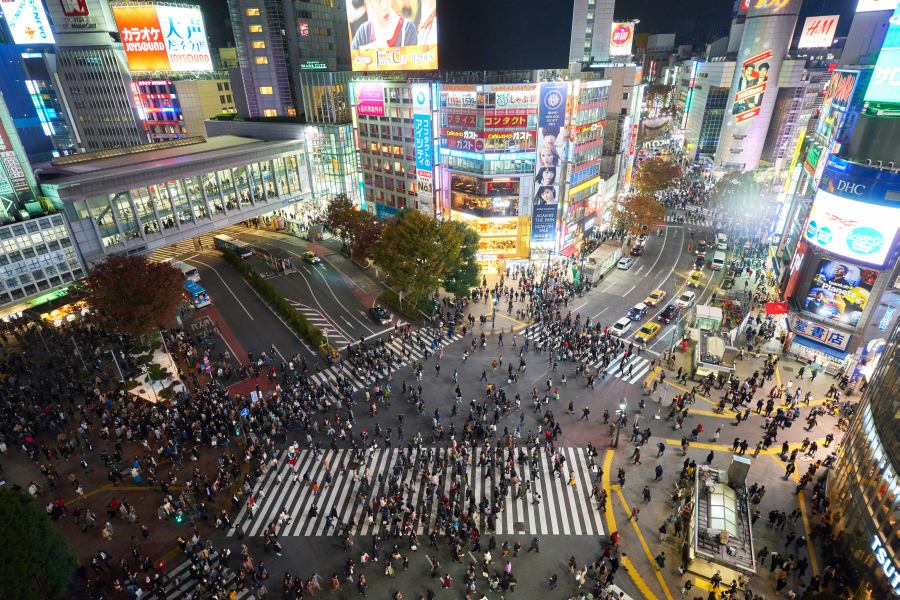
At the end of Cat Street you arrive in Shibuya. The first stop is the Hachikō statue, the memorial to the faithful dog, followed by one of the busiest pedestrian crossings in the world, the Shibuya Scramble Crossing. With each green light, thousands of people cross the road at once. The crossing can also be viewed well from the rooftops of the buildings around Shibuya Station and from the corridors of Mark City, but the real experience is provided by Shibuya Sky.
Shibuya Sky, at the top of Shibuya Scramble Square, sits 229 meters above the ground; from the building’s open-air rooftop terrace you can see the crossing, the Tokyo skyline and, in clear weather, Mount Fuji. Allow 60–90 minutes. The open-air section may be closed in bad weather (rain, storms).
Shibuya Sky is open from 10:00 to 22:30. It is worth buying tickets online in advance, because the sunset and evening time slots sell out quickly.
Ticket prices:
- Online ticket, entry between 10:00 and 14:59: 2,700 yen
- Online ticket, entry between 15:00 and 21:20: 3,400 yen
- Box office ticket: 3,000 yen (10:00–14:59) or 3,700 yen (15:00–21:20)
- Under 12 years of age: 1,200 yen (available only on site)
Ticket booking and all information can be found here!
Evening (approx. 17:30–21:00): Shibuya at night
After Shibuya Sky, the area around Center-gai and Nonbei Yokochō is the ideal place for dinner: next to the station, tiny bars with 5–8 seats and yakitori and izakaya alleys line the streets, while Center-gai offers sushi, ramen and fast food. The crowded crossing does not empty out in the evening, either; it looks most beautiful at night because of the neon lights.
A calmer alternative: from Shibuya, Ebisu is one stop (about 3 minutes) on the JR Yamanote line, where the small restaurants and izakayas of Ebisu Yokochō offer a quieter atmosphere frequented by locals.
Day 3: Tsukiji, Ginza and the Imperial Palace East Gardens
The third day covers the center and heart of the city: the Tsukiji Outer Market in the morning, Ginza in the late morning, the Imperial Palace East Gardens, on the grounds of the former Edo Castle, in the afternoon, and Tokyo Station and Marunouchi in the evening. The traditional Tokyo market, the most exclusive shopping district and the imperial past stand side by side, so the whole day can be covered on foot. The total is about 7–9 kilometers.
This day should fall on a Tuesday, Thursday or Saturday: the Tsukiji Outer Market is closed on Wednesdays, Sundays and public holidays, and the East Gardens are closed on Mondays and Fridays.
Morning (approx. 8:30–10:30): Tsukiji Outer Market
The Tsukiji Station of the Hibiya subway line or the Tsukijishijō Station of the Ōedo line is at the edge of the market. The Tsukiji Outer Market (Tsukiji Jōgai Shijō) is the successor of the old wholesale fish market: the wholesale fish market moved to Toyosu in 2018, but the outer, retail part of Tsukiji remained, with about 460 shops.
The market is the best choice for breakfast: fresh tamagoyaki (Japanese rolled omelet), grilled seafood on skewers, rice bowls with tuna, salmon and seafood (kaisen-don), and sushi. Most shops accept only cash, so bring enough yen. An important rule: eating while walking is not allowed; food you have bought must be eaten at the shop or in a designated area.
Allow 90–120 minutes. Near the market stands Tsukiji Hongan-ji, an Indian-style Buddhist temple, which also makes a good short detour of about 15 minutes.
Late morning (approx. 10:30–12:30): a walk to Ginza
From the Tsukiji market, Ginza is about 1 kilometer, a 12–15 minute walk. Ginza is Tokyo’s most elegant shopping district: at the Ginza 4-chōme crossing stands the clock tower of the Wakō department store, and among the sights in the area are Ginza Six, Mitsukoshi and the Itoya stationery store (several floors of stationery and Japanese paper).
If you like the theater, you can find out the current program at the Kabuki-za Theatre; tickets for a single act of kabuki are also sold separately.
There is no need to shop; the district’s architecture and shop windows are spectacular in themselves. Allow about 90 minutes.
Lunch (approx. 12:00–13:30): Ginza and Yūrakuchō
In Ginza and neighboring Yūrakuchō, the prices of lunch menus (teishoku) in restaurants are much lower than those of dinner. Tonkatsu, tempura, soba and ramen restaurants offer cheap lunch sets, and on the top floors and in the basement food halls (depachika) of the department stores you can get quick, tasty bento boxes. Finish your lunch around Yūrakuchō Station, because the route continues from there.
Afternoon (approx. 13:30–16:00): the Imperial Palace East Gardens
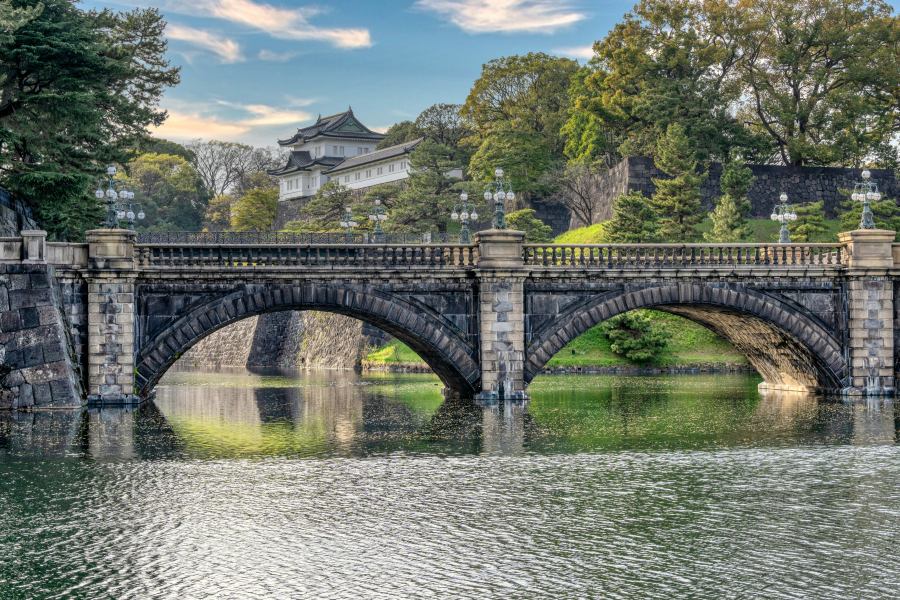
From Yūrakuchō, it is about a 25-minute walk past the Marunouchi side of Tokyo Station to the Ōte-mon Gate of the East Gardens (one stop by JR train to Tokyo Station, then a 10-minute walk). The East Gardens (Kōkyo Higashi Gyoen) preserve the remains of the former Edo Castle: stone walls, guard towers, the grassy expanse of the Honmaru and the Japanese garden. The castle’s main keep burned down in 1657 and no longer stands, but the garden is large, peaceful and free.
Allow 1.5–2 hours. The garden opens at 9:00, and the closing time varies at certain times of the year (in summer it is open until 18:00). It is closed on Mondays and Fridays, and from December 28 to January 3.
Admission is free.
Opening hours and all information can be found here!
Evening (approx. 16:00–21:00): Tokyo Station and Marunouchi
The brick building of Tokyo Station was completed in 1914 (designed by Tatsuno Kingō), and its Marunouchi-side façade is especially beautiful lit up at dusk and in the evening. From the rooftop garden of the KITTE shopping center opposite the station (free), there is a view of the station. The tree-lined pedestrian street Marunouchi Naka-dōri is usually decorated with strings of lights from November to February.
For dinner there are two good options with no detour: the small yakitori and izakaya pubs under the Yūrakuchō railway viaduct (Gado-shita), or Tokyo Ramen Street beneath Tokyo Station, where several well-known ramen shops operate. From both, the Yamanote line makes for an easy trip back to your accommodation.
A calmer alternative: you can put together your dinner in the basement food halls (depachika) of the Ginza department stores, then take a walk around Tokyo Station before returning to your accommodation.
Day 4: teamLab Planets and Shinjuku
The fourth day starts with a special, modern experience and ends with Shinjuku, the skyscraper center of the city’s west. The trip between the two locations is longer (about 40–50 minutes, with one or two transfers), but the outstanding significance of teamLab Planets and the evening atmosphere of Shinjuku justify it. The total walk is about 6–8 kilometers.
Morning (approx. 8:00–9:00): getting to Toyosu
teamLab Planets is located in Toyosu, next to Shin-Toyosu Station (Yurikamome line), about a 3-minute walk from Exit 1A of the station. From Shimbashi, the trip takes about 20 minutes on the Yurikamome automated train. The Yurikamome is not covered by the Tokyo Metro and Toei subway ticket, so an IC card is more convenient. Have breakfast at your accommodation or around Shimbashi Station, as there are few breakfast options around Planets.
Late morning (approx. 9:00–11:15): teamLab Planets
teamLab Planets is not a traditional museum: visitors walk barefoot among water and mirrors, through installations made of light, mirrors and flowers. The experience is about connection with the body: you wade through ankle-deep water, walk through gardens covered in flowers, and in the mirrored spaces the light changes around you. The route takes about 1.5–2 hours, and it is worth going through most of the spaces even on a first visit.
Practical information: the water spaces are entered barefoot (socks must be taken off as well), shorts are available to borrow free of charge for the mirrored floor, and personal belongings must be left in a lockable locker. Re-entry is not allowed, and eating, drinking and smoking are prohibited. It is worth wearing shoes that are easy to take off and trousers that are easy to roll up.
Ticket prices:
- Full price (from age 18): from 3,800 yen (the price varies depending on occupancy)
- Students: 2,800 yen
- Ages 4–12: 1,500 yen
- Free under age 4
Tickets are available only online or at the official ticket shop, not on site. The date and time can be changed up to three times, no later than 2 hours before entry.
Ticket booking and all information can be found here!
Lunch (approx. 12:15–13:45): Shinjuku
From Shin-Toyosu Station to Shinjuku takes about 40–50 minutes, with one or two transfers (for example, the Yurikamome to Toyosu Station, then the subway). Google Maps or the Japan Transit app will give you the exact route according to the latest timetable. The travel time includes both the time on the vehicle and the transfers.
Around Shinjuku Station there is a wide choice for lunch: ramen, tonkatsu, soba and udon restaurants, as well as the restaurant floors of department stores (for example, Takashimaya Times Square). It is worth having lunch around the west exit (Nishiguchi) or the east exit, so that you do not have to go back to continue the day.
Afternoon (approx. 13:45–17:00): Shinjuku Gyoen and the Tokyo Metropolitan Government Building
For those who would like one more calm, nature-oriented stop, Shinjuku Gyoen is a large, well-kept park (optional, about 1–1.5 hours); check the admission fee, the opening hours and the November closing time on the official website. If you are tired, you can happily skip this stop.
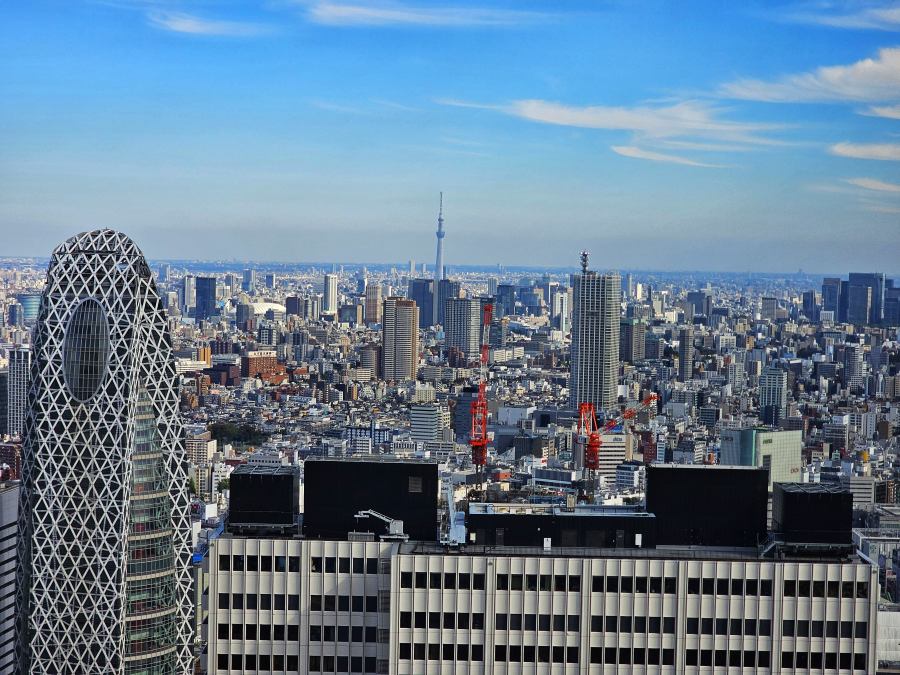
From Shinjuku Station, the Tokyo Metropolitan Government Building (Tochō) is about a 10-minute walk through the underpass. The observation decks on the 45th floor are free: the South Observation Deck is open from 9:30 to 22:00, and the North Observation Deck from 9:30 to 17:30. The North Observation Deck is closed on the 2nd and 4th Monday of the month, and the South on the 1st and 3rd Tuesday. It is worth arriving around sunset (approx. 16:00–16:45); in clear weather Mount Fuji is also visible. Allow about 45–60 minutes.
All information can be found here!
Evening (approx. 17:00–21:00): Omoide Yokochō, Kabukichō and Golden Gai
From the observation deck, Omoide Yokochō (“Memory Lane”) is about a 15-minute walk. The narrow alley running alongside the railway tracks is famous for its smoky yakitori bars; the bites are cheap, and the atmosphere is crowded and thoroughly Tokyo. From there, it is worth continuing through the station to the east side, to Kabukichō (about 15 minutes), where the Hotel Gracery Shinjuku, topped with a Godzilla head, and the neon signs define the character of the district.
Golden Gai is about a 5-minute walk from here, a network of alleys with small bars of 5–8 seats. It is important to know that several bars charge a cover charge, which is usually posted at the entrance, and some bars serve only regulars, so it is worth asking before entering any of them. In Kabukichō, be careful with street touts (kyakuhiki): do not follow them, and do not take part in drinking sessions they invite you to.
Those who prefer a calmer evening can have dinner in the restaurants of the department stores around Shinjuku Station, then return to their accommodation by subway.
Practical tips
Tickets and passes for transport
- IC card: Suica or PASMO is the most convenient way to pay on the subway, on JR trains and on most buses, and it can be used in most shops as well. For tourists, Mobile Suica (Apple Wallet on iPhone, Google Wallet on FeliCa-enabled Android) is the simplest. Welcome Suica and PASMO Passport are valid for 28 days and are deposit-free cards; Welcome Suica is available at Narita and at Haneda Terminal 3, and at the JR East Travel Service Center in Tokyo Station. Due to the chip shortage, traditional Suica cards have not been available from vending machines since 2023.
- Tokyo Subway Ticket: 24-hour 1,000 yen, 48-hour 1,500 yen, 72-hour 2,000 yen (half price for children), valid on all Tokyo Metro and Toei subway lines, counted from the first use. It is not valid on JR lines or the Yurikamome, so in this itinerary, which includes both JR and the Yurikamome, it may not be worth it. It is worth buying if you will be riding the subway a lot.
- The JR lines (Yamanote, Chūō, Keihin-Tōhoku) and the Yurikamome cannot be used with the Tokyo Subway Ticket; these must be paid for separately, and an IC card is ideal for this.
All information can be found here!
In bad weather, and the season
In November, the weather in Tokyo is generally nice: typically 15–18 °C during the day and around 8–10 °C at night, and the autumn foliage usually peaks in late November and early December. Sunset is already around 16:30, so the day is shorter. On a rainy day, swap the outdoor programs (Meiji Shrine, the Imperial Palace East Gardens, Tsukiji) for indoor ones; teamLab Planets is indoors, so it can be a good choice for a rainy day. Alternatives are listed below.
Clothing and gear
You will walk 8–12 kilometers a day, so comfortable, already broken-in shoes are the most important thing. In several places (teamLab Planets, temples, some restaurants) you have to take off your shoes, so easy-to-remove shoes and clean, intact socks are also useful. Dress in layers: it can be cool in the morning and evening, but it is warm in the subway and in department stores. Carry cash (many market vendors and small restaurants do not accept cards), a small hand towel (restrooms often have no paper towels), and a bag for your trash, because there are few public trash cans.
Local customs and tourist traps
- Eating, drinking and talking on the phone while in transit is not considered polite; on the subway and on trains, travel quietly.
- Tipping is not customary, either in restaurants or in taxis.
- In temples and shrines, bow before the gate, purify yourself at the hand-washing fountain (temizuya), and respect the bans on photography.
- At the Tsukiji market you need cash, and eating while walking is not allowed.
- In Kabukichō, avoid street touts and expensive, unfamiliar bars; in the bars of Golden Gai you can ask about the cover charge.
- Tokyo is generally very safe, but in crowded places (Shibuya, Takeshita Street, Akihabara) it is worth keeping an eye on your bag.
Alternatives for bad weather
If it is raining or too cold, you can slot in the following indoor programs in place of the outdoor ones:
- Akihabara’s arcades and retro game shops (Day 1): instead of the walk in Ueno Park and Ameyoko, they offer a covered, multi-story program. After the Tokyo National Museum you can go straight to Akihabara; from there, the Okachimachi–Akihabara section is one stop by JR train.
- Omotesandō Hills and Harajuku’s department stores (Day 2): covered shopping and architecture instead of the forest walk at Meiji Shrine and Takeshita-dōri.
- Tokyo Station’s underground passages and Ginza’s department stores (Day 3): instead of the Tsukiji Outer Market and the East Gardens. Tokyo Ramen Street, Character Street and the basement food halls (depachika) of the Ginza department stores are all indoors and close to one another.
- Moving teamLab Planets forward (day swap): teamLab Planets is indoors, so it can be moved earlier to a rainy day, and the outdoor program can be placed on the fourth day, if the ticket booking allows it (the time slot can be changed up to three times).
- Tokyo Metropolitan Government Building observation decks (Day 4): they are free and indoors, but in rain or fog little is visible, so of Shibuya Sky and the TMG it is worth choosing the one that gets the clear weather.
Summary
The four-day itinerary shows the most important faces of Tokyo: old Asakusa and Ueno, the forest of Meiji Shrine and the neon lights of Shibuya, the Tsukiji market, Ginza and the gardens of the former Edo Castle, and finally the light show of teamLab Planets and Shinjuku at night. With two or three main programs a day, geographically coherent routes and realistic lunch times, it helps you get to know the city comfortably.