
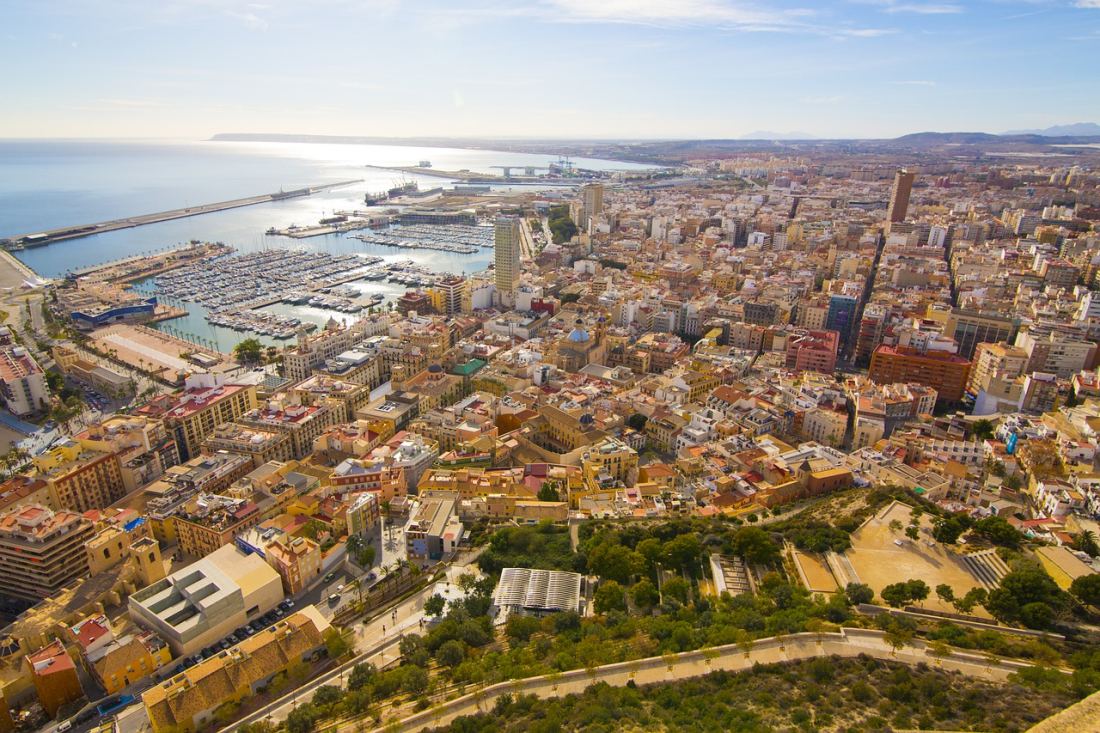
Alicante is one of the main destinations on the Spanish coast in summer. However, it’s worth visiting outside the high season as well, as numerous attractions await tourists!
The tourism boom began in the 1960s, which has become spectacular in the past few decades. Alicante and its surroundings have become one of Spain’s most popular destinations.
Table of Contents
Attractions in Alicante
Santa Barbara Castle (Castillo de Santa Bárbara)
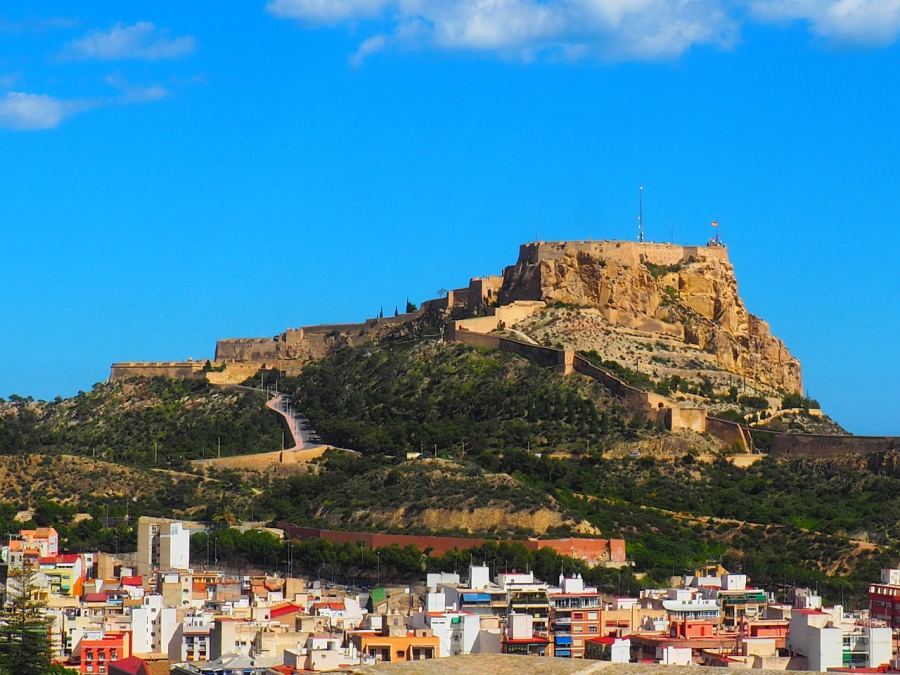
Located in the center of Alicante, it’s one of the largest medieval fortresses in Spain.
The castle is situated at the top of Mount Benacantil, 166 meters high, offering a breathtaking view of the city below and the Mediterranean Sea. You can reach it on foot, by car, bus, or using a modern elevator that starts directly from the foot of the mountain.
The castle consists of three main parts:
- The Upper Castle (La Torreta) is the highest point, where the ruins of medieval buildings are found, and where the oldest parts have been preserved.
- Middle Castle (El Macho del Castillo): this part contains the 16th-century extensions, including the Royal Guard’s Hall.
- Lower Castle (Revellín del Bon Repós): the youngest part of the castle, where numerous buildings are located, such as the Felipe II Hall and the Habsburg gazebo.
Entry to the castle is free, but you have to pay for the elevator ride!
All information can be found here!
San Fernando Castle (Castell de Sant Ferran)
Another notable castle in Alicante is located on Tossal Hill, although it’s less impressive than Santa Barbara Castle.
Its construction began in 1813 during the Napoleonic Wars to strengthen the city’s defense against the French invasion. However, the construction was never fully completed, and its importance gradually diminished.
The reason to visit here is the view of the city. From here, we can see Alicante from a different perspective.
El Barrio
The old Arab quarter is located at the western foot of Santa Barbara Castle, one of the most authentic parts of the city.
Its history dates back to the 8th century when the Moors conquered the peninsula. Alicante was important in the Moorish empire, and the Arab quarter was the central part of the city. Although Christians recaptured the area in the 13th century, the Arab influence remained in the architecture and street layout.
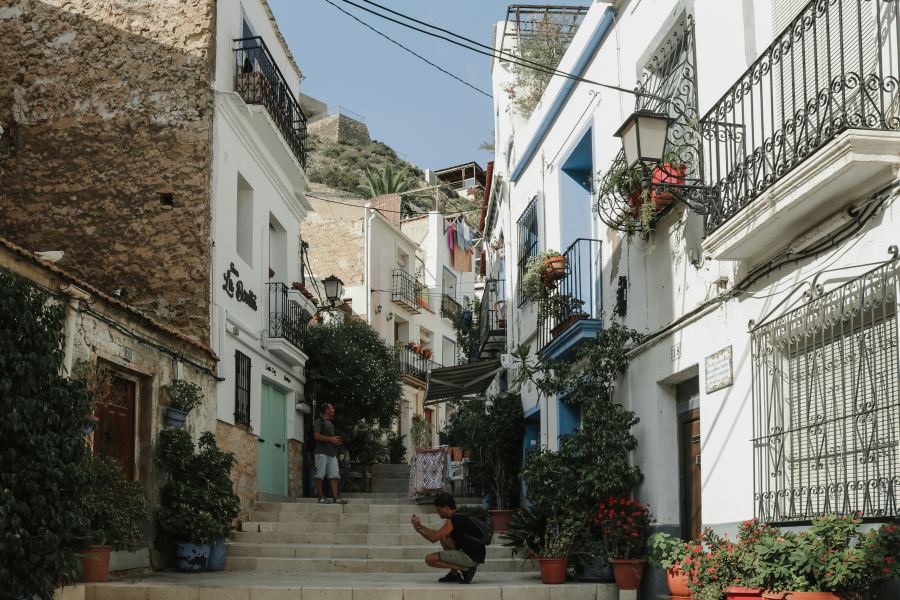
The neighborhood exudes a special atmosphere with its characteristic narrow streets, whitewashed houses, and flower-decorated balconies. It’s worth taking time to walk around the small streets.
Church of Santa Maria (Iglesia de Santa María)
One of the most beautiful buildings in the old Arab quarter, built on the site of an old Moorish mosque.
The construction of the church began in the 14th century and was completed in the 16th century, thus bearing the marks of several architectural styles, including Gothic and Baroque.
Its richly decorated Baroque-style portal stands out, adorned with a statue of Mary and angels. Its interior is decorated with Gothic vaults and Baroque altars, and we can also see several medieval paintings.
Co-Cathedral of Saint Nicholas of Bari (Concatedral de San Nicolás de Bari)
The cathedral is located in the heart of the old town and is one of Alicante’s most significant attractions due to its unique architectural style and rich interior decoration.
It was built in the 17th century and stands on the site of an older church that was converted into a Christian church after Moorish rule. It’s named after Saint Nicholas of Bari, the patron saint of sailors and children.
The interior is impressive, with high arches and richly decorated altars. The altarpiece depicts Saint Nicholas of Bari, surrounded by statues of angels and saints.
Carrer de les Setes
The „Street of Mushrooms” is one of the most unique and spectacular pedestrian streets in downtown Alicante.
The main features of the street are the large, colorful mushroom sculptures that appear in various sizes and shapes. In addition, the street is decorated with other fairy-tale elements, such as small animals, butterflies, and flowers.
The sidewalk of the street is covered with colorful pavement, which further enhances the cheerful atmosphere. This makes it a much more attractive shopping street, where it’s a pleasure to walk.
Casa Carbonell
One of Alicante’s most famous and impressive buildings, which has become a symbol of the city.
It was built by Enrique Carbonell, who was a wealthy textile manufacturer from Alcoy. The construction of the house began after World War I, in 1922. It was designed by Juan Vidal Ramos, who was a famous Spanish architect at the time.
It was built in a neoclassical style, characterized by the richness and elegance of architectural details. The facade is adorned with ornate balconies, columns, and arched windows. The central part of the building stands out, adorned with two domes. Its interior is also wonderful, with an elegant staircase and spacious rooms.
Plaça de Bous d’Alacant
As befits a Spanish city, there is also a bullfighting arena here, which also serves as a venue for various cultural events and concerts.
It was built in 1847, and in 1888, neo-Mudejar architectural elements were added, which can still be observed today. The exterior facade of the building is made of ornate bricks, decorated with geometric patterns and arched windows. The interior of the arena is oval-shaped.
Part of it functions as a museum where visitors can learn about the history of bullfighting, the lives of matadors, and art related to bullfighting.
Playa del Postiguet
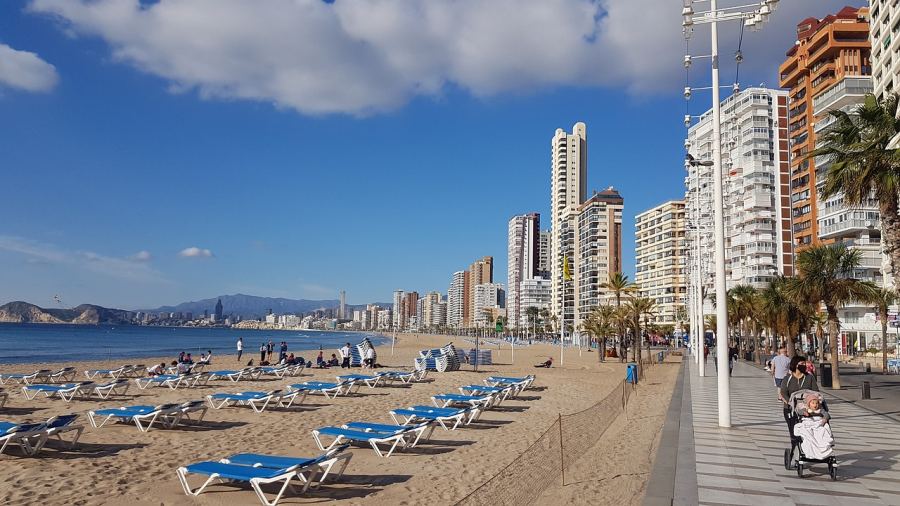
Alicante’s most popular beach, located on the southern part of Santa Barbara Castle, east of the port.
The beach is covered with fine golden sand and is about 900 meters long. Between the road and the beach, we can walk along the Passeig de Gómiz promenade, which offers a great view of the beach and the beautiful hotels.
Santa Faz Monastery
This important religious and pilgrimage site is located about 8 km from Alicante.
The building began construction in 1490 and was consecrated in 1518. The monastery is associated with the miracle of Santa Faz (Holy Face), according to which a cloth depicting Christ shed tears in 1489. This cloth, which is considered to be a piece of Veronica’s veil, is kept in the monastery.
The Santa Faz pilgrimage (Romería de la Santa Faz) takes place every year in April, with hundreds of thousands of people participating. Pilgrims walk from downtown Alicante to the monastery.
All information can be found here!
Archaeological Museum (Museo Arqueológico)
It showcases the archaeological heritage of the province and is almost a hundred years old.
It has several departments, each showcasing a different time and culture:
- Prehistory: presents traces of early human life in the region, including Neanderthal and early modern human remains, as well as ancient tools and artworks.
- Iberian culture: reveals the life and culture of the Iberian peoples who lived in the territory of present-day Spain before the Romans. The exhibition displays burial objects, weapons, and ceramics.
- Roman period: presents the Roman conquest and its impact on the region, including urban life, architecture, and everyday objects.
- Middle Ages: explores the relationships and conflicts between Muslim and Christian cultures, showcasing the remains of castles, churches, and mosques, among others.
All information can be found here!
Gravina Museum of Fine Arts (Museo de Bellas Artes Gravina)
The museum presents the city’s historical art collections in the Gravina Palace.
Its permanent collection covers the period between the 16th and 20th centuries. The exhibition contains artworks from the Baroque, Romantic, Realist, and Impressionist periods. Special emphasis is given to the works of artists from Alicante and Valencia, such as paintings by Antonio Gisbert, Joaquín Agrasot, and Emilio Varela.
All information can be found here!