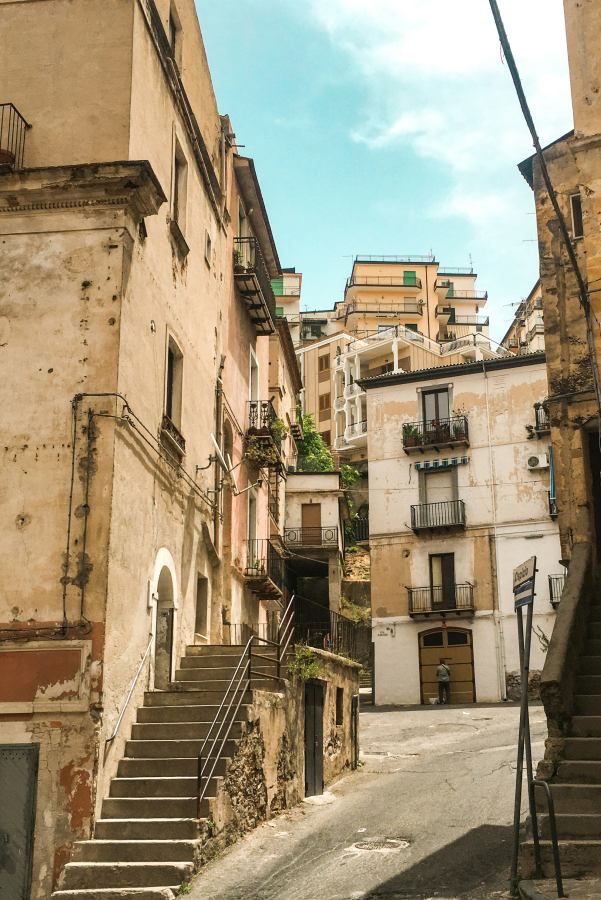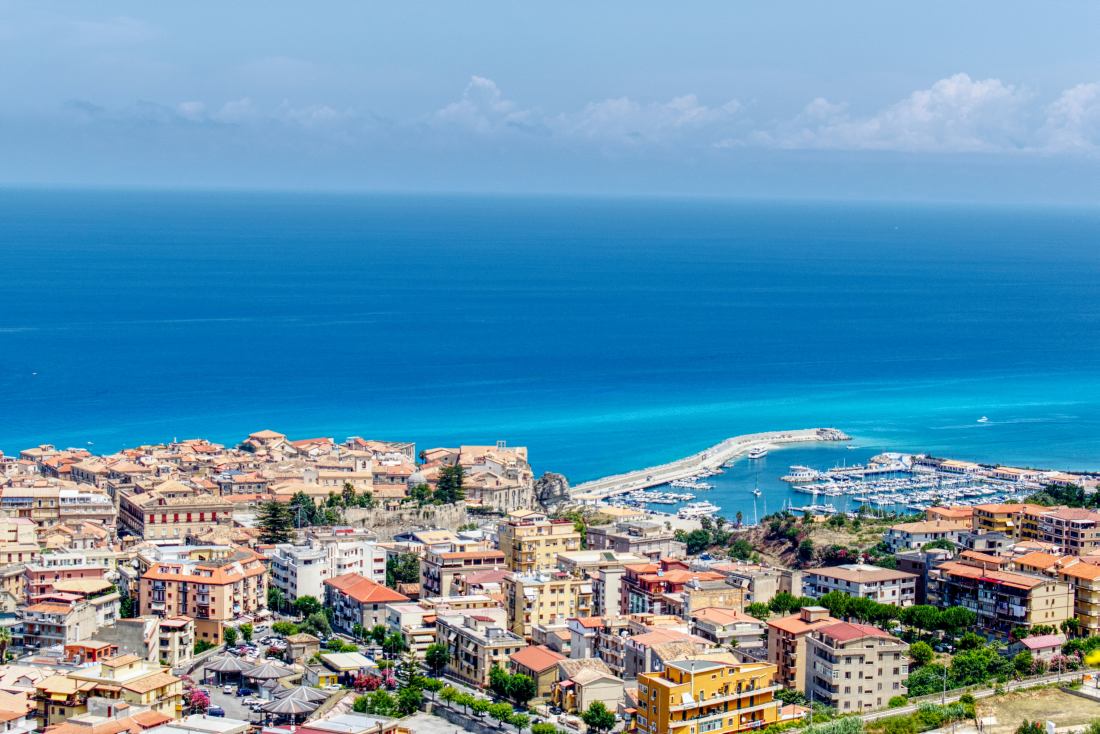
Calabria is one of Italy’s most authentic regions. The area at the „toe” of the boot boasts wonderful towns and beaches.
It is located at the southwestern tip of the Apennine Peninsula, between the Tyrrhenian Sea and the Ionian Sea. It is separated from Sicily by the Strait of Messina. It is one of the poorest regions in Italy and Europe.
Table of Contents
Calabria attractions
Tropea
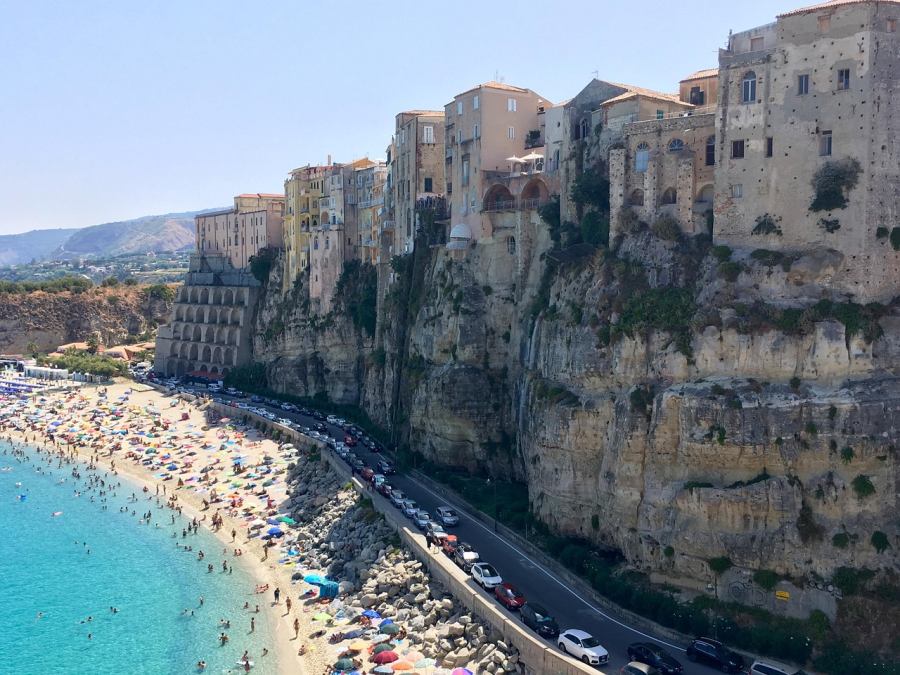
One of Southern Italy’s most visited coastal towns rises on a limestone cliff along the Tyrrhenian Sea coast.
The settlement is spread across two levels: the high-lying historic center and the sandy beaches stretching below create a special atmosphere. Crystal-clear turquoise water spreads before bathers on the white sand, while the buildings of the old town built on the cliff face form a backdrop.
The 12th-century Norman cathedral, the Cattedrale di Maria Santissima di Romania, is the city’s religious and historical center. Along the narrow streets, baroque palaces, flower-decorated balconies, and charming small squares line up, where restaurants and cafes await visitors.
The Santa Maria dell’Isola monastery towers on top of a rocky cliff above the sea, directly below the town. From the top of the stairs leading to the monastery, an amazing panorama opens up of the coastline and the distant Aeolian Islands. The town’s gastronomy is special, famous for Tropea red onions, which have a sweet and mild flavor.
Reggio Calabria
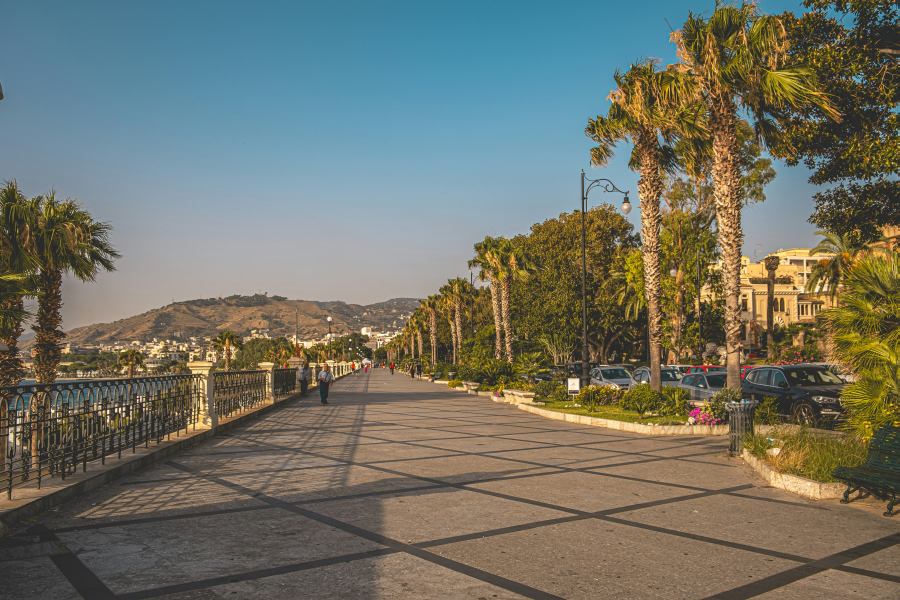
The capital of the province and Calabria’s largest city lies on the shore of the Strait of Messina, with views of Sicily. The settlement is one of the most significant centers in Southern Italy, both historically and culturally. The palm-lined seafront offers pleasant walks; on clear days, Mount Etna is also visible.
The Museo Nazionale della Magna Grecia is the city’s most famous attraction, housing the world-famous Riace Bronzes. These ancient Greek statues are unparalleled pieces of classical art that have remained in exceptional condition. The museum’s rich collection provides insight into the region’s ancient Greek heritage.
The Lungomare Falcomatà, the city’s seafront promenade, is called the most beautiful in Europe. Mediterranean vegetation and fountains line the elegant promenade. The Villa Comunale park in the center is an ideal resting place where locals also like to spend their afternoons.
Scilla
The town bears the name of the mythological creature known from the Odyssey, where the monster of Greek myths, Scylla, supposedly lived according to legends.
The settlement is divided into two parts: the modern downtown and the Chianalea fishing quarter, which is built directly at the water’s edge. Chianalea is a narrow strip along the coast where houses are built right on the water’s edge, and fishing nets practically hang from the terraces into the sea.
The Castello Ruffo castle towers on top of a rock, offering views of the Strait of Messina. The Norman-origin fortress now operates as a museum, with historical exhibitions awaiting visitors within its walls. From the castle, an unparalleled panorama unfolds before us, encompassing the strait and the distant Sicilian coasts.
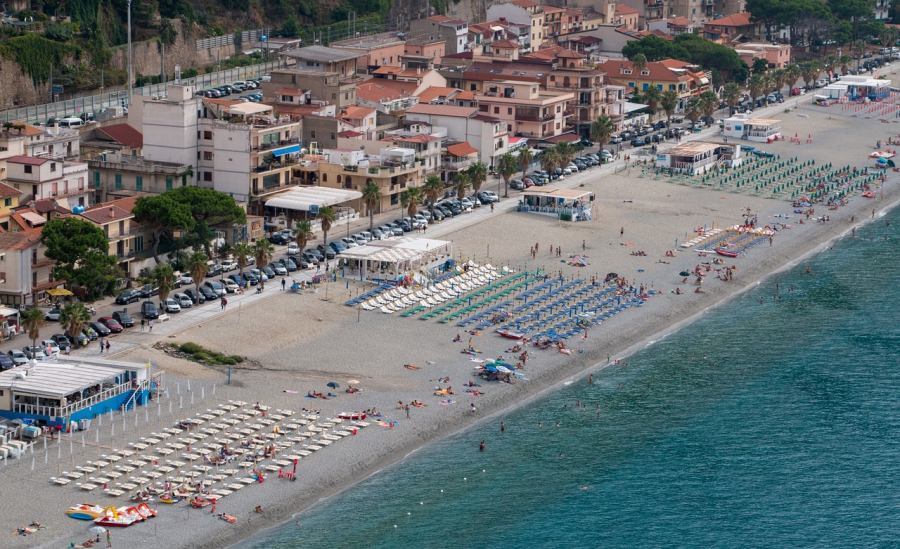
Capo Vaticano
Located south of Tropea, this rocky coastline is famous for its crystal-clear water and cliff-studded shoreline. From the peninsula’s panoramic points, breathtaking views open up of the sea bays and distant volcanic islands. Hidden coves nestle between the area’s white sandy beaches and turquoise water.
The location is particularly popular among divers and snorkelers; colorful fish and sea caves await explorers in the depths. The water’s clarity allows us to see the seabed formations and marine life clearly even at five to ten meters deep. Several dive centers operate along the coast, from which guided tours depart.
Among the beaches, Grotticelle is the most famous, but numerous smaller, hidden coves are also accessible by a short walk or by boat. Some beaches can only be reached on foot or by boat, thus providing a quieter, less crowded environment.
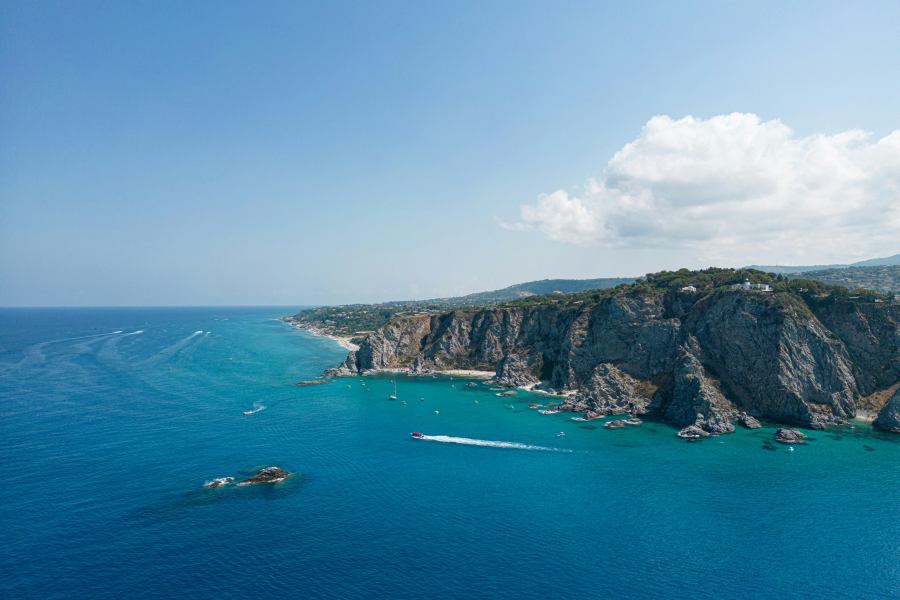
Pizzo
The settlement located in the middle of the Gulf of Sant’Eufemia lies on the slope of a promontory, overlooking the Tyrrhenian Sea.
The town built on the hillside facing the sea is known not only for the famous tartufo ice cream but also for its historic downtown and atmospheric beach. Colorful houses and narrow alleys create a Mediterranean atmosphere where locals’ daily life unfolds.
The Castello Murat is located in the heart of the town, where Joachim Murat, Napoleon’s brother-in-law and King of Naples, spent his last days before being executed. The small castle now operates as a museum, with exhibitions showcasing Murat’s life and Pizzo’s historical role. From the castle, a beautiful view opens up of the harbor and the sea.
Pizzo’s name has become synonymous with the dessert called tartufo di Pizzo: it’s a hazelnut or pistachio ice cream ball with melted chocolate hidden in the center, then rolled in cocoa powder. This specialty can be found in every ice cream parlor in town, with the most famous including Gelateria Ercole and Bar Dante.
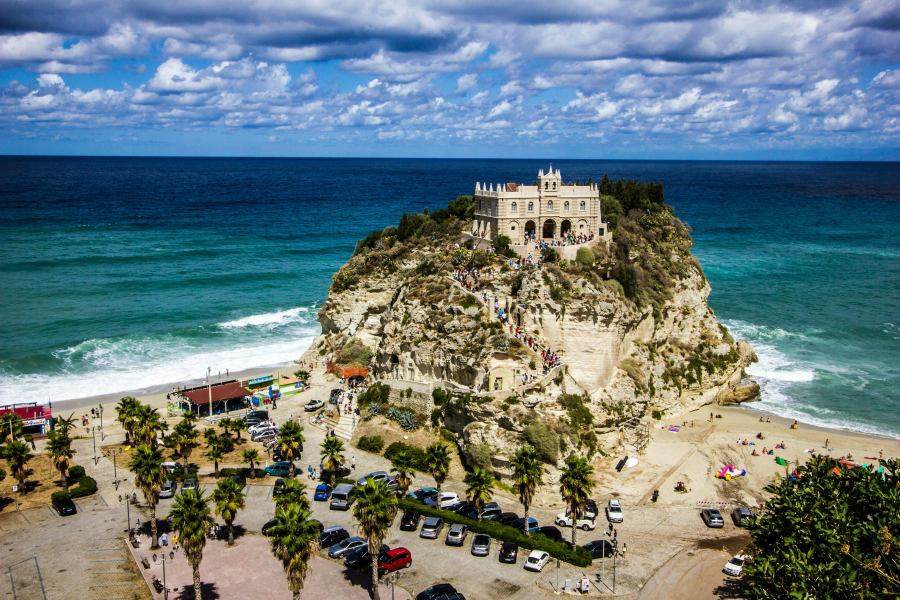
Gerace
The medieval hilltop village is one of Calabria’s most beautiful and oldest towns, towering above the Ionian Sea. The settlement’s labyrinthine streets and ancient stone houses faithfully preserve the past.
The Gerace Cathedral is one of Southern Italy’s largest churches, a mix of Romanesque and Norman architectural styles. The massive church’s interior is decorated with impressive frescoes, and medieval tombstones line between the columns.
The Franciscan church is an architectural masterpiece of contrasts: the apse’s rich decoration sharply contrasts with the nave’s simplicity. At the highest point of the hilltop, remains of a Norman castle ruin are visible, from which an unparalleled panorama unfolds before us. Local ceramics and traditional products are available in small craft shops.
Stilo
The picturesque small town lies at the foot of the Sila Mountains, in the valley of the Stilaro River, with rich historical heritage. The town is famous for its medieval architecture, which dates back to Greek, Roman, Byzantine, and Norman times.
The Cattolica, a 10th-century Byzantine-style chapel with domes and brick covering, is quite unique. The small church’s perfect proportions and architectural solutions show an unparalleled example of Byzantine art. Inside, valuable frescoes preserve the spiritual heritage of past centuries, reflecting the finesse of Byzantine art.
From the town, hiking trails lead up the mountain, from which views open up of the entire region. Walking along the narrow streets, we pass medieval buildings and small churches.
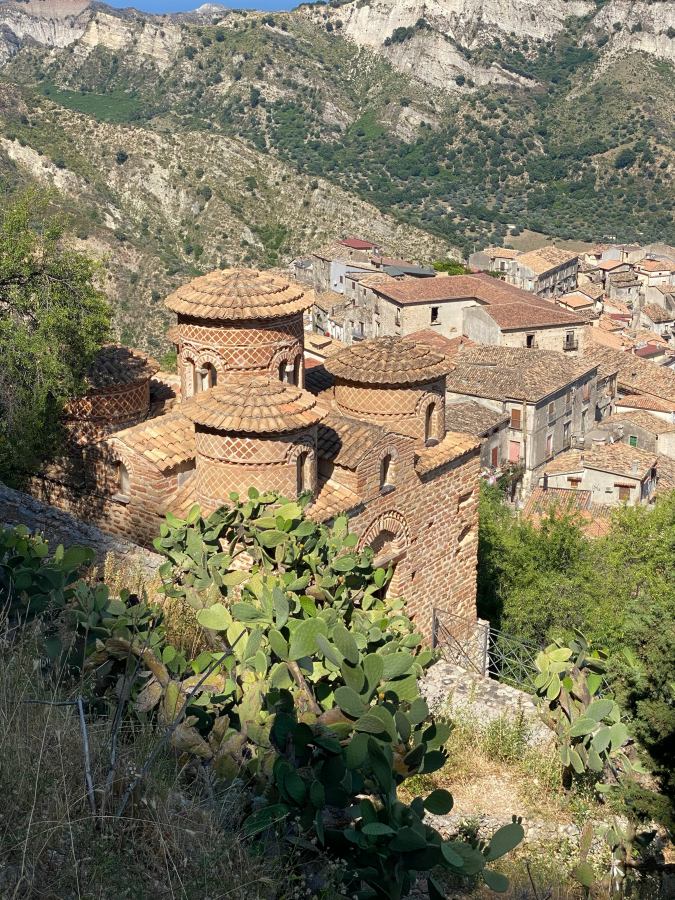
Le Castella
The settlement’s most famous sight is the Aragonese castle on a peninsula jutting into the sea, dating from the 15th century. The castle now operates as a museum, preserving pieces of local history within its walls.
The castle connects to the mainland through a narrow strip of land, making it easily accessible on foot. From the fortress walls, beautiful views open up of the Ionian Sea and the surrounding coastline. The castle’s historical significance lies in being part of a fortification system that served to defend the coast.
Walking paths, small fish restaurants, and developed beaches line the shore, but the surrounding nature reserve also offers programs, such as bird watching or boat tours in the lagoons. The crystal-clear water of the Capo Rizzuto marine protected area is ideal for diving and snorkeling.
Cosenza
The city is a university center with a vibrant intellectual environment. It lies in the Crati River valley, where mountainous landscape meets Mediterranean culture. Baroque and Renaissance buildings mix in the city; in the old town center stand the San Francesco monastery, the cathedral, and several medieval palaces.
The historic quarter’s narrow streets and atmospheric squares invite strolling, where cafes and small shops line up. The modern city district lies on the opposite bank of the Crati River, full of young people, galleries, bars, and bookstores. The city’s cultural life is lively, with frequent art events and exhibitions.
One of the old town’s highlights on the hill is the Norman-Swabian castle, from whose walls an unparalleled panorama opens up of the surrounding area. The 11th-century cathedral’s facade and interior are both impressive, preserving valuable art treasures. Cosenza is also an ideal starting point for exploring the Sila National Park, which is just a few kilometers away.
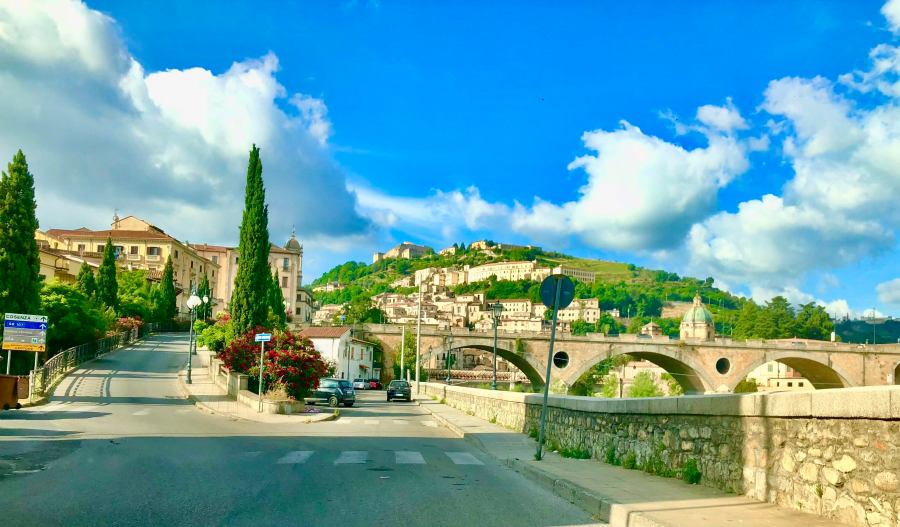
Caminia Beach
Located on the Ionian Sea coast, between Catanzaro and Soverato, this hidden gem has not yet appeared on the mass tourism map.
The beach is situated between two imposing rocky-walled bays, creating natural protection from the wind. The shore is sandy, the water crystal-clear and shallow, making it popular among families as well. The location is calm, less developed than the region’s better-known beaches, thus offering an authentic beach experience.
The surrounding rocky formations provide a perfect location for snorkeling, where the seabed’s varied world can unfold before us. From the shore, a short hike leads to the San Gregorio cave, which can be visited both by land and water. Around the cave, a colorful marine world hides underwater.
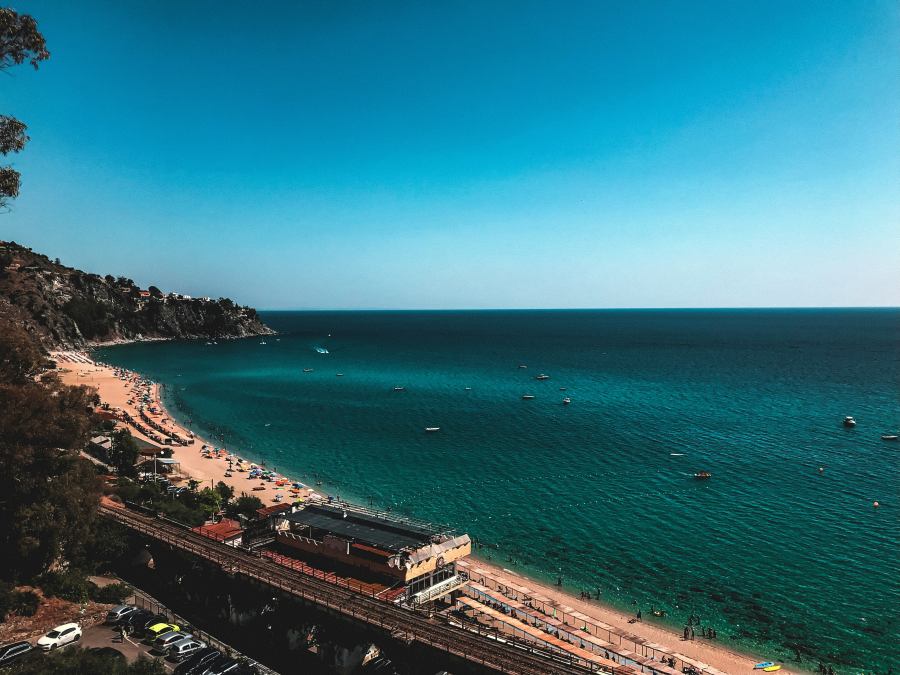
Roccella Ionica
The town is recognized year after year with a blue flag for the coast’s cleanliness and service quality. A promenade runs along the kilometers-long fine sandy beach, lined with beach clubs, restaurants, and bars.
From the shore, the castle ruins are visible, towering on a rocky ridge above the town. The medieval fortress once played an important defensive role in protecting the coast. Today only part of the walls remain standing, but the view of the beach and distant mountains is worth the climb.
Music festivals and cultural events take place in the town during summer, enlivening the otherwise calm atmosphere. The local market offers fresh seafood and regional products. Olive groves and vineyards spread across the surrounding hillsides.
Praia a Mare
Located in the north, on the Cedar Coast, the settlement shows a special contrast: the meeting of black volcanic sand and brilliant blue sea creates a unique atmosphere.
Dino Island rises directly in front of the coast, Calabria’s largest island, a nature reserve with rich flora and fauna. The island can be reached by boat, which regularly departs from the harbor.
Numerous sea caves cut through the island’s coast, of which the Blue Cave is the most famous. In the cave, sunlight filtering through the underwater gives a dazzling blue color to the water and walls. The Gargiulo Cave opens underwater, accessible only to experienced divers. Other caves, such as the Lion Cave or the Monks’ Cave, can be discovered during tours.
On the mainland, the Madonna della Grotta sanctuary can be visited, built into a cave and considered a pilgrimage site. The town’s waterfront promenade creates a pleasant environment.
Badolato
The settlement consists of two parts: the coastal Marina di Badolato and the hilltop medieval Badolato Borgo, which lies five kilometers from the coast. The upper town was built in 1080, with a Norman castle erected on the hilltop for defensive purposes.
The Borgo counts thirteen churches, of which the Immacolata church is particularly spectacular: it stands at the village’s foot with its blue-gold dome. The settlement is also known as „the village of churches” because it has been an important religious center since medieval times. During Holy Week, special Easter ceremonies take place when hundreds dress in period costumes and reenact Christ’s Passion.
The Palazzo Gallelli noble palace was recently renovated and now operates as an exhibition space and cultural center. From the village, paths lead down to the beach, where long sandy beaches await bathers. In the 1980s, the village almost completely depopulated, but has since been revitalized, with foreign artists and returning families settling again.
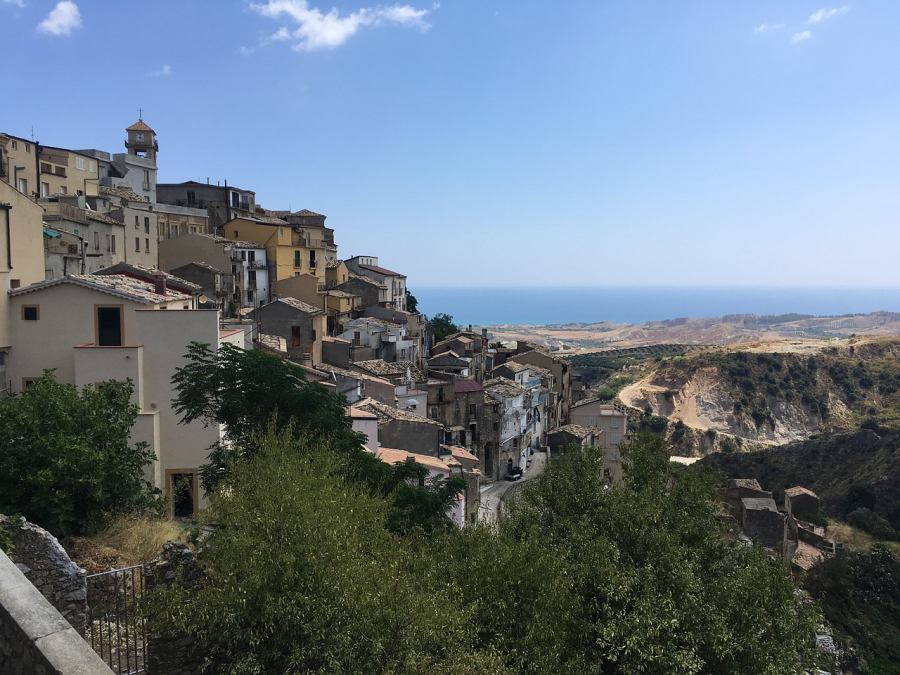
Civita
In the heart of Pollino National Park, 450 meters high, this Albanian-origin village was settled in the 15th century by families fleeing from Albania. The Arbëreshë community still preserves its language, rituals, and traditions to this day. The settlement is often called „the eagles’ nest” because it nestles among the rocks.
The village’s most peculiar characteristic is the „Kodra houses” or „talking houses” which show anthropomorphic features: eyes formed by windows, noses by chimneys, mouths by doors draw out the buildings’ faces. These houses evoke the style of Albanian artist Ibrahim Kodra. The chimneys are particularly varied, with each family creating their own unique shape.
Below the village, the Devil’s Bridge arches over the Raganello stream, which according to legend was built by the devil in exchange for a soul. In the valley lies the Raganello Gorge with its limestone cliffs and hiking trails attracting nature lovers. During Greek-Byzantine rite Easter, the village presents special Albanian dances and songs that preserve the memory of the hero Skanderbeg.
Diamante
The town on the Cedar Coast is famous for two things: its murals and the pepper festival. Since 1981, more than two hundred murals have decorated the town center’s buildings, depicting scenes of local life, historical events, and artistic works. The artists came from an international community and transformed the town into an open-air museum.
Every September, the Peperoncino Festival is held, created in honor of Calabrian peppers. The five-day event features food stalls, cooking demonstrations, competitions, music, and cultural programs awaiting visitors. The festival’s creator, Enzo Monaco, also founded the Italian Pepper Academy, which operates in Diamante.
Beaches stretch for eight kilometers along the coast with different characteristics. Sabbia d’Oro has golden sand, while other parts are covered with small pebbles. Nearby is Cirella Island, Calabria’s second-largest island, where unchanged Mediterranean vegetation thrives. On the hill next to the town, the ancient ruins of Cirella are visible, where an ancient theater has also survived.
Santa Severina
Situated on a rocky ridge above the Neto River valley, this medieval settlement looks from afar like a ship built of stone. The Norman-Swabian castle in the village’s heart dates from the 11th century, with a square tower and four cylindrical watchtowers. The castle now houses an Archaeological Museum displaying finds from the area.
The village’s Byzantine roots are preserved by the Baptisterium, Calabria’s only intact Byzantine baptistery chapel. In the round building, 10th-12th century frescoes are visible, reflecting the finesse of Byzantine art. The cathedral was built in the 13th century but has been renovated several times, so today it shines in Baroque style.
In May or June, a medieval festival is held when the village residents wear Norman-era costumes and hold street theater performances. The area is famous for the local orange, the aranciàru variety, a specialty cultivated here for hundreds of years.
Rossano
The town, which today forms part of Corigliano-Rossano, bears the title of „Byzantine capital” in Calabria.
Its most famous treasure is the Codex Purpureus Rossanensis, a 6th-century Greek evangeliary written on purple parchment with gold and silver. The UNESCO World Heritage-listed codex can be viewed in the Diocesan Museum, where modern tactile devices help visitors.
The Santa Maria Achiropita Cathedral contains the miracle-working Virgin Mary fresco of the same name, which according to legend was not painted by human hands. The church’s floor is decorated with valuable mosaics, the interior space adorned with gold and Cypriot stone. At the top of the hill stands the Santa Maria del Patire Abbey, built in 1095 and once one of Southern Italy’s most significant monasteries.
The town is the center of true Calabrian licorice; here is located the Amarelli licorice factory and museum, showcasing the family business’s more than two-hundred-year history. Along the coast, blue flag beaches stretch on the Costa degli Achei.